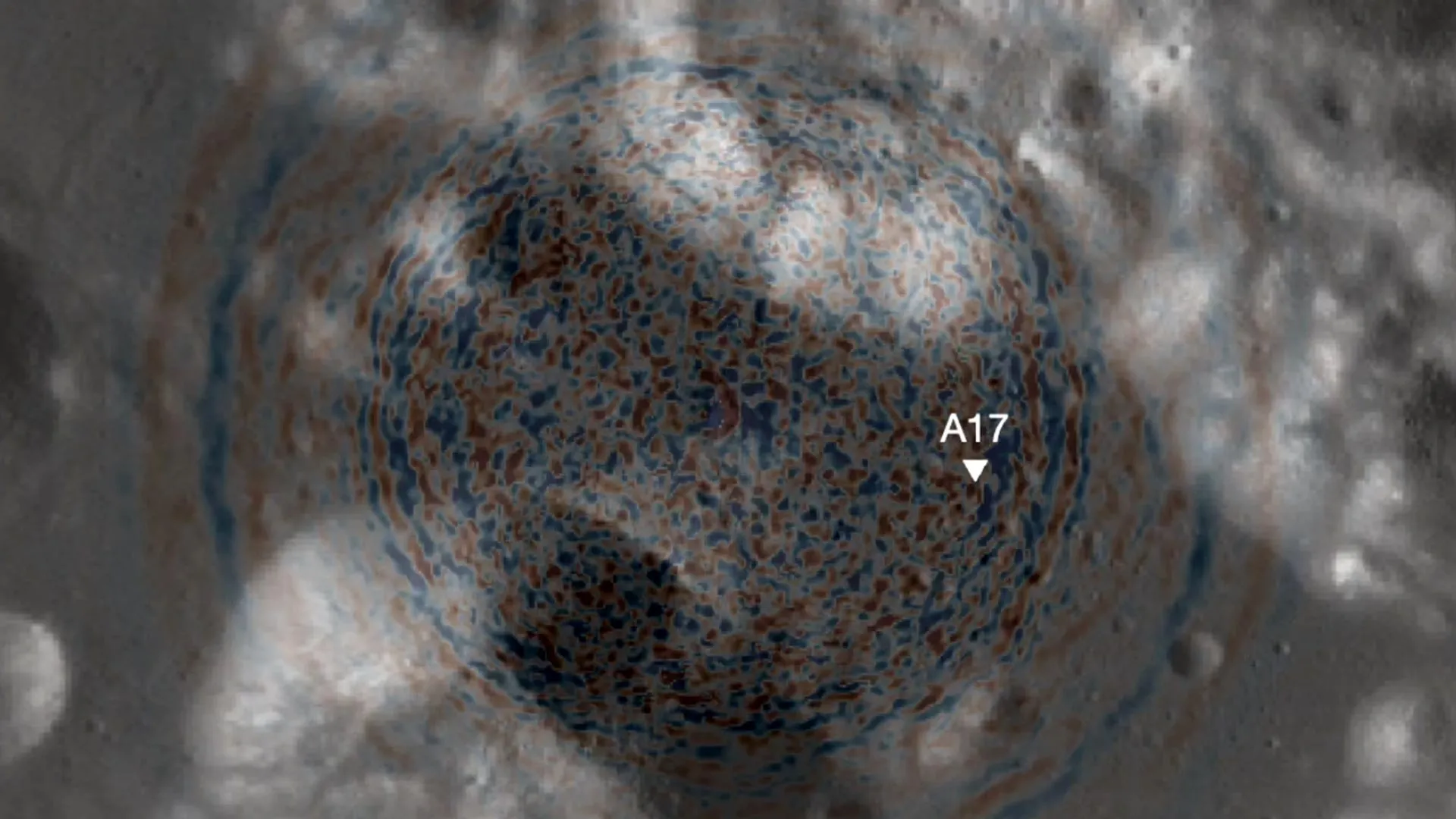
Scientists from the University of Maryland have uncovered new insights into the lunar landscape, revealing that moonquakes, rather than meteoroid impacts, are responsible for the shifting terrain near the Apollo 17 landing site. Their study, published in the journal Science Advances, indicates the presence of an active fault that has likely been generating tremors for millions of years. These findings could significantly impact NASA’s planning for future lunar missions, particularly in light of the ongoing Artemis program.
Understanding Moonquake Activity
The research team, led by Thomas R. Watters, Senior Scientist Emeritus at the Smithsonian Institution, and Nicholas Schmerr, Associate Professor of Geology at the University of Maryland, focused on the Taurus-Littrow valley, where Apollo 17 astronauts conducted their historic mission in 1972. By analyzing geological samples and observations from the lunar surface, they determined that seismic activity from moonquakes, rather than meteoroid strikes, was the primary cause of the region’s terrain changes.
During their investigation, the scientists identified boulder tracks and landslides, which they believe were triggered by past moonquakes. Schmerr noted, “We don’t have the sort of strong motion instruments that can measure seismic activity on the moon like we do on Earth, so we had to look for other ways to evaluate how much ground motion there may have been.”
Implications for Future Lunar Missions
The study’s findings reveal that moonquakes with magnitudes near 3.0 have repeatedly affected the area over the last 90 million years. These seismic events are associated with the Lee-Lincoln fault, suggesting that this tectonic feature remains active. Watters emphasized the importance of considering the global distribution of young thrust faults when planning lunar infrastructure: “The potential to form new thrust faults from ongoing contraction should be considered when planning the location and assessing stability of permanent outposts on the moon.”
While short missions, such as those conducted during the Apollo program, face minimal risk from such quakes, the researchers calculated the daily likelihood of a damaging event occurring near an active fault. They estimate a 1 in 20 million chance of such an event happening on any given day. Schmerr elaborated, “If you have a habitat or crewed mission up on the moon for a whole decade, that’s 3,650 days times 1 in 20 million, leading to a risk of about 1 in 5,500.”
This assessment underscores the necessity for modern missions to address hazards that were not accounted for during the Apollo era. As NASA continues with the Artemis program, which aims to establish a sustained human presence on the moon, long-term missions will need to incorporate advanced seismic monitoring and avoid construction near known fault lines.
Watters and Schmerr recommend that future lunar planners take precautions, stating, “Don’t build right on top of a scarp, or recently active fault. The farther away from a scarp, the lesser the hazard.” They anticipate that advances in lunar science, including higher resolution mapping and new technologies, will enhance understanding of seismic activity on the moon.
This research received support from NASA’s Lunar Reconnaissance Orbiter mission, which has been operational since its launch on June 18, 2009. The findings not only illuminate the moon’s geological past but also pave the way for safer exploration strategies in the future.