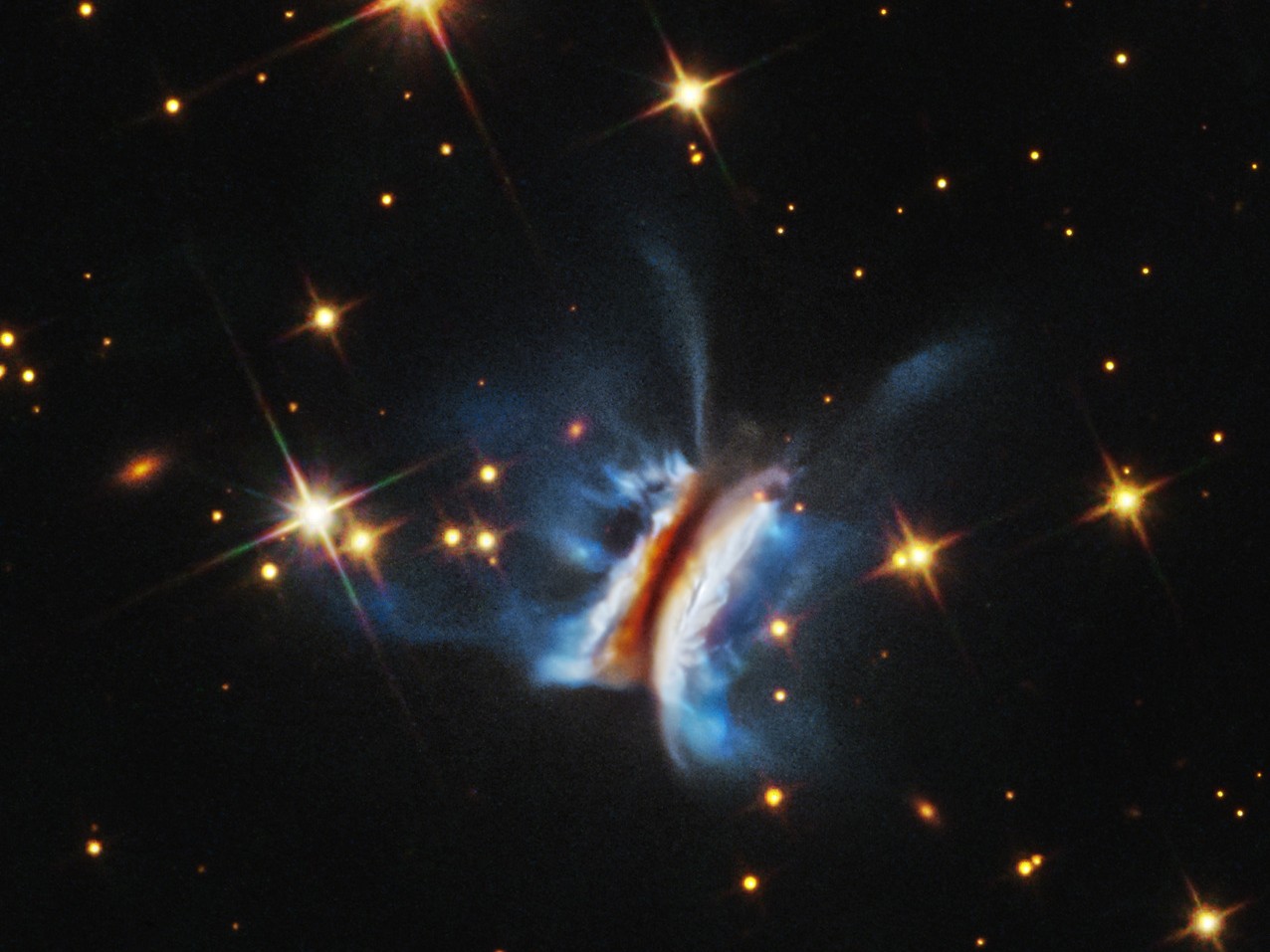
NASA’s Hubble Space Telescope has made a significant discovery regarding the largest observed birthplace of planets, revealing turbulent conditions that could impact planetary formation. This finding was published in the March 2024 issue of the Astrophysical Journal, highlighting the intricate processes involved in the birth of planetary systems.
Understanding the Discovery
The research focuses on a specific region known as the planetary nebula, which is thought to be a crucial area for planet formation. According to Kristina Monsch, a researcher affiliated with the Center for Astrophysics, the turbulence observed may hinder the process of building planets from gas and dust. This turbulence poses challenges for the accumulation of material needed to form solid bodies, suggesting that not all regions within these nebulae are conducive to planet formation.
Images processed by Joseph DePasquale of the Space Telescope Science Institute reveal striking visuals of this nebula, showcasing the dynamic environment in which these processes occur. The findings contribute to a broader understanding of how planets form and evolve, and the implications could reshape theories on planetary system development.
Implications for Planetary Science
The turbulence identified by Hubble is a critical factor in the formation of planetary systems. Understanding these dynamics can aid astronomers in predicting where new planets might emerge. This research challenges previous assumptions about the uniformity of conditions in planetary nebulae and emphasizes that environmental factors are essential in determining the success of planet formation.
As scientists continue to explore these cosmic phenomena, the data collected from Hubble’s observations serve as a foundation for future studies. The ongoing analysis will likely yield more insights into the lifecycle of stars and the potential for life beyond our solar system.
In summary, NASA’s Hubble Space Telescope has unveiled complex turbulence within a significant planetary formation zone, prompting a reevaluation of existing theories in planetary science. With ongoing research and analysis, this discovery may lead to new understandings of how planets are born and shaped in the universe.