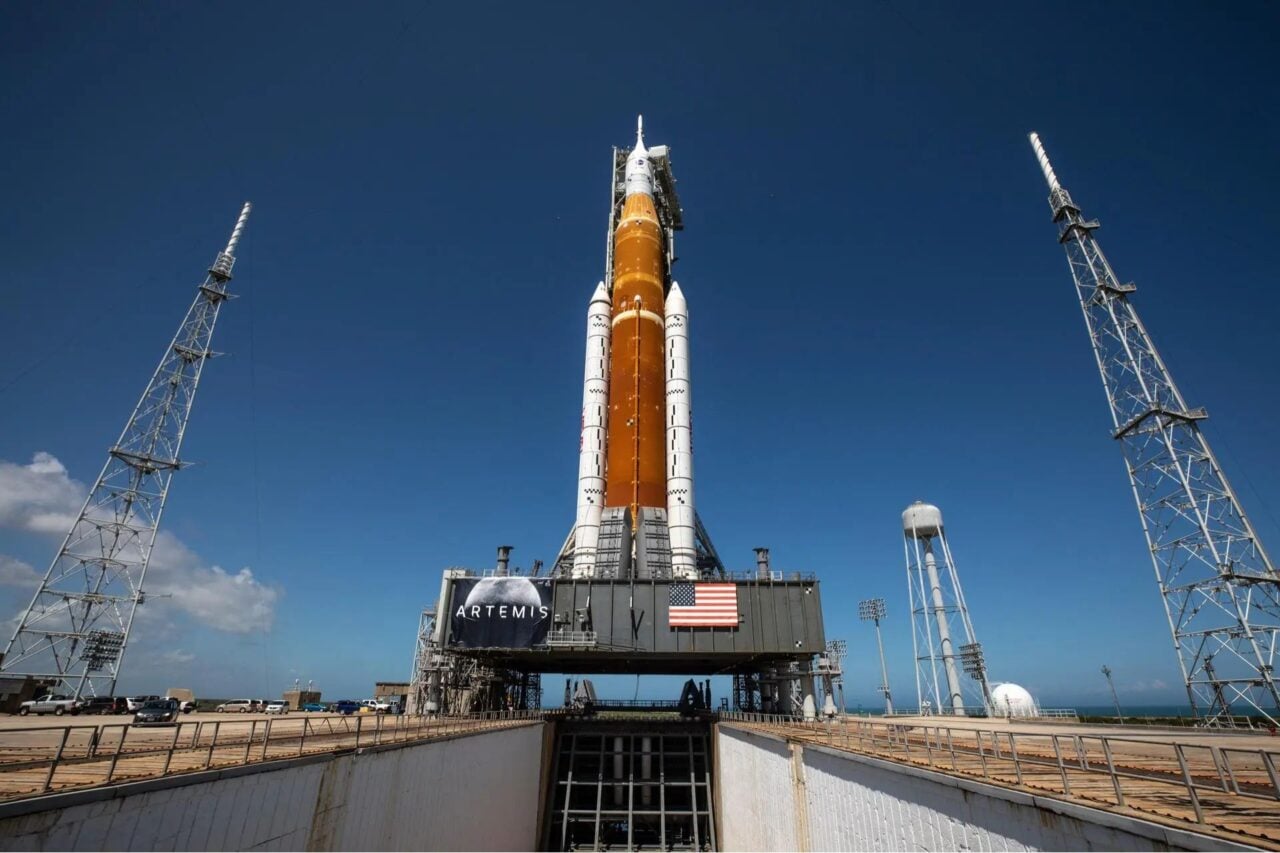
NASA is finalizing preparations for the highly anticipated Artemis 2 mission, which aims to send a team of four astronauts on a historic journey around the Moon. The launch is set to take place in early 2024, with the Space Launch System (SLS) rocket and the Orion spacecraft scheduled to roll out to Launch Pad 39B at the Kennedy Space Center on January 17, 2024.
At a recent briefing, NASA officials expressed their excitement about the upcoming rollout, which will begin at no earlier than 7 a.m. ET. The journey from the Vehicle Assembly Building (VAB) to the launch pad spans four miles and is expected to last between eight and ten hours. Charlie Blackwell-Thompson, the launch director for NASA’s Exploration Ground Systems Program, stated, “About an hour after we get that first motion, you’ll begin to see this beautiful vehicle cross over the threshold of the VAB and come outside for the world to have a look.”
Live Coverage of Rollout and Mission Preparations
NASA plans to provide live coverage of the rollout, starting at 7 a.m. ET, followed by a media event at 9 a.m. ET featuring NASA Administrator Jared Isaacman and the Artemis 2 crew. This event will allow reporters to ask questions about the astronauts’ preparations for the mission, which marks a significant step in NASA’s plan to return humans to the Moon.
As the SLS rocket makes its way towards the launch pad, engineers will pause to retract the mobile launcher’s crew access arm, a process anticipated to take approximately 45 minutes. The vehicle will then be rolled towards the launch pad at a speed of just under 1 mile per hour (1.6 km/h). Once in position, teams will connect the rocket to ground support equipment and perform a series of checks to ensure all systems are operational. The Artemis 2 crew, which includes NASA astronauts Reid Wiseman, Victor Glover, Christina Koch, and Canadian Space Agency astronaut Jeremy Hansen, will conduct a final walkdown of the emergency egress system at the pad.
If everything proceeds as planned, NASA is targeting a wet dress rehearsal on February 2, 2024. During this critical test, the SLS and Orion will be powered up, and ground crews will load the rocket with propellant. Engineers will simulate a launch countdown without firing the rocket’s boosters, practicing how to safely drain propellant from the SLS. Blackwell-Thompson noted that while technical issues are expected, the team is focused on ensuring a safe and successful launch.
Launch Timeline and Future Opportunities
Currently, NASA aims for a launch date of February 6, 2024. However, with only a four-day window between the wet dress rehearsal and the potential launch date, this timeline may be challenging. If Artemis 2 is not ready to launch by February 6, additional launch opportunities are available on February 7, 8, 10, and 11. Following those dates, further opportunities extend into March and April, with Blackwell-Thompson affirming that “there are additional launch opportunities in just about every month” after April.
Throughout the briefing, NASA officials emphasized that crew safety remains their top priority. Although there is pressure to launch Artemis 2 expediently, the agency is committed to taking necessary precautions. This mission represents the first crewed flight in NASA’s lunar exploration program and is crucial for paving the way for Artemis 3, which aims to land astronauts on the Moon.
As Artemis 2 prepares for its launch, the mission will see astronauts journey farther into space than any before them. They will explore previously unvisited areas of the Moon, serving as a testament to humanity’s readiness to return to deep space exploration. The excitement surrounding this mission reflects not only its significance for NASA but also the broader ambitions of space exploration in the coming years.