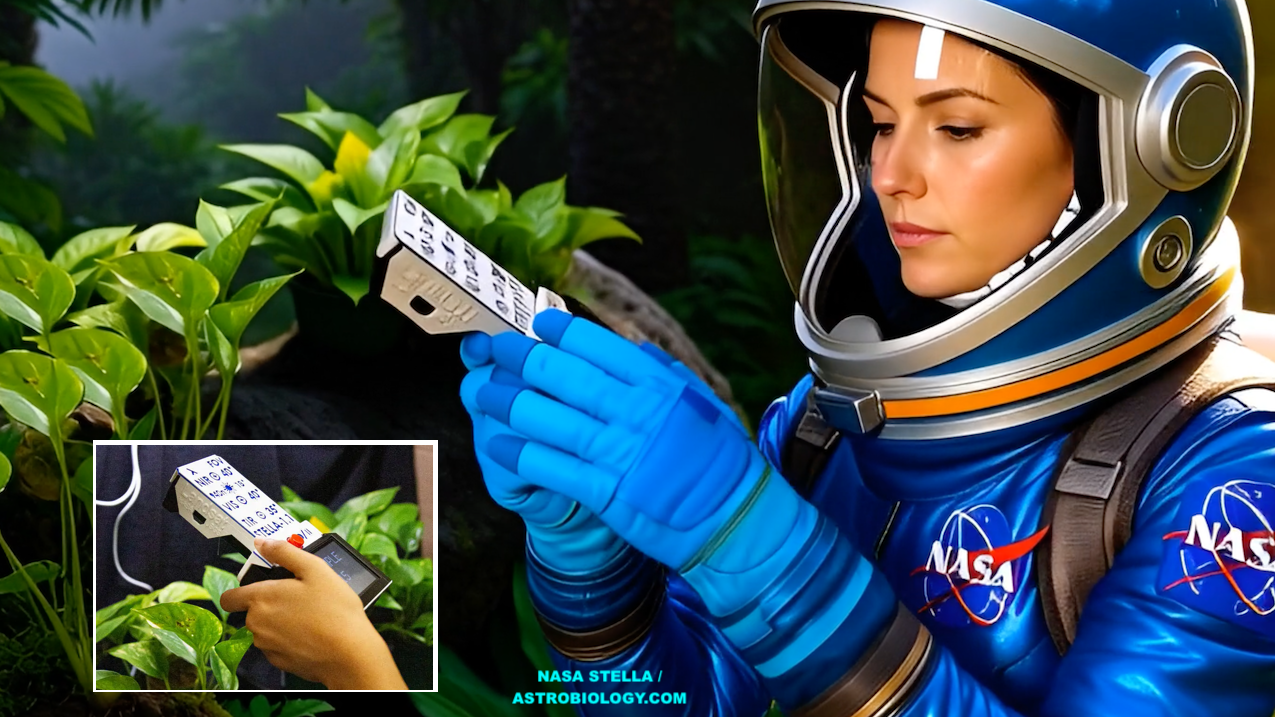
NASA has introduced a groundbreaking initiative known as STELLA, which stands for Science and Technology Education for Land/Life Assessment. This program aims to provide accessible and affordable remote sensing technology for a broader audience, including students and citizen scientists. By fostering hands-on experience with sensor technology, STELLA offers a preview of the instruments that may one day be used for planetary exploration.
The STELLA program at the NASA Goddard Space Flight Center focuses on creating low-cost, open-source instruments that can be assembled using commercially available components. These devices are designed to measure light spectra across 18 channels in the visible and near-infrared range, enabling detailed analysis of environmental features such as plant health. The simplest model, the STELLA-Q, can be assembled for approximately $200 and is suitable for anyone with basic soldering skills.
Empowering the Next Generation of Scientists
As humanity prepares to explore other worlds, understanding the ecosystems that may exist there becomes crucial. The STELLA project not only aims to empower individuals with the tools necessary for remote sensing but also engages younger generations—often referred to as the Artemis Generation. This group will likely be responsible for future explorations beyond Earth.
With the rise of a vibrant citizen science movement, NASA is tapping into a DIY culture that encourages innovation and learning. The open-source nature of the STELLA instruments allows users to modify and improve their devices, fostering creativity and collaboration. The project also emphasizes educational outreach, providing resources and step-by-step guides to help users navigate the assembly and operation of these instruments.
The STELLA instruments are not just tools for measurement; they serve as educational platforms that promote scientific inquiry and analytical thinking. By engaging students in the quantitative aspects of satellite data, NASA aims to cultivate a new generation of researchers equipped to face the challenges of interplanetary exploration.
Significance of In-Situ Analysis
The ability to conduct in-situ analysis of extraterrestrial environments is vital for future astrobiology missions. As we expand our search for life on other planets, it is essential to gather data on-site rather than relying solely on sample return missions, which can be logistically challenging and costly. The STELLA project enables real-time data collection, allowing researchers to analyze environmental conditions and biological systems as they are encountered.
In situ analysis not only expedites the scientific process but also enhances the efficiency of exploration missions. As astronauts and robotic teams gather data, they can refine their search strategies based on immediate findings, leading to a more profound understanding of alien ecosystems. This approach will ultimately help create a dynamic catalog of life forms that could exist on other planets.
NASA’s commitment to democratizing remote sensing science through the STELLA project highlights the importance of accessibility in scientific research. By making these instruments available to a broader audience, NASA is paving the way for innovative research and fostering a sense of community among aspiring scientists.
The comprehensive paper detailing the STELLA initiative provides an in-depth look at its objectives and potential impacts. For more information, the full document can be accessed via NASA’s website.
Through initiatives like STELLA, NASA is not only advancing scientific knowledge but also inspiring future generations to explore the frontiers of space. As technology continues to evolve, the tools we build today will play a critical role in understanding the universe and the life forms we may encounter within it.