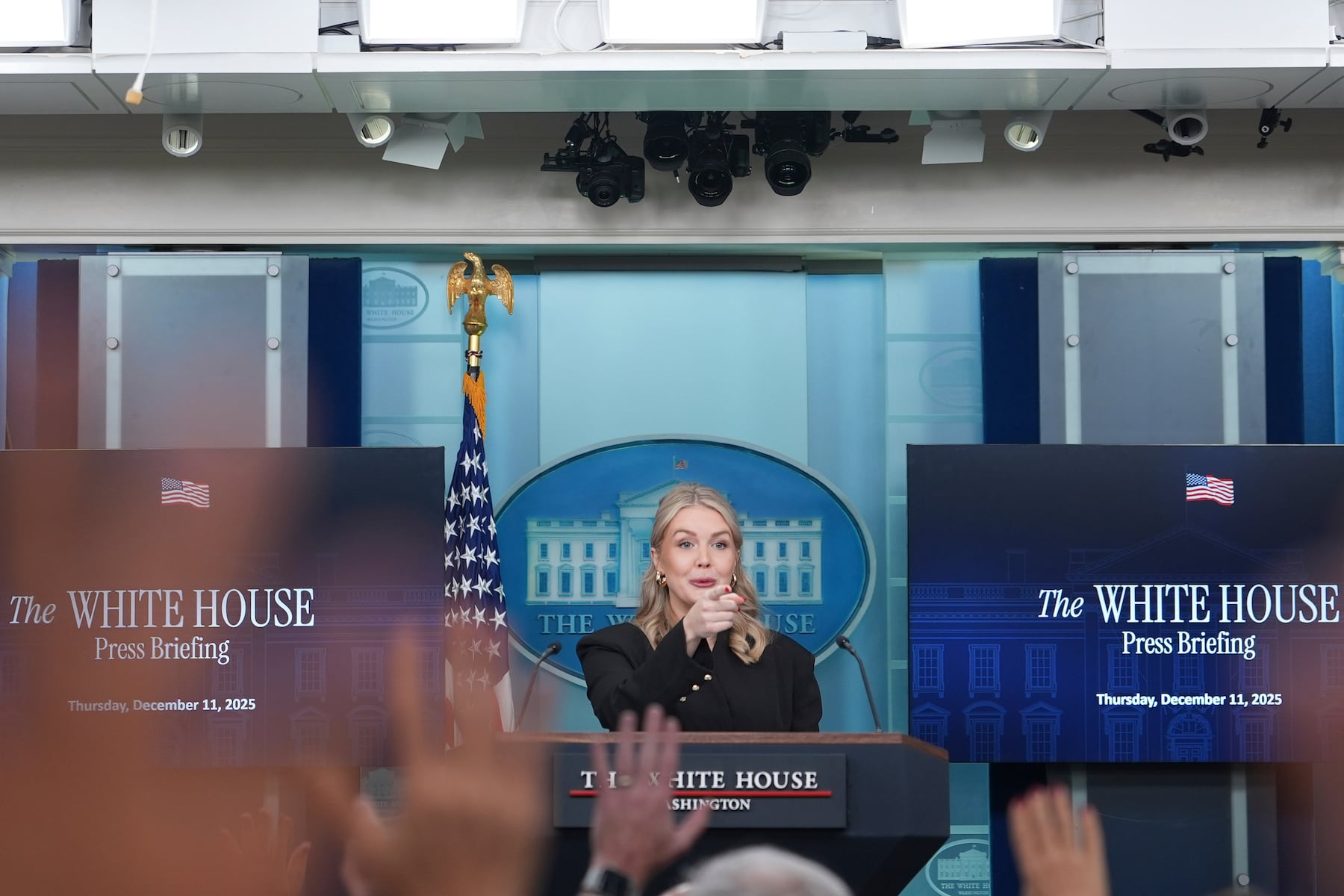
During a press briefing on December 11, 2025, White House Press Secretary Karoline Leavitt proclaimed positive news regarding the U.S. economy. She stated that inflation, as measured by the Consumer Price Index (CPI), had slowed to an average rate of 2.5%. Leavitt also claimed that real wages were increasing by approximately $1,200 for the average American worker.
The announcement quickly drew scrutiny, particularly when CNN political correspondent Kaitlan Collins attempted to probe deeper into the figures. Instead of addressing Collins’ question, Leavitt redirected the conversation, criticizing her predecessor, Jen Psaki, for purportedly spreading “utter lies” during her tenure. Leavitt asserted, “Everything I’m telling you is the truth backed by real, factual data,” accusing the media of pushing false narratives about the president.
However, the data Leavitt cited has come under fire for lacking clarity. For instance, the actual inflation rate recorded for September was 3%, contradicting her statement. Additionally, CNN’s business editor David Goldman noted that U.S. workers had experienced the lowest annual paycheck growth since May 2021, raising questions about the accuracy and context of Leavitt’s claims.
In reflecting on Leavitt’s assertions, historian Laura Beers draws parallels to George Orwell’s dystopian novel, “1984”. She highlights the way the Ministry of Plenty in Orwell’s narrative disseminated statistics that were disconnected from reality, a theme echoed during Leavitt’s briefing. Orwell wrote about a society where “the fabulous statistics continued to pour out of the telescreen,” emphasizing a disconnect between the government’s proclamations and the lived experiences of citizens.
The concept of “doublethink,” as described by Orwell, also seems to resonate with Leavitt’s rhetoric. In her defense of President Donald Trump, she claimed that he is the “most transparent president in history,” a statement that has sparked skepticism. Critics argue that this characterization represents a form of Orwellian doublespeak, where language is manipulated to convey the opposite of its true meaning.
Leavitt’s approach has drawn attention not only for its content but also for its implications regarding government transparency. She faced backlash for her defense of Trump’s handling of sensitive issues, such as the Jeffrey Epstein scandal, stating, “This administration has done more with respect to transparency when it comes to Jeffrey Epstein than any administration ever.” Such claims have been met with disbelief from media professionals, including David Smith of The Guardian, who described her statements as “fabulously audacious.”
The press secretary’s statements also stretch the truth in other contexts. Leavitt has made claims about a $32,000 grant from the now-dismantled U.S. Agency for International Development (USAID) for a “transgender comic book” in Peru, which has been disputed. Other inaccuracies include misrepresentations about tax policies and the origins of political slogans.
The pattern of misleading statements raises broader concerns about the current administration’s communication strategies. As Leavitt continues to navigate the complexities of her role, the implications of her words extend beyond mere press briefings. As the political landscape evolves, the relationship between truth and political language remains a critical area for scrutiny.
In conclusion, while all governments may occasionally stretch the truth, Leavitt’s style has drawn particular attention for its blend of factual assertion and questionable accuracy. As journalists and citizens alike scrutinize the information coming from the White House, the challenge remains to discern fact from fiction in an increasingly complex political environment.