The founder of Holiverse, Lado Okhotnikov, is advocating for a revolutionary approach to meet the soaring energy demands of artificial intelligence (AI). As the global reliance on AI expands, the energy requirements for training advanced AI models are reaching staggering levels, consuming more electricity than what 120 U.S. homes utilize in a year. Projections indicate that by 2030, the energy consumption of data centers could double, posing a significant challenge for our current power grids.
This energy crisis is not merely a concern for technologists; it represents a foundational challenge for the future of technology as a whole. Okhotnikov emphasizes the urgency of the situation, stating, “The problem is becoming especially urgent now, as AI is advancing rapidly and its energy demands are growing just as fast.” He believes the solution must be mindful of the existing industries and the lives of people, necessitating a shift in how energy is sourced.
Renewable Energy Limitations and Space Solutions
Currently, many experts point towards renewable energy as a viable solution. Okhotnikov acknowledges progress in this area, noting that “renewable energy collected on Earth is no longer a fantasy.” Countries worldwide are transitioning to wind, solar, and geothermal energy sources. However, these methods come with geographical and temporal limitations, such as weather variability and the inherent unavailability of sunlight during the night. While these renewable sources are crucial, they may not suffice for a future dependent on a robust, continuous AI ecosystem.
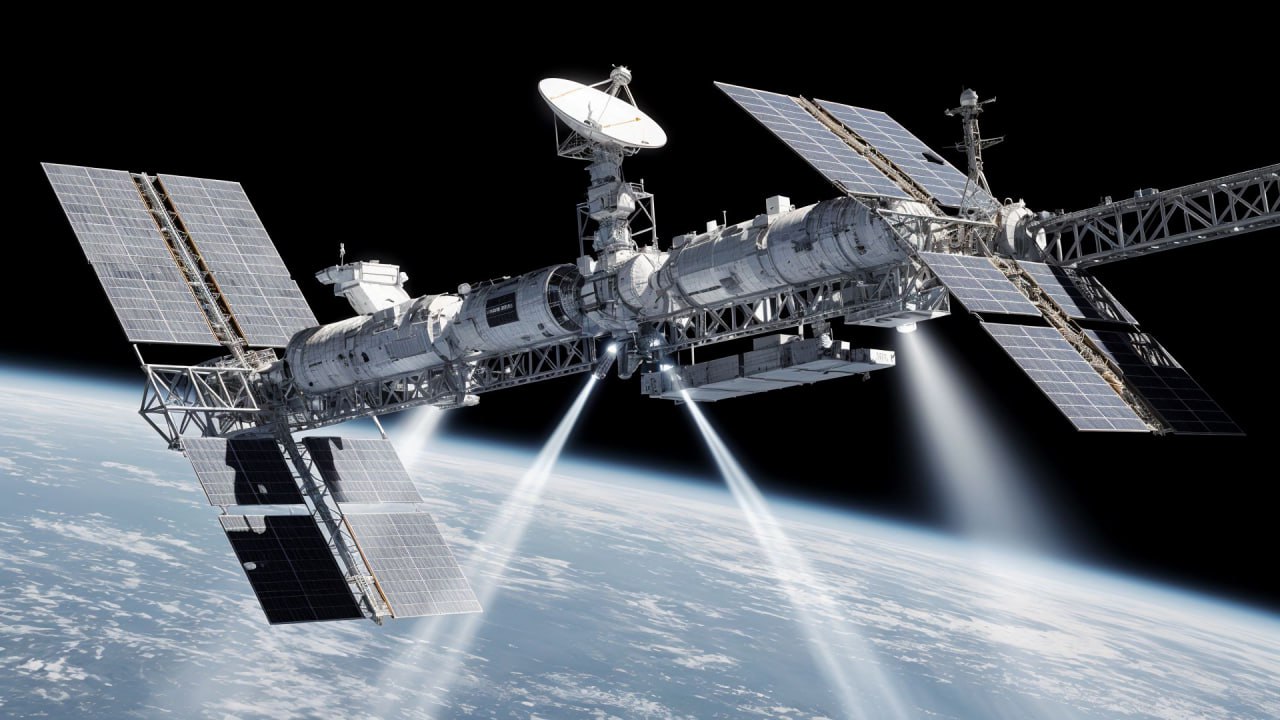
The pressing question is: what comes next? For Okhotnikov and a growing number of experts, the answer lies beyond our planet. He asserts, “Very soon, we will have to look to space—because the future, without question, belongs there.” This perspective brings forth the concept of Space-Based Solar Power (SBSP), which envisions large solar arrays positioned in geostationary orbit, continuously exposed to sunlight. These arrays could collect solar energy and transmit it wirelessly to Earth, creating a stable, carbon-free power supply accessible from any location.
This concept is not merely theoretical. Organizations such as the European Space Agency and NASA are actively conducting feasibility studies to explore the potential of SBSP. A 2025 analysis projected that such systems could provide a stable energy backbone that intermittent renewable sources cannot match. Okhotnikov highlights the significant potential of space-based energy, asserting, “The solar power we can collect here on Earth is only a tiny fraction of what is available in space.”
Holiverse’s Role in the Transition
Holiverse is strategically positioning itself at the forefront of this transition by exploring designs and partnerships that integrate space-generated energy with the future infrastructure needed for AI. Okhotnikov notes, “We are developing technologies capable of powering the next era of AI.” This endeavor involves collaboration with some of the brightest minds in the field.
The challenges to implementing SBSP are substantial, including international governance, the complexity of orbital construction, efficiency in energy transmission, and the costs associated with launching infrastructure into space. However, advancements in materials science and the development of reusable rockets suggest that these obstacles are engineering and diplomatic issues that can be resolved.
The implications of successfully harnessing solar power from space are profound. If AI is liberated from the constraints of terrestrial energy limitations, the potential for research and innovation would expand significantly. A sustainable energy network could facilitate the computational needs of material science, personalized medicine, and climate prediction, transforming energy from a limiting factor into a catalyst for progress.
As Holiverse and other innovators pursue this ambitious path, it becomes evident that the next significant leap in AI may well depend on our ability to harness energy from the sun above us. By shifting focus to space-based power solutions, we may unlock the true potential of artificial intelligence, ensuring its growth aligns with sustainable practices that benefit humanity as a whole.