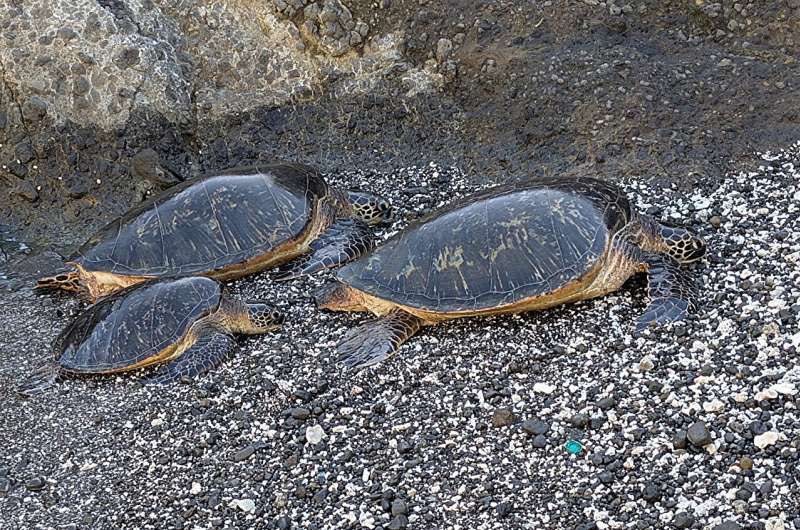
Research conducted by scientists from Rissho University has uncovered significant evidence of cross-regional plastic pollution impacting green sea turtles in the waters surrounding the Ogasawara Islands, Japan. The study, published in the journal PeerJ on January 11, 2026, indicates that plastics were found in the digestive systems of seven out of ten turtles analyzed, highlighting the broader implications of marine pollution.
The research team utilized a combination of genetic, isotopic, and plastic analyses to trace the origin of the ingested plastics. They discovered that these materials came from regions beyond the turtles’ migratory routes, pointing to the influence of transboundary marine pollution. This finding emphasizes the need for international cooperation in addressing plastic waste management.
Impact of Plastics on Marine Life
Marine plastic pollution has emerged as a critical environmental challenge, affecting various marine species, including fish, whales, and zooplankton. Among these, sea turtles are particularly vulnerable. These creatures often ingest plastics through two primary pathways: by mistaking them for natural food items, such as algae, or through selective feeding on jellyfish-like organisms.
Despite previous research highlighting the issue, detailed insight into the green turtle’s diet and its relationship with plastic ingestion has been scarce. This study provides a clearer picture of the feeding habits of these turtles, furthering understanding of their ecological interactions.
Insights from the Research
The study revealed that the primary food source for the turtles at the time of capture was macroalgae. Genetic analysis traced their feeding grounds to three specific areas where key seaweed species, including Ectocarpus crouaniorum, Sargassum muticum, and Lobophora sp., are abundant. The stable isotope ratios of carbon and nitrogen in muscle tissue indicated that these turtles likely consumed drifting seaweed and gelatinous plankton during their migration toward the Ogasawara Islands.
Overall, the researchers detected an average of 9.2±8.5 plastic items in the digestive tracts of the turtles, with a range of 0–31 items per individual. Notably, a significant portion—56.5%—of the identified plastics were macroplastics, measuring between 10 cm² and 1 m². While most plastics found in marine organisms are typically microplastics, this study indicates that larger plastics, including mesoplastics and macroplastics, are also ingested, posing severe risks to both the turtles and their ecosystems.
The analysis of the printed characters on the ingested plastics suggested their origins were from regions extending beyond the turtles’ migratory range, underscoring the transboundary nature of marine pollution.
“This study demonstrates that plastic pollution is a transboundary issue,” stated Prof. Lee, one of the lead researchers. “Efforts to reduce plastic pollution—including reduction in the production, use, and disposal of plastic products—must be pursued through international cooperation, alongside continued research.”
The findings of this research not only contribute to the knowledge of green turtle ecology but also serve as a call to action for global initiatives aimed at mitigating marine plastic pollution. Enhanced collaboration between nations will be essential to protect marine life and maintain healthy ocean ecosystems.