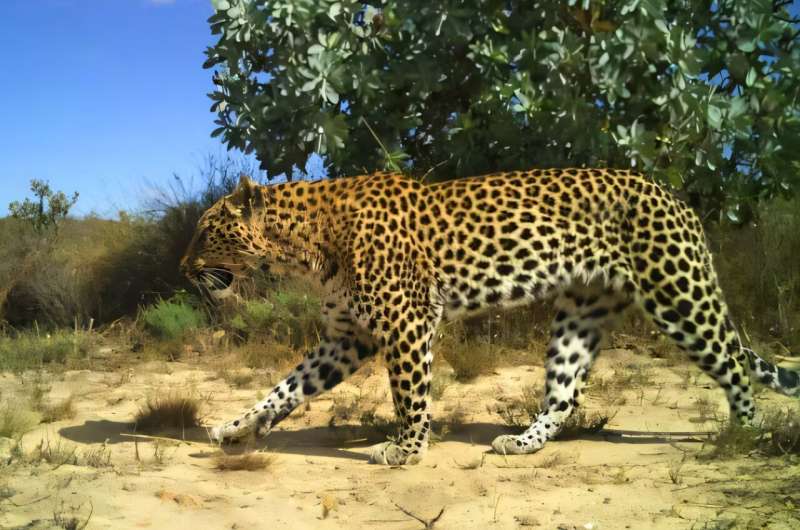
A recent study has revealed that leopards in South Africa’s Cape Floristic Region are genetically unique, having adapted to their environment over approximately 20,000 years. This isolated population, comprising fewer than 1,000 individuals, is significantly smaller than leopards found elsewhere in Africa, raising important questions about their evolutionary history and future conservation.
Researchers, including conservationists from the Cape Leopard Trust, utilized whole-genome sequencing to explore the genetic makeup of these leopards. Unlike previous studies that focused on limited genetic markers, this comprehensive analysis enabled scientists to examine the entire genome, consisting of 2.57 billion base pairs. Comparisons with genomes from other African leopards confirmed that Cape leopards have diverged genetically due to prolonged isolation and environmental adaptation.
The Cape Floristic Region, known for its rich biodiversity, presents unique challenges for leopards. They primarily prey on smaller animals, such as rock hyrax, klipspringer, and Cape grysbok. This specialized diet and the distinct ecological conditions have contributed to their smaller size and specific genetic traits, making them an important focus for conservation efforts.
Understanding Isolation and Adaptation
The study traced the divergence of Cape leopards back to the Last Glacial Maximum, around 20,000–24,000 years ago. During this period, climatic changes led to cooler and drier conditions, restricting the movement of animal populations. Consequently, these leopards became isolated from their counterparts to the east, resulting in unique adaptations that reflect their specific habitat.
Despite fears that the small population size might lead to genetic depletion, the research found that Cape leopards possess only slightly lower genetic diversity compared to other African populations. This is a promising indication that they can continue to adapt to emerging threats, such as climate change and habitat encroachment.
Implications for Conservation
The findings emphasize the need for targeted conservation strategies to protect this genetically distinct group. Recognized as an evolutionarily significant unit, Cape leopards represent a unique branch of the species’ evolutionary tree, necessitating specific measures to ensure their survival.
The challenges are considerable. As human populations expand into leopard habitats, conflicts arise, often leading to persecution of these animals. To safeguard the future of Cape leopards, conservationists advocate for the creation of connected habitats that allow for safe movement across landscapes. Addressing threats like poaching and road mortality is also essential.
By conserving the Cape leopard population, researchers aim not only to protect an iconic predator but also to preserve an evolutionary legacy shaped by millennia of adaptation in one of the planet’s most distinctive environments. The research, published in the journal Heredity, underscores the critical importance of understanding and preserving the genetic diversity of wildlife populations in the face of rapid environmental change.