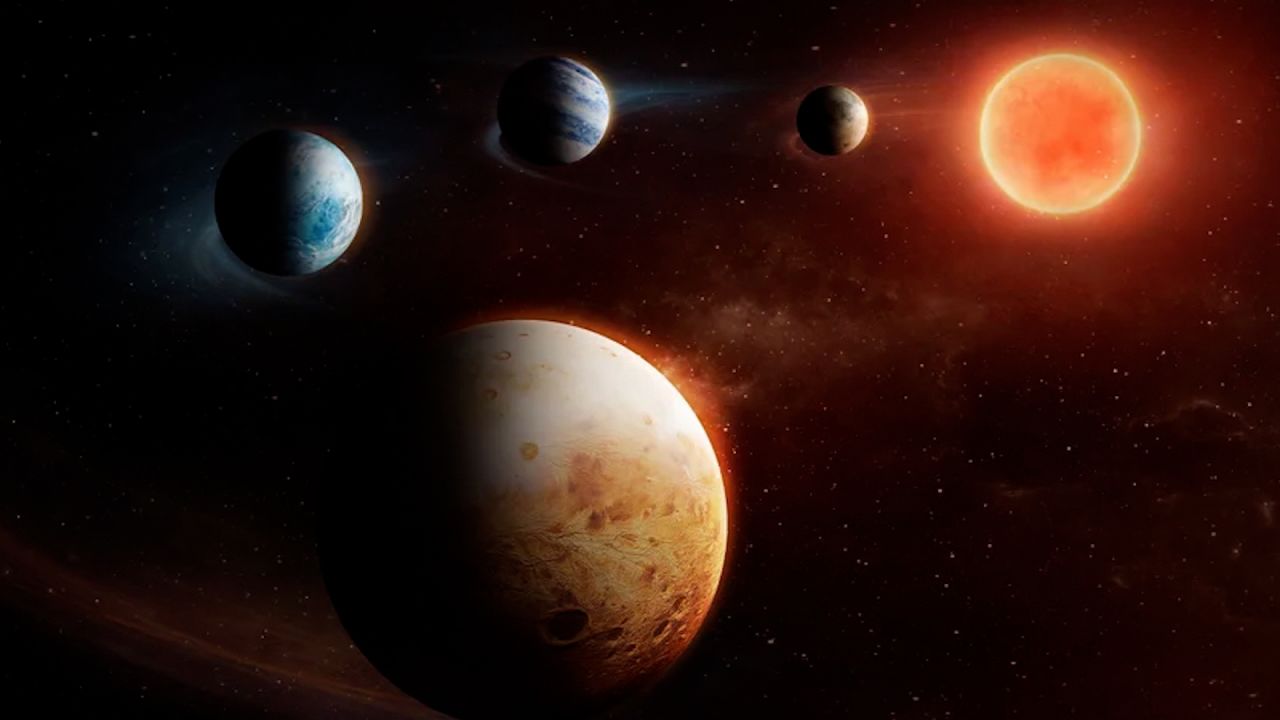
A newly discovered planetary system, described as “inside-out,” has left astronomers baffled due to its unexpected arrangement of planets. This unique system, which features gas giants located closer to their host star than rocky planets, challenges existing models of planetary formation.
The findings emerged from observations made using the Kepler Space Telescope, which has been instrumental in identifying exoplanets since its launch in 2009. Researchers from the University of California, Berkeley, published their study in a recent issue of the Astronomical Journal, detailing the peculiarities of this solar system, located approximately 300 light-years away in the constellation Centaurus.
Unusual Planetary Configurations
Typically, planetary systems form with rocky planets, such as Earth, situated closer to the star, while gas giants like Jupiter reside further out. This is a pattern seen across numerous systems observed to date. However, this newly identified system flips that expectation on its head. The gas giants are situated within a distance of 0.5 astronomical units from their star, while the smaller, rocky planets are located at greater distances.
According to the researchers, this reversal raises significant questions about the processes that govern planetary formation and migration. Dr. Alex Williams, an astronomer involved in the study, stated, “Our understanding of how planets form and evolve is predicated on observations from other systems. This discovery suggests there might be more variety in planetary systems than we previously thought.”
The implications extend beyond mere academic curiosity. Understanding the formation of such systems could provide insights into the potential for life on other planets. If gas giants can form close to stars, they may influence the atmospheres and conditions of nearby rocky planets, making them more or less hospitable.
Future Research Directions
This anomaly has prompted astronomers to re-evaluate existing theories and explore further. The data collected from this system will be combined with future observations from missions like NASA’s James Webb Space Telescope, which is expected to provide deeper insights into exoplanet atmospheres and compositions.
The discovery of this unusual system also underscores the necessity for continued exploration of the cosmos. As new technologies and methodologies emerge, astronomers anticipate uncovering even more unexpected phenomena that could reshape our understanding of planetary systems.
In a rapidly evolving field, this “inside-out” system serves as a reminder of the complexities and surprises inherent in the universe. With ongoing research, scientists remain hopeful that further exploration will illuminate the mechanisms behind these perplexing arrangements.
As the study of exoplanets advances, the astronomical community eagerly awaits the next revelation that could redefine our comprehension of planetary formation and the potential for life beyond Earth.