Engineers at the U.S. Department of Energy’s Argonne National Laboratory are conducting vital research on how insider actions could compromise the safety of next-generation nuclear reactors. Their work focuses on understanding potential vulnerabilities in passive safety systems, which are designed to operate without active intervention. With the rise of advanced reactor designs, including small modular reactors, ensuring the integrity of these systems has become more crucial than ever.
Darius Lisowski, the group manager of reactor safety testing and analysis at Argonne, emphasized the importance of this research. “We want to know what would cause these systems to not work. In this project, we’re focusing on individuals with authorized access and knowledge of the internal mechanisms. What could they do to make things break?”
The research initiative acknowledges insider sabotage as a tangible risk rather than a mere hypothetical concern. Argonne researchers are utilizing large-scale experimental facilities to simulate real-world scenarios.
Stress Testing Passive Safety Systems
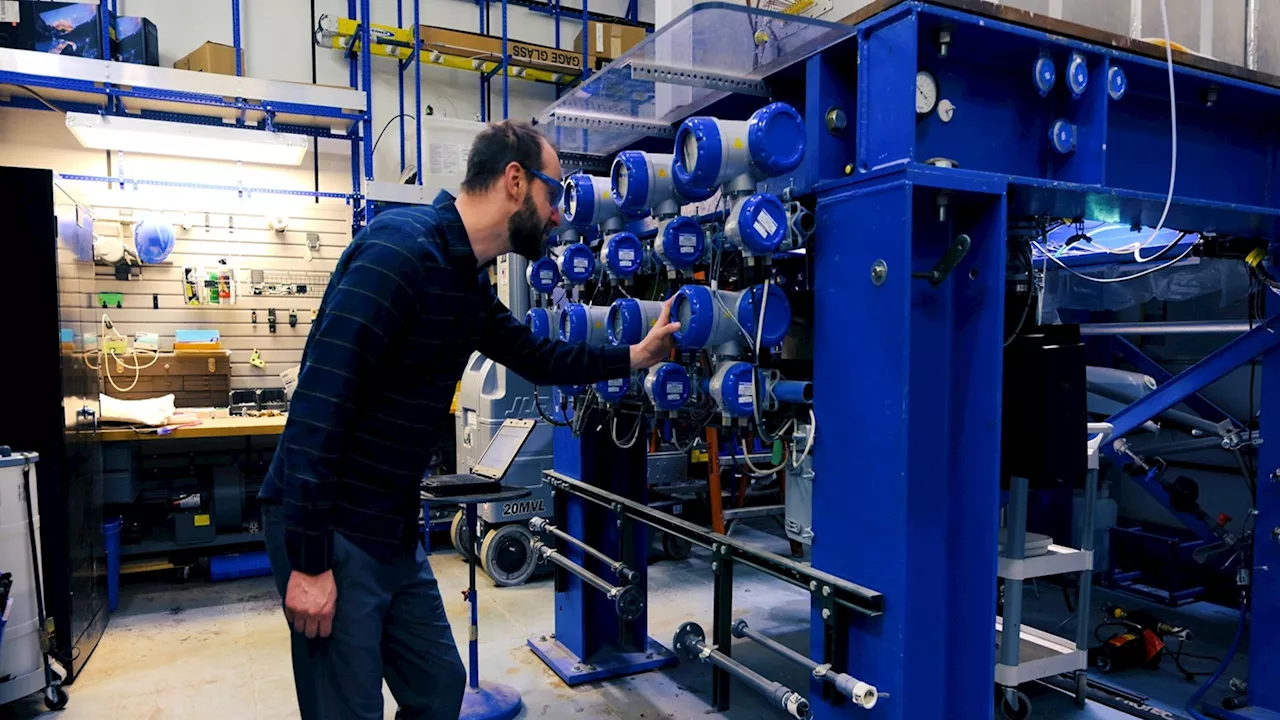
At the heart of this investigation is Argonne’s Natural Convection Shutdown Heat Removal Test Facility. This facility enables engineers to replicate how heat is managed within reactor systems when traditional cooling methods are unavailable. By examining scenarios such as leaving access hatches open or intentionally obstructing cooling pathways, the team aims to identify and mitigate insider sabotage risks.
The project, launched more than two years ago, involves collaboration with several esteemed organizations, including Sandia National Laboratories, Oak Ridge National Laboratory, and Idaho National Laboratory. Researchers began by identifying plausible sabotage scenarios and subsequently evaluated the potential impact of these actions. Their findings culminated in a comprehensive report titled “Identifying Sabotage Risks and Adversarial Threats to Passive Decay Heat Removal Systems in Advanced Nuclear Reactors,” prepared for the International Atomic Energy Agency.
While the study confirms that nuclear plants incorporate multiple layers of protection—such as controlled access, alarms, redundancy, and conservative design—it also highlights certain vulnerabilities that require proactive attention. Addressing these weaknesses during the design phase is essential to enhancing safety.
Designing Resilience into Future Reactors
To test these vulnerabilities, Argonne researchers deliberately recreated the most credible insider threat scenarios within the test facility. They simulated conditions by blocking cooling paths and leaving components unsecured, measuring how the systems responded under stress.
“Our research is relevant and applicable to every U.S. nuclear vendor out there,” said Matthew Bucknor, Argonne’s international nuclear security lead. The experiments do not target specific reactor designs but instead focus on common features shared across many advanced reactor concepts.
Identifying risks early allows for the prevention of minor oversights from escalating into significant issues later on. Lisowski remarked, “By using redundancy, focusing on the most severe threats, and meeting strict design tests, we can ensure passive safety features are robust. Design improvements will occur early, before the next generation of reactors becomes operational.”
The initiative is supported by funding from the National Nuclear Security Administration and has received backing for ongoing research. As global reliance on nuclear energy increases—driven by rising electricity demands from artificial intelligence, data centers, and electrification—the researchers argue that safety and security measures must evolve in tandem with technological advancements in reactor design.
This proactive approach not only enhances the safety of future nuclear operations but also reinforces the commitment to responsible and secure energy production.