Research conducted by Dr. Matías Medina and colleagues has revealed significant insights into the organized craft production of bone arrow points among prehistoric communities in the Sierras de Córdoba, Argentina. Published in the International Journal of Osteoarchaeology, this study addresses a longstanding gap in understanding the manufacturing techniques and social dynamics of these ancient societies.
Unveiling Ancient Craftsmanship
For decades, knowledge regarding the diverse bone raw materials used by the Late Prehispanic Period communities (approximately 1220 to 330 cal BP) in the region remained limited. Previous archaeological studies primarily focused on broad economic practices, such as hunting, gathering, and farming, rather than delving into the intricacies of tool production.
These communities practiced a flexible mixed economy that allowed them to adapt their subsistence strategies according to seasonal changes. Although bone tools were essential to their material culture, they were often overlooked in archaeological research. Dr. Medina noted, “Publications dealing specifically with bone technology were, for decades, scarce, especially in South America.” Most existing literature provided only basic descriptions of bone assemblages, lacking in-depth analyses.
To fill this void, Dr. Medina and his team examined 117 bone artifacts collected from the Museo Arqueológico Numba Charava. These artifacts were gathered non-systematically throughout the 20th century from various locations in the southern Punilla Valley, resulting in limited provenance for many pieces.
Insights into Production Techniques
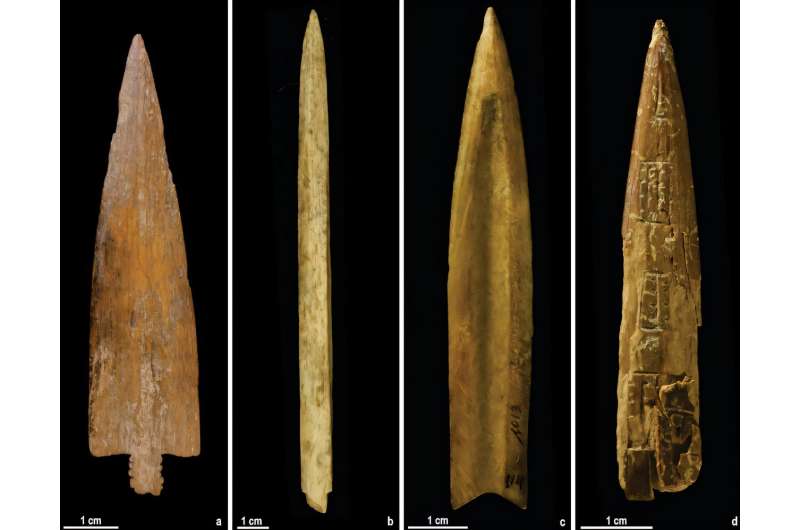
The research identified that the primary raw material for crafting these arrow points was likely obtained from the guanaco, a species of llama. The bones of these animals were repurposed into tools after being hunted for food. The team found that metapodia, the long bones of the limbs, were predominantly used in the arrow-point manufacturing process.
Process steps included splitting the bones lengthwise to create workable blanks, which were then flattened using grinding techniques on abrasive stones. These blanks were further refined through scraping and whittling until they resembled arrowheads. Some points featured decorative elements, although these were rare. Dr. Medina explained that “only three bone arrow points with incised decoration on the blade were reported” in existing archaeological literature. The decorations primarily consisted of lines and triangles reminiscent of designs found on other artifacts in central Argentina.
The findings suggest that these arrow points were likely used more for warfare than hunting, with the decorative aspects serving as expressions of social identity. This use of stylistic features on weaponry could have reinforced cultural affiliations among users, especially during conflicts.
Understanding the production of bone arrow points provides important context regarding the social structures of the time. The study suggests that the production was not only standardized but also likely transmitted through familial lines, indicating that the nuclear family played a key role in tool-making and food production practices.
Dr. Medina emphasized the need for comparative studies with neighboring regions, particularly areas near the Sierras de Córdoba, such as the Low Paraná and Uruguay River floodplains. These regions, located over 500 km away, developed their unique bone technologies, which adapted to different ecological conditions and material availability.
By exploring the implications of various technological alternatives, researchers aim to identify critical areas for future research and better understand how prehistoric communities organized their craft production.
This comprehensive analysis sheds light on the sophisticated social and economic structures of ancient communities in Argentina, transforming our understanding of their daily lives and cultural practices.
As the study indicates, the manufacturing of bone arrow points in the Late Prehispanic Period was a complex and significant endeavor, reflecting the rich heritage of these early societies.