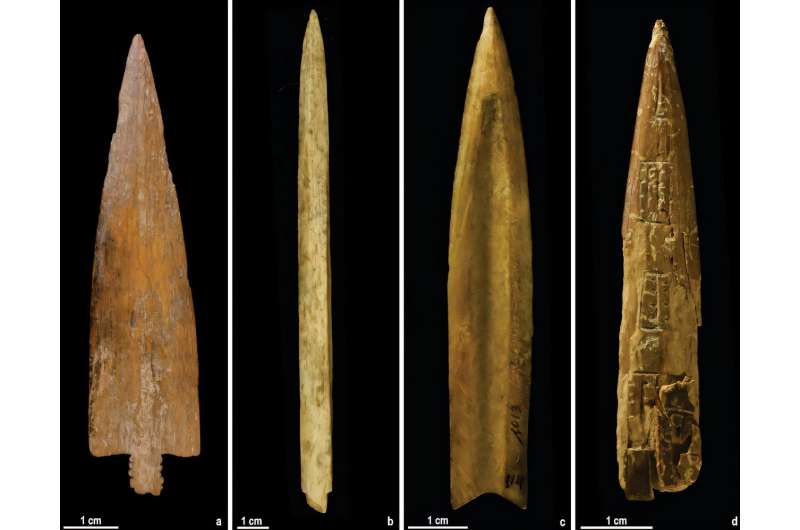
Recent research has uncovered significant insights into prehistoric life in Argentina’s Sierras de Córdoba, revealing organized craft production among communities during the Late Prehispanic Period, approximately 1220 to 330 cal BP. A study led by Dr. Matías Medina and his colleagues, Sebastián Pastor and Gisela Sario, published in the International Journal of Osteoarchaeology, focuses on the technological analysis of bone arrow points, illuminating previous gaps in understanding the social and economic structures of these ancient populations.
Understanding the Craft Production of Bone Tools
The Late Prehistoric Period in this region was marked by communities that practiced flexible mixed economies, integrating hunting, gathering, and farming. This adaptability allowed them to maintain mobility while residing in seasonal camps. Despite their resourcefulness, the archaeological evidence, particularly concerning bone tools, has remained underexplored until recently. Dr. Medina emphasized that publications on bone technology were scarce in South America, limiting understanding of these ancient practices.
The current study addresses this knowledge gap by examining 117 bone artifacts collected from the Museo Arqueológico Numba Charava. These items were gathered non-systematically throughout the 20th century from various sites in the southern Punilla Valley, resulting in many pieces lacking precise provenance. The primary raw material identified was bone from the guanaco, a species hunted for food. Other animal bones, such as those from the pampas deer, were less common.
Insights Into Manufacturing Techniques
The analysis revealed that arrow points were primarily crafted from metapodial bones, which were split lengthwise and ground down on abrasive stones. This process allowed artisans to create workable blanks, which were then shaped into arrowheads through further scraping and whittling. Decorative elements were rarely incorporated, with only three decorated points identified in archaeological literature, featuring incised lines and triangles similar to other artifacts from central Argentina. Dr. Medina proposed that these decorative attributes might reflect social identity and cultural affiliation, suggesting that the arrow points were more likely used in warfare than for hunting.
The implications of this study extend beyond local practices. It indicates that arrowheads were produced uniquely within families, reinforcing the notion that the nuclear family was the primary social unit for both food and tool production during this period. The time-intensive yet standardized production methods suggest a tradition passed down through generations.
Dr. Medina called for comparisons with neighboring regions, such as the Low Paraná and Uruguay River floodplains, which are over 500 kilometers away. He noted that these areas developed complex bone technology due to the scarcity of stone resources, using specific skeletal parts and manufacturing techniques that likely differed from those observed in the Sierras de Córdoba.
The findings not only enhance understanding of the social and economic frameworks of these ancient communities but also provide a foundation for future research into the technological alternatives available to prehistoric populations in varying environments.
This article, written by Sandee Oster, edited by Sadie Harley, and reviewed by Robert Egan, highlights the importance of independent science journalism in uncovering and disseminating critical findings in the field of archaeology.