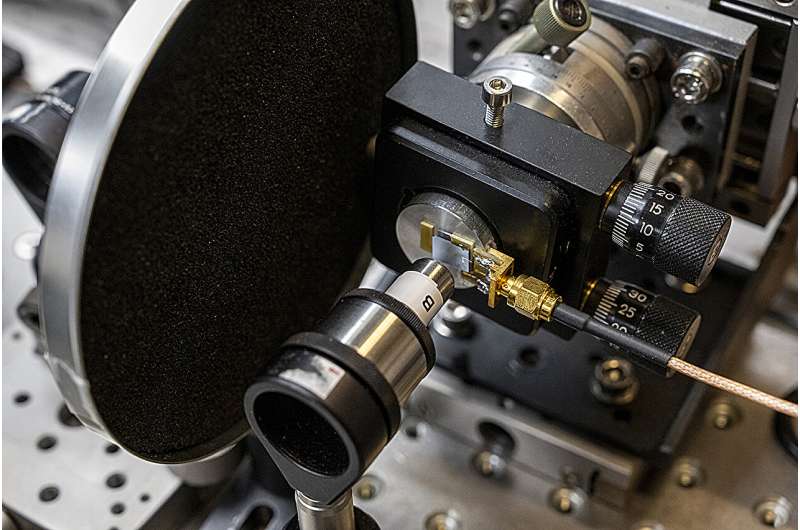
Researchers at Tohoku University and Fujitsu Limited have made a significant advancement in the field of superconductivity by utilizing artificial intelligence (AI) to analyze a newly discovered superconducting material. This breakthrough promises to enhance our understanding of superconductivity and potentially lead to more efficient energy applications.
The collaboration between the university and the tech giant represents a pivotal moment in materials science. By employing AI algorithms, the team was able to derive insights into the mechanisms that enable superconductivity in this novel material. The research findings could pave the way for the development of technologies that rely on superconductors, such as magnetic levitation and lossless power transmission.
The material in question was tested in a laboratory setting in Japan, where researchers observed its properties under various conditions. The use of AI not only expedited the analysis process but also uncovered patterns that traditional methods might have overlooked. This innovative approach highlights the growing trend of integrating AI into scientific research, especially in complex fields like materials science.
Implications for Future Technologies
The implications of this discovery are vast. Superconductors are known for their ability to conduct electricity without resistance, which makes them invaluable for a range of applications, from medical imaging devices to advanced transportation systems. The potential to create more efficient superconducting materials could lead to substantial energy savings and technological advancements.
According to the researchers, the findings could also contribute to the quest for room-temperature superconductors, a long-sought goal in the scientific community. Achieving superconductivity at higher temperatures would revolutionize many industries and make the use of superconductors more feasible in everyday applications.
The study, published in a leading scientific journal in 2023, emphasizes the importance of interdisciplinary collaboration. By combining expertise from both academia and industry, the team was able to leverage AI’s capabilities to enhance their research outcomes. This model of collaboration could serve as a blueprint for future scientific inquiries, particularly in fields that require rapid analysis and innovation.
As the research community continues to explore the capabilities of AI in various domains, the success at Tohoku University and Fujitsu Limited stands as a testament to the potential of technology in driving scientific progress. The discovery not only opens new avenues for research but also sets the stage for transformative applications that could impact society in meaningful ways.
In conclusion, the intersection of AI and materials science is proving to be a fertile ground for breakthroughs. The insights gained from this study may lead to a new generation of superconducting materials, underscoring the importance of continued investment in both research and technological innovation.