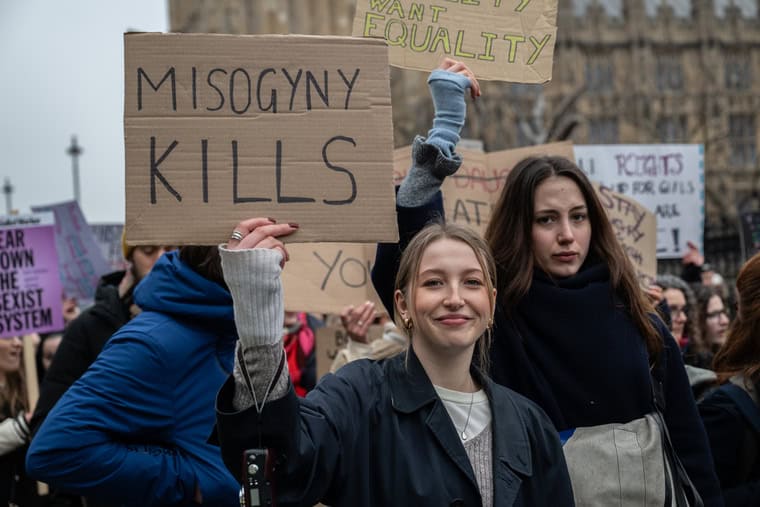
An article by Caroline Downey in The Telegraph has sparked discussion by framing the anger of young women in political contexts as “toxic empathy.” The piece suggests that women’s political dissent is rooted in psychological issues rather than legitimate political arguments. This portrayal has drawn criticism for its gendered delegitimization of women’s voices in political discourse.
Downey’s column, titled “Angry young women are the vanguard of the Left’s toxic empathy,” reflects a broader tendency in conservative media to pathologize women’s political engagement. The article asserts that traits such as care and empathy, which are essential in social contexts, are viewed as threats when expressed in political spheres. Downey states, “Left-wing women—and, yes, it does often seem to be women—have been marshalling their rage,” implying that women’s anger is excessive and irrational.
Such characterizations stand in stark contrast to how men’s protests are often perceived. While men are frequently described as “principled” in their dissent, women face labels like “unhinged” or “irrational.” Downey’s analysis suggests that women’s political disagreement is a sign of psychological malfunction, reinforcing a double standard in how gender shapes perceptions of dissent.
The article critiques the expectation for women to engage in emotional labor in private while being dismissed for similar expressions in public. This creates a challenging dynamic where empathy is encouraged at home but seen as subversive when mobilized for political purposes. Downey also suggests that the internet has exploited women’s need for validation, reducing political action to mere performance.
Another significant aspect of Downey’s argument is her focus on mothers participating in protests. She positions these mothers as irresponsible, overlooking the rich historical involvement of children in movements for civil rights, anti-war activism, and labor rights. This narrative serves to undermine women’s agency and reinforce traditional gender roles.
Additionally, Downey’s claims that young women lack the “emotional anchors” of family and marriage reflect a nostalgic viewpoint rather than an analytical one. The suggestion that political disagreement equates to mental health issues further weaponizes the struggles many women face, framing their dissent as a pathological condition rather than a legitimate political stance.
Downey concludes with a rhetorical question about happiness, implying that dissent leads to unhappiness and compliance results in fulfillment. This framing invites women to conform to societal expectations and suppress their political expressions.
The critique of Downey’s article highlights a pervasive issue in media narratives around women’s anger and political participation. Many women assert that their compassion and activism are not irrational but rather a collective response to systemic injustices. The representation of women’s anger as a social threat may serve to maintain the status quo, discouraging meaningful engagement in political discourse.
The discussion surrounding this article underscores the need for a more nuanced understanding of women’s roles in political movements. Recognizing the complexities of women’s experiences and their contributions to social justice can help foster a more inclusive political environment.