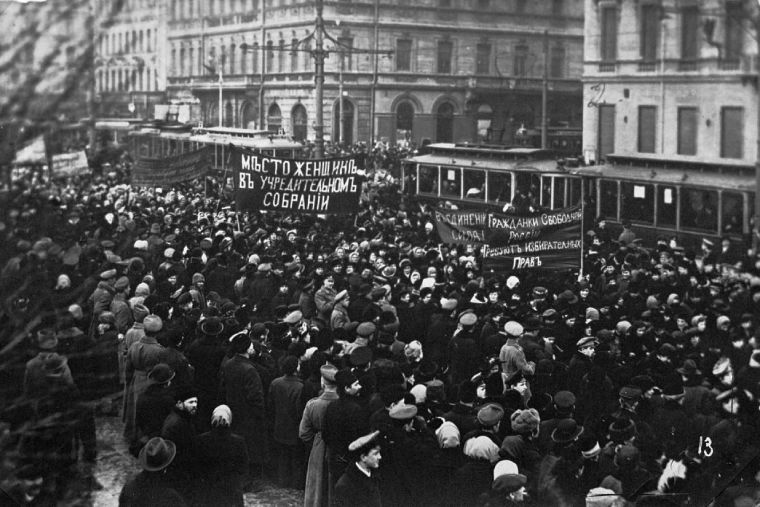
The dynamics of worker solidarity and class consciousness have been pivotal in historical revolutions, notably during the Russian Revolution of 1917. This event highlighted how a collective identity among workers can emerge, leading to significant societal changes. As the landscape of labor evolves, understanding the motivations and beliefs of workers is essential in analyzing contemporary movements for social change.
The Concept of Class Consciousness
The term “working class” traditionally refers to individuals who rely on selling their labor to survive. This definition, established by influential thinkers like Karl Marx, presents a dichotomy between a class “in itself” and a class “for itself.” While all individuals engaged in labor are objectively part of the working class, their awareness and collective organization are crucial for fostering a class “for itself,” which is characterized by a shared identity and common interests.
In the current climate, many workers grapple with their perceptions of class identity. While some may recognize their exploitation, others might not identify as working class due to prevailing ideologies that emphasize individualism and competition. This dissonance complicates the push for revolutionary change. According to Chris Harman, the ideas prevalent in society often reflect the interests of the ruling class, shaping how individuals understand their roles within a broader social context.
Historical Lessons from the Russian Revolution
The Russian Revolution serves as a profound example of how collective action can transform societal structures. In the early 20th century, Russia was marked by stark social inequalities. By 1913, the nation was celebrating the 300th anniversary of the Romanov dynasty, while underlying class tensions simmered beneath the surface. Tsar Nicholas II and his family may have appeared secure in their positions, yet widespread discontent among workers foreshadowed the upheaval to come.
As World War I ravaged the country, the dire circumstances prompted mass strikes led by women textile workers in early 1917. These protests expanded rapidly, engaging half of St. Petersburg’s 400,000 factory workers in demands for an end to the war and the autocratic rule of the Tsar. The revolution reached a tipping point by October 1917, when workers’ councils, known as soviets, began to form, allowing workers to take democratic control over their lives.
The Bolsheviks capitalized on this burgeoning class consciousness, ultimately leading to a second revolution that dismantled the provisional government established earlier that year. The impact of these events was far-reaching, reshaping societal norms and expectations. The revolution brought about significant advancements for women, including access to education, voting rights, and reproductive rights, as illustrated in the works of revolutionary Alexandra Kollontai.
Contemporary Movements and the Path Forward
Today, while the conditions may differ, the potential for similar shifts persists. In places like Minnesota, public dissent against narratives that scapegoat immigrants for crime is gaining momentum. This grassroots movement reflects a growing recognition of the falsehoods perpetuated by those in power, and it echoes the revolutionary fervor seen in earlier historical contexts.
The interplay between lived experiences and dominant societal narratives can catalyze profound changes in public consciousness. Revolutionary strategies must focus on creating opportunities for workers to recognize their shared interests and mobilize collectively.
While education remains a vital tool for countering misinformation and fostering dialogue, it must be coupled with efforts to engage workers in meaningful action. Historical precedents suggest that revolutionary change often emerges not from isolated arguments but from collective experiences that challenge the status quo.
As workers today navigate complex social and economic landscapes, their engagement in activism can gradually reshape their understanding of class identity. This evolution may not require a full-scale revolution but rather a sustained effort to cultivate solidarity and shared purpose among diverse groups.
In conclusion, the journey toward a revolutionary consciousness among workers is ongoing. By learning from past struggles and recognizing the interplay of ideas and experiences, advocates for social change can inspire a new wave of collective action that transcends individual beliefs and fosters a unified working-class identity.