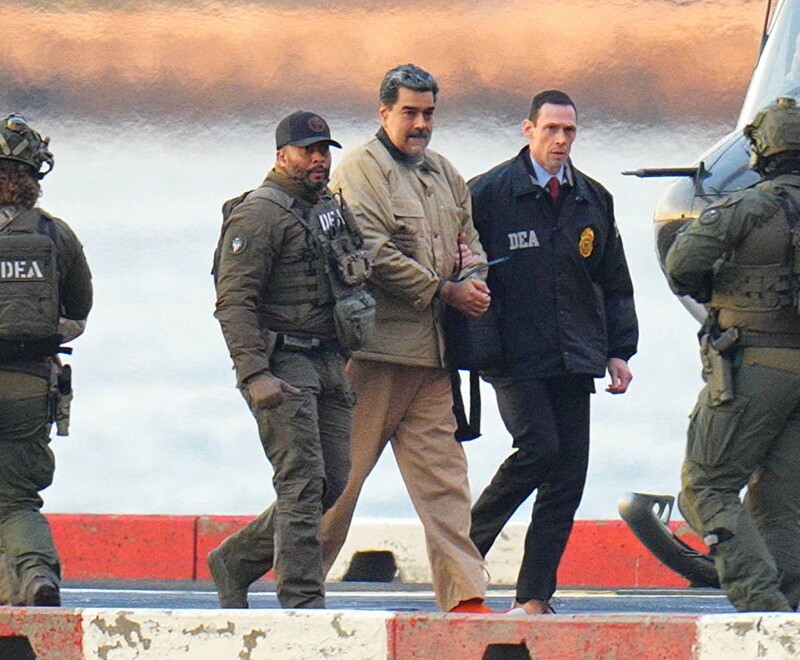
The recent actions of the U.S. administration, including military operations near the shores of Venezuela and the seizure of oil tankers, indicate a significant escalation in efforts to remove President Nicolás Maduro. While some officials in Washington may view these actions as a triumph, experts caution that they could lead to long-term consequences detrimental to both U.S. and Venezuelan interests, as well as the welfare of their citizens.
This shift in foreign policy is reminiscent of past interventions, particularly the U.S. involvement in Iraq. Despite assurances from then-President Donald Trump that the transition in Venezuela would be manageable, historical precedents raise questions about the sustainability of such military actions. The Iraq conflict was initially described as a potential “cake walk,” with costs estimated between $50 billion to $100 billion. Ultimately, the financial burden escalated to over $2 trillion, leading to a power vacuum that contributed to the rise of ISIS in 2014.
Despite these lessons, the current administration appears intent on pursuing further military engagement. There are concerns regarding Secretary of State Marco Rubio and President Trump’s ambitions that may extend beyond Venezuela, potentially involving Colombia or even Cuba. Critics argue that foreign policy should not be approached like a game, where one victory seamlessly leads to another. The complexities of real-world conflicts often defy simplistic strategies.
Historical Context and Consequences
The ramifications of military interventions extend beyond financial costs. The wars in Iraq and Afghanistan have resulted in over $8 trillion in taxpayer expenses and have led to significant loss of life, displacing countless individuals and leaving many veterans with lasting physical and psychological injuries. The Department of Veterans Affairs has faced budget cuts, affecting the support and care available to those who served.
Reflecting on the words of former President Dwight D. Eisenhower, who warned against the military-industrial complex, it becomes evident that each investment in military assets diverts resources from addressing fundamental human needs. In his 1953 speech, Eisenhower articulated, “Every gun that is made… signifies, in the final sense, a theft from those who hunger and are not fed.” His insights prompt a critical examination of the current priorities guiding U.S. foreign policy.
A Call for Change
The question now arises: what should the U.S. focus its efforts on to ensure safety and prosperity? Engaging in military conflicts in Latin America is unlikely to be beneficial. Instead, it could exacerbate issues that Eisenhower cautioned against over seventy years ago.
Eisenhower pointed out that true strength comes not from military might but from fostering a well-educated, healthy, and united population. The current trajectory of U.S. policies threatens to undermine these foundational elements of national security.
It is imperative for Congress and the public to advocate for a new approach to foreign policy that prioritizes diplomacy over military intervention. Engaging in constructive dialogue and supporting sustainable development in Latin America may offer a more stable and secure future for both the U.S. and its neighbors. Without a shift in strategy, the consequences of continued military action could leave lasting scars on both nations for generations to come.
As the debate continues, the voices of those advocating for a more responsible foreign policy must be amplified. The stakes are high, and the need for a thoughtful reassessment of U.S. actions in Venezuela and beyond has never been clearer.