On March 25, 2024, the Supreme Court ruled against former President Donald Trump in the case of Trump v. Illinois, effectively blocking his use of the National Guard for domestic law enforcement in Illinois. The Court’s decision is not a final ruling on the case’s merits, but it rejects Trump’s motion for a stay of a lower court ruling that previously found his actions unlawful. This preliminary decision indicates that the majority of justices are likely to view Trump’s actions as illegal if the case is fully heard in the future.
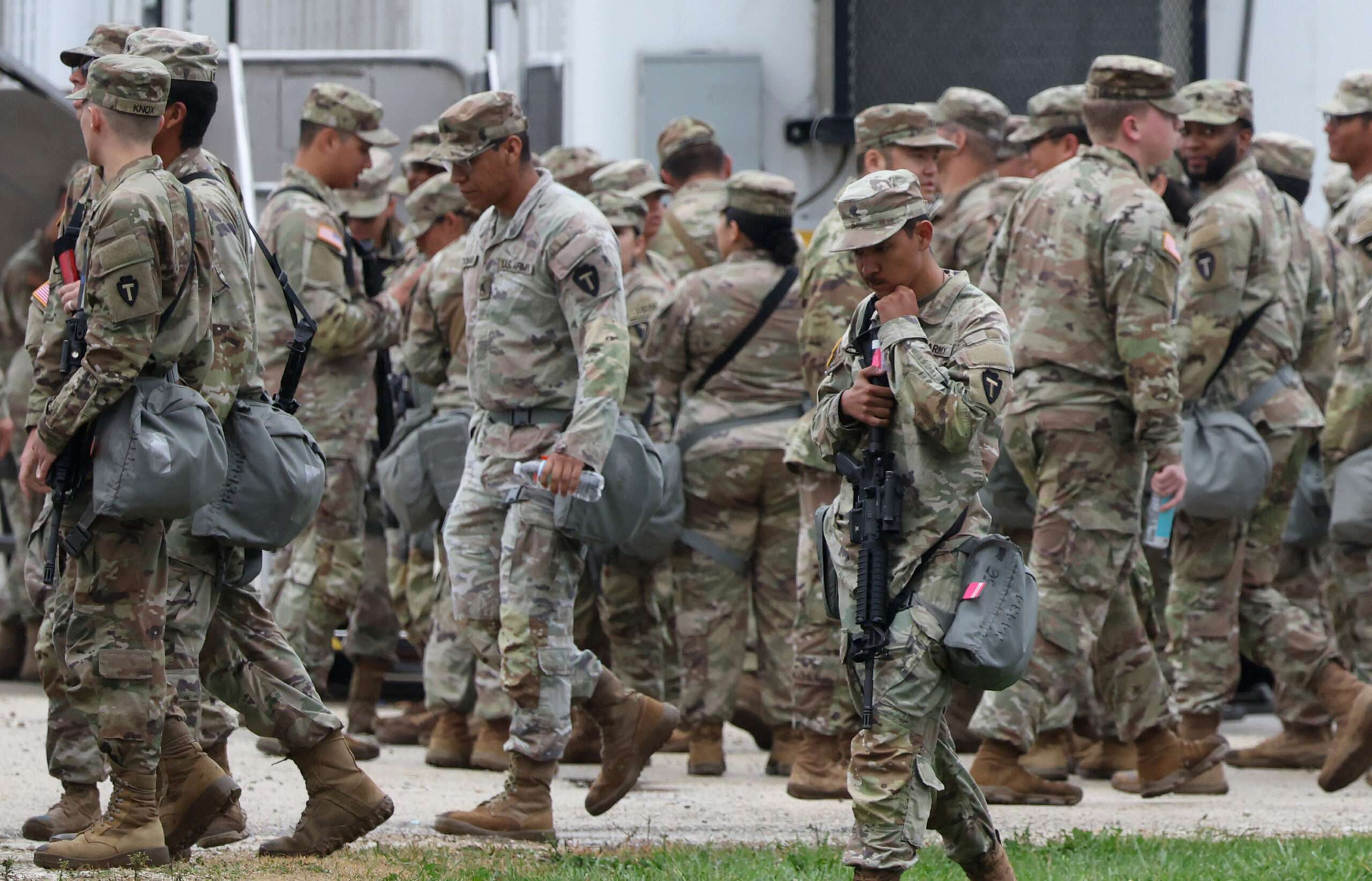
The context of the ruling stems from Trump’s attempt to deploy the National Guard to address anti-ICE protests in the Chicago area, which he claimed included violent elements. He invoked 10 U.S.C. Section 12406, a statute that allows for the federalization of state National Guard forces in specific circumstances, including threats of invasion or rebellion. The Supreme Court’s majority opinion clarified that none of these conditions applied in Illinois, where no invasion or rebellion was claimed.
Under this statute, the President can only call upon the National Guard if he is deemed “unable with the regular forces to execute the laws of the United States.” The Court’s per curiam opinion determined that “regular forces” refers to the United States military rather than civilian law enforcement agencies. As such, the Court concluded that Trump had not demonstrated a failure of military resources necessitating the federalization of the National Guard.
The majority opinion emphasized the importance of the Posse Comitatus Act, which restricts the military’s role in domestic law enforcement unless explicitly authorized by law. The justices noted that for Trump to invoke Section 12406, he must possess statutory or constitutional authority permitting military action—something the government failed to establish regarding the situation in Illinois.
Justice Brett Kavanaugh concurred with the ruling, agreeing with the conclusion that “regular forces” refer to military personnel. He, however, expressed concerns that the majority’s reasoning extended too far. Conversely, Justices Samuel Alito and Clarence Thomas dissented, arguing that the Court’s decision did not adhere to the “party presentation” rule, which mandates that courts only consider issues raised by the parties involved.
While the ruling represents a victory for those opposing Trump’s use of military forces domestically, it does not necessarily end the legal controversies surrounding his actions. Legal experts suggest that Trump may still attempt to use the Insurrection Act to mobilize military forces, an avenue that could present further challenges in the courts.
The implications of this ruling extend beyond Illinois, as it may influence ongoing legal battles in other states, including California and Oregon. As the legal landscape surrounding military involvement in domestic law enforcement evolves, the Supreme Court’s decision underscores the delicate balance between national security and the rights of citizens.
In summary, the Supreme Court’s March 25 ruling is a significant development in the ongoing debate over the use of military forces for domestic purposes, reinforcing the legal boundaries set forth by existing statutes and the Constitution.