The Republican delegation from Southern California has rejected two resolutions aimed at limiting President Donald Trump’s military actions in Venezuela. The votes, which took place on September 27, 2023, underscore a growing divide within the party regarding the use of military force and the role of Congress in authorizing such actions.
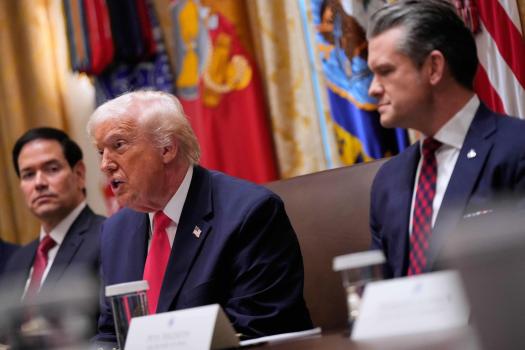
The first resolution sought to restrict the President’s hostilities against groups he designated as terrorists, notably drug cartels in the Western Hemisphere. This resolution failed with a vote count of 216 against to 210 in favor. Representatives Ken Calvert, Young Kim, Jay Obernolte, and Darrell Issa voted against the proposal, positioning themselves in favor of Trump’s aggressive stance.
Critics argue that the President is overstepping his authority. Representative Norma Torres highlighted the constitutional requirement for congressional approval before military strikes. She stated, “What we’re seeing is lawlessness,” emphasizing that the United States should collaborate with regional partners to combat drug trafficking through cooperative measures rather than military intervention.
The second resolution, which aimed to direct the removal of U.S. armed forces from hostilities in Venezuela without congressional authorization, also met defeat. It fell short with 213 votes against and 211 in support. Only a handful of Republicans, including Thomas Massie, Marjorie Taylor Greene, and Don Bacon, supported the measure, advocating for a restoration of Congress’s war-making powers.
These votes reflect a significant concern among some lawmakers about the concentration of military power in the executive branch. Massie articulated this sentiment, stating, “When war-making power devolves to one person, liberty dissolves.” His remarks highlight the ongoing debate about the balance of power between the legislative and executive branches.
The resolutions came in the wake of Trump’s administration taking direct actions in Venezuela, including seizing oil tankers and escalating military operations against alleged drug traffickers. Critics have described these tactics as reckless and ineffective, arguing they jeopardize U.S. lives and do not address the root causes of drug trafficking.
The Southern California GOP delegation’s stance has raised questions about the party’s commitment to constitutional checks and balances. With most Republicans aligning with the President, observers are left to consider the implications for future U.S. foreign policy and military engagement.
In an age where drug trafficking poses serious challenges, the approach taken by the U.S. has historically relied on intelligence sharing and development cooperation rather than military strikes. The rejection of these resolutions may signal a continued commitment to a more aggressive foreign policy, one that some argue could lead to unintended consequences both domestically and internationally.
As the situation evolves, the debate over the U.S. role in Latin America remains critical. Lawmakers will need to navigate the complex landscape of foreign policy while adhering to constitutional principles that safeguard democratic governance. The recent votes in Congress illustrate the ongoing tension between military action and legislative oversight, a dynamic that will likely shape future discussions on U.S. involvement in Venezuela and beyond.