In a tale that spans generations, the legacy of rancher Fred Engle illuminates the struggles of rural communities in Northern California. Engle’s journey began in 1914 when he moved to the Manton area with his wife and two sons, Fred Jr. and Clair. The family soon found themselves embroiled in a protracted legal battle against the Northern California Power Company over water rights—a fight that would leave a lasting mark on the Engle family and inspire a future political career.
The legal dispute with the power company forced the Engles to relocate to Gerber, where Fred took up work with the Southern Pacific Railroad and later at the Red Bluff post office. This struggle not only shaped Fred’s life but also profoundly influenced his son Clair Engle, who grew up with a strong sense of justice and an abiding commitment to public service. Clair’s passion for history, inspired by his father’s admiration for figures like Daniel Webster and Henry Clay, fueled his desire to advocate for those he believed were marginalized by government and economic power.
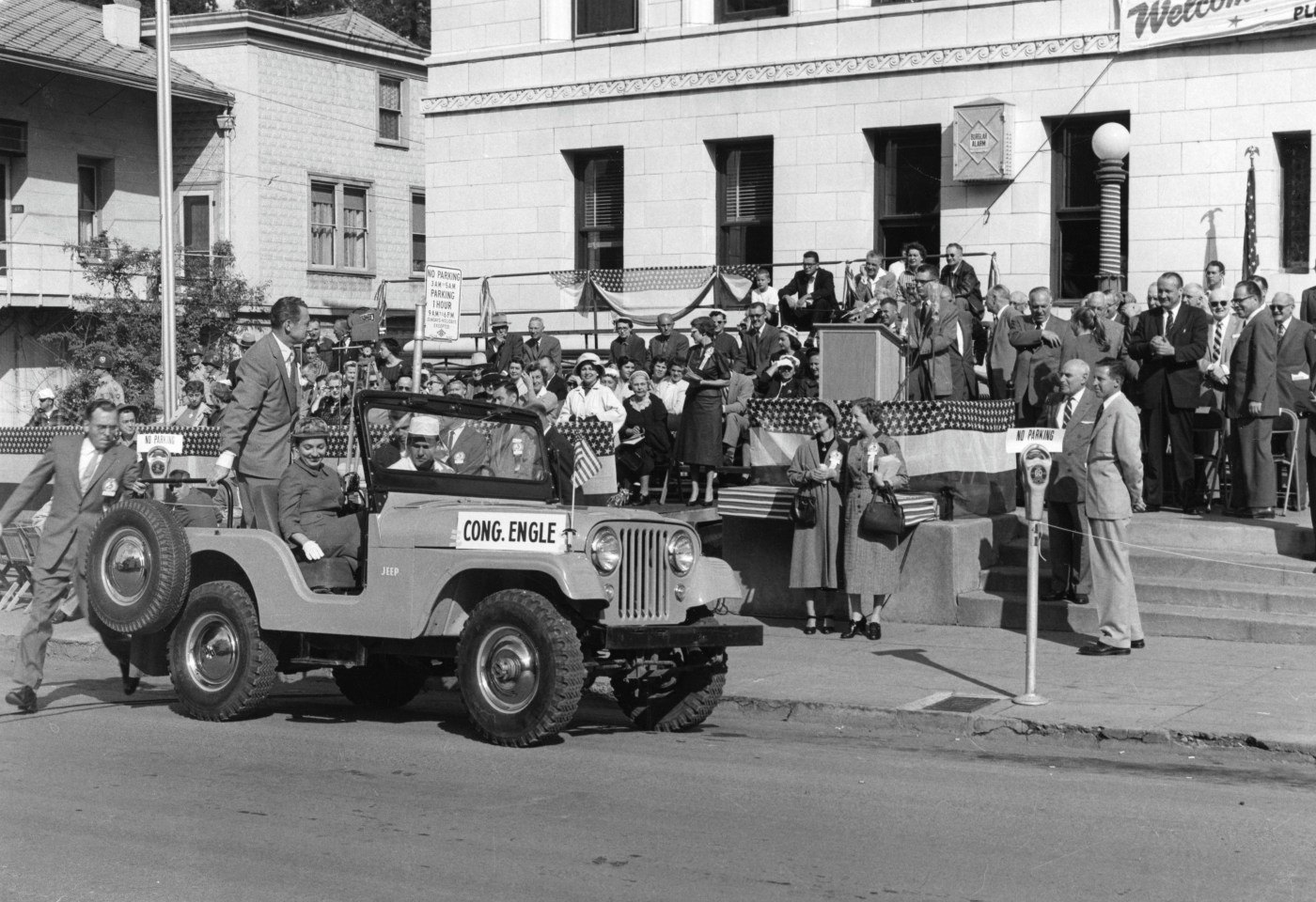
Clair’s political journey began during his high school years, where he was elected student body president. He later earned a law degree and established a practice in Corning. By 1934, he was serving as Tehama County’s District Attorney. His political career reached new heights in 1943 when he was elected to Congress, representing the expansive Second District, which spanned approximately 53,400 square miles across 18 counties—making it one of the largest congressional districts in the United States.
Engle’s dedication to his constituents was evident in his relentless campaigning. He was known for his adventurous spirit and love of flying. In 1947, while navigating from Washington, D.C. to Red Bluff, Engle faced turbulence that left him with a gash on his head from the plane’s canopy. Despite this, he demonstrated remarkable resourcefulness by landing in a farmer’s field to ask for directions.
His charisma often shone through in unconventional campaign settings. In a memorable incident, Engle entered a tavern in Markleeville and, upon seeing only one patron, boldly announced his candidacy for Congress while offering to buy drinks for the house. This spontaneous gesture turned into a successful strategy, as he quickly garnered support from the patrons who filled the establishment.
Engle’s political influence surged when he became a United States Senator in 1958, a position he held until his death in 1964. During his tenure, he played a crucial role in significant legislative initiatives, including the $300 million American River development bill, which funded the construction of Folsom Dam, and an additional $100 million for Sacramento Valley canal projects. These efforts were pivotal in enhancing California’s irrigation infrastructure and addressing the needs of farmers and ranchers.
His passing did not go unnoticed; an estimated 3,000 people attended his burial at Oak Hill Cemetery. The Red Bluff Daily News reflected on his legacy, highlighting his reputation as one of the more colorful figures in Congress and his enduring impact on the residents of Tehama County.
Clair Engle’s life story is a testament to the power of perseverance and the importance of standing up for the underrepresented. His legacy lives on in the hearts of those he served, reminding future generations of the value of advocacy and community engagement.