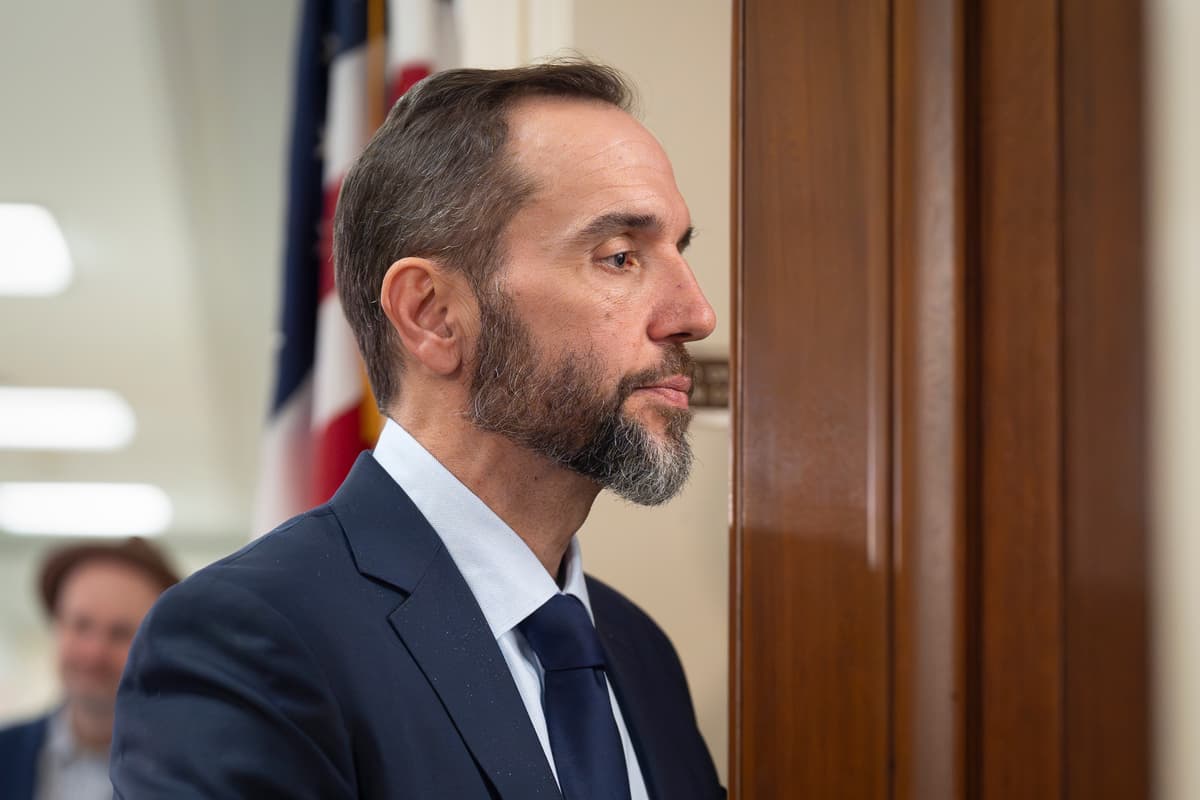
Special Counsel Jack Smith faced intensified scrutiny following his closed-door testimony to the House Judiciary Committee on December 6, 2023. This session marks a pivotal point in the ongoing confrontation between federal prosecutors and Republican lawmakers aligned with former President Donald Trump. Just hours before Mr. Smith’s testimony, the FBI and Department of Justice provided Congress with emails that revealed internal dissent regarding the legality of the search conducted at Mar-a-Lago.
Internal Disputes Over Legal Justifications
The newly disclosed emails, which some sources describe as a “bombshell,” indicate that there was disagreement within the FBI about whether the agency met the legal standard of “probable cause” necessary to obtain a search warrant. One email noted, “we are not in agreement for PC [probable cause] on the SW [search warrant],” while another expressed concerns about the scope of the warrant and suggested “alternative, less intrusive options for resolution.”
The decision to proceed with the search warrant, which included areas such as First Lady Melania Trump‘s bedroom and the private quarters of Barron Trump, was eventually authorized by Attorney General Merrick Garland and approved by a magistrate judge, Bruce Reinhart. As the investigation unfolded, some within the FBI questioned the effectiveness of spending six weeks focusing on probable cause, suggesting it hampered efforts to recover classified records expeditiously.
This internal conflict has heightened tensions between Mr. Smith and congressional Republicans, who are particularly concerned about the extensive nature of the search. There is speculation that Mr. Smith may be called to a second session to discuss the Mar-a-Lago case, but lawmakers’ ability to investigate is limited as Mr. Smith’s final report remains sealed by order of Judge Aileen Cannon to protect the due process rights of Mr. Trump and his co-defendants, Waltine Nauta and Carlos De Oliveira.
Ongoing Investigations and Political Ramifications
Mr. Trump’s legal team has urged Judge Cannon to maintain the confidentiality of the report, arguing that its release could prejudice their case. Meanwhile, organizations such as the Knight First Amendment Institute at Columbia and American Oversight are advocating for its release, asserting that the basis for the judge’s ruling has diminished. The 11th United States Appeals Circuit has criticized Judge Cannon for “undue delay” in addressing these requests and has mandated a response by early January 2024.
In his testimony, Mr. Smith defended his prosecution of Mr. Trump, asserting that he has gathered sufficient evidence to charge the former president with criminal election interference related to the 2020 presidential race. He characterized Mr. Trump’s actions as part of a “criminal scheme” and emphasized that he would pursue similar charges irrespective of a president’s political affiliation. Mr. Smith dismissed claims that political motivations influenced his investigation as “ludicrous.”
Additionally, tensions are rising over “Operation Arctic Frost,” the codename for Mr. Smith’s investigation into the events of January 6. This probe reportedly involved surveilling telephone metadata from eight senators and one congressman, raising concerns about legislative immunity. Lawmakers, led by Senator Charles Grassley, are preparing to hold hearings on the investigation and are likely to demand further testimony from Mr. Smith in the upcoming year.
The evolving landscape of these investigations underscores the complex interplay between legal proceedings and political maneuvering, as both sides brace for what could be a dramatic year ahead in Washington.