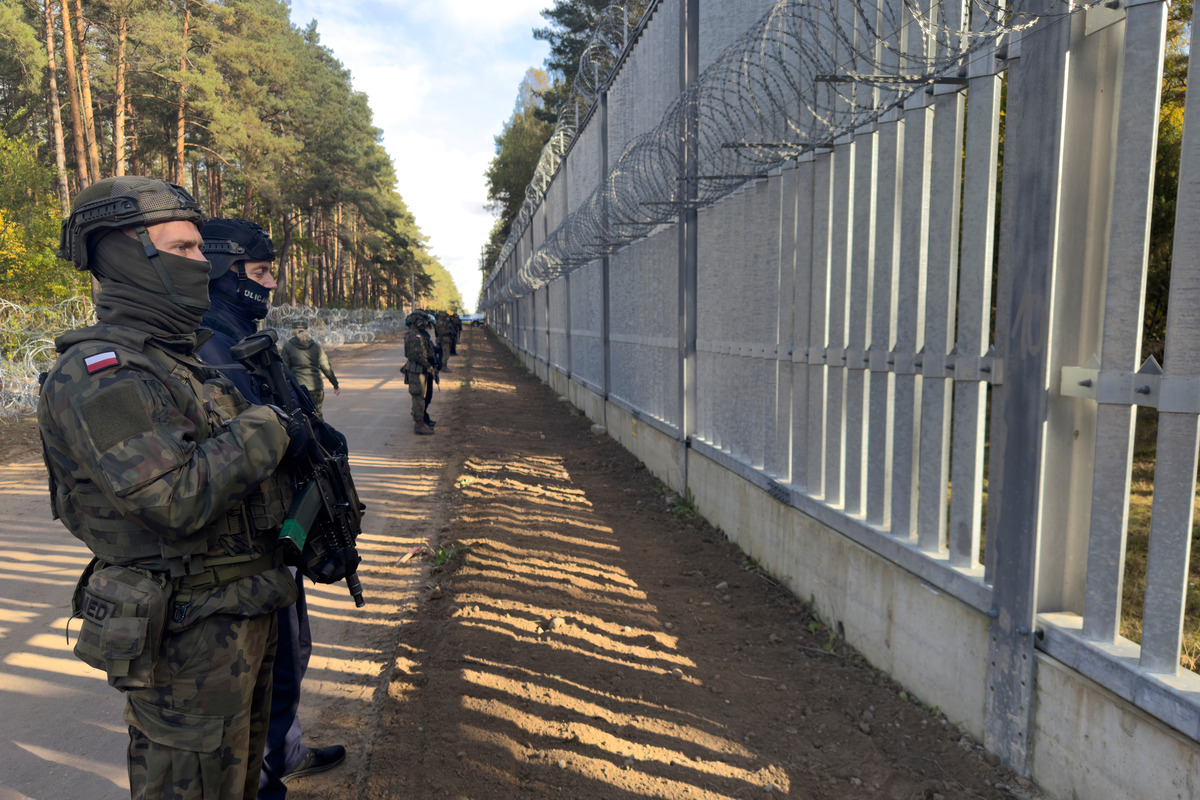
Poland’s military reported an incursion of “balloon-like objects” from Belarus into its airspace early on Thursday. This incident has been described as a “hybrid” action, highlighting concerns about unconventional tactics employed against NATO’s eastern flank.
Incursion Details and Military Response
According to Poland’s Operational Command, military radars continuously tracked these objects, prompting authorities to impose temporary restrictions on civilian air activities over the northeastern Podlaskie region, which borders Belarus. The Polish military emphasized that such incidents contribute to a pattern of hybrid actions targeting the nation.
This latest incursion marks a continuation of a troubling trend. Polish authorities noted that in the past month, several waves of balloons believed to be carrying illegal cigarettes have crossed from Belarus. The military’s statement underlined that these actions fit within a broader context of hybrid warfare tactics, which include activities that do not escalate to open conflict, such as cyberattacks and information campaigns.
Historical Context and Broader Implications
Poland’s concerns over airspace violations are not new. On January 17, 2024, national police reported an increase in balloon smuggling incidents near the Belarusian border, indicating a persistent issue. In December 2023, Polish military officials informed local police of “several dozen flying objects, most likely so-called smuggling balloons,” crossing into Poland. This was followed by a report from RMF 24 radio, which stated that 59 balloons had violated Polish airspace.
In a related incident, Lithuanian officials were compelled to temporarily close the main airport in Vilnius due to similar balloon activity in October 2023. The increasing frequency of these incursions has prompted NATO to enhance its air presence along the alliance’s eastern edge, particularly following an incident on September 10, 2023, when approximately 20 Russian drones entered Polish airspace.
Polish Prime Minister Donald Tusk characterized that drone incident as the closest Poland has come to open conflict since World War II, underlining the heightened tensions in the region.
In light of the recent balloon incursions, the Polish military assured the public that it is continuously monitoring the situation and remains prepared to protect Polish airspace. The military’s statement reflects a commitment to national security amidst evolving threats along its borders.
Poland’s proactive approach demonstrates its awareness of the broader hybrid strategies at play, with both Belarus and Russia employing tactics that challenge traditional military responses. As the situation develops, Poland and its NATO allies remain vigilant against potential incursions that could escalate into more serious confrontations.