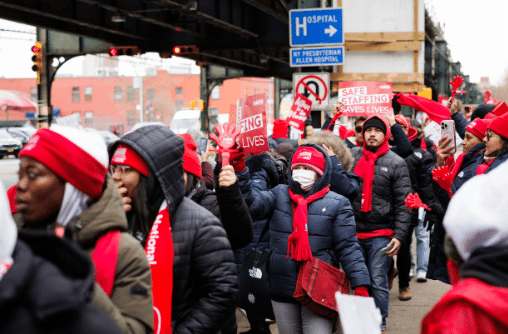
Fifteen thousand nurses in New York City are currently on strike, marking the largest strike of its kind in the city’s history. Organized by the New York State Nurses Association (NYSNA), the nurses are demanding improved working conditions, including enforceable nurse-patient ratios, enhanced healthcare benefits, pensions, and protections against workplace violence. The strike commenced on March 1, 2024, and has garnered attention for its focus on critical issues affecting both nurses and patients.
Demands Centered on Patient Care and Safety
At the heart of the nurses’ demands is the call for lower nurse-patient ratios, which they argue are essential for ensuring quality care. One nurse, who preferred to be identified as J, shared insights from the picket line at Mount Sinai West. He highlighted that a nurse in the intensive care unit (ICU) can struggle to provide adequate attention to patients when faced with such overwhelming workloads. “If she has four patients in the ICU, she can’t possibly attend to all of them properly,” he stated. The implications of this excessive workload lead to burnout among nurses and compromise patient care.
In addition to staffing concerns, the nurses are pushing for better health insurance coverage. J pointed out that management is threatening to remove healthcare benefits, which could result in a significant financial burden on workers. “They’re not offering a pay raise to compensate for the loss of coverage, so workers would effectively be taking a pay cut,” he explained. The precarious situation is exacerbated by a dispute between Mount Sinai and their insurance provider, limiting access to necessary care for the nurses themselves.
The issue of workplace violence has also emerged as a critical concern. J noted that nurses are increasingly facing assaults without adequate support from hospital administrations. The union is advocating for enhanced security measures to protect staff from such incidents, with experiences shared by nurses underscoring the urgency of this demand.
Morale Remains High Despite Growing Frustration
As the strike continues into its second week, the resolve among the nurses appears unwavering. On the ninth day, two outpatient neurology nurses, identified as S and A, echoed similar sentiments about the importance of the strike for their families and their patients. “My insurance is my family’s insurance,” one nurse stated, emphasizing the impact of potential healthcare cuts on her home life.
The nurses are also advocating for enforceable staffing standards, which they argue have been proven to improve patient outcomes. Research indicates that for every additional patient assigned to a nurse, the risk of negative outcomes increases by up to 7 percent. Despite these findings, the nurses contend that hospital management has largely been unresponsive to their concerns, with only one meeting involving a mediator since the strike began.
While morale remains strong, the nurses acknowledge the challenges of a prolonged strike. “The longer it goes on, the more motivated — and more entrenched — people become,” one nurse remarked. The frustration with management’s lack of engagement in negotiations continues to fuel their determination.
As the situation unfolds, the nurses’ commitment to advocating for their rights and the well-being of their patients remains steadfast, highlighting the broader implications of the strike for healthcare practices in New York City. The outcome of this labor action could set significant precedents for nursing practices across the country.