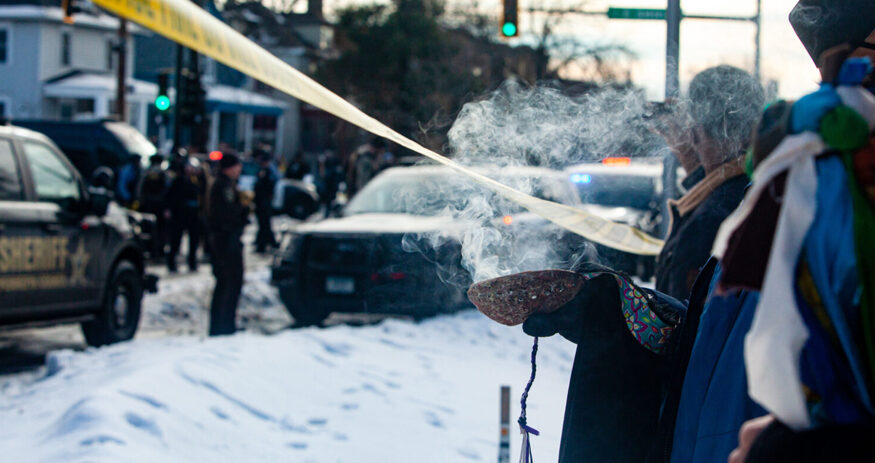
On January 7, 2024, protests erupted in the Twin Cities of Minneapolis and St. Paul following the fatal shooting of Renee Good by a U.S. Immigration and Customs Enforcement (ICE) officer. In response, a coalition of labor unions, progressive organizations, and religious leaders has called for Minnesotans to boycott work, school, and shopping on Friday to demonstrate against immigration enforcement in the state. Despite dangerously cold temperatures, this mobilization is expected to be the largest action to date.
Protests began shortly after Good’s death, which occurred during an ICE operation. Since then, federal law enforcement presence in the area has increased, leading to confrontations between officers and community members who are actively monitoring their movements. Activists have stated that the community’s activism has intensified in light of these events, highlighting the urgent need for reform in immigration policies.
Changes in ICE Practices Raise Concerns
A recent internal memo from ICE has caused alarm within immigrant communities across the United States. The document reveals that immigration officers may forcibly enter homes without a judge’s warrant, contradicting long-standing advice for individuals to refrain from opening their doors to agents unless presented with proper legal documentation. This shift in policy could significantly raise the risks faced by immigrants, as law enforcement and legal experts warn that such actions may lead to broader community repercussions.
The implications of this policy change are profound, as many community members have relied on legal counsel that emphasized the importance of warrants in protecting their rights. Experts caution that this development could lead to an increase in unauthorized entries, further destabilizing immigrant communities already under pressure from heightened enforcement actions.
International Developments and Domestic Discontent
In international news, Russian President Vladimir Putin met with U.S. President Donald Trump’s envoys to discuss the ongoing conflict in Ukraine. The Kremlin emphasized that any potential resolution must address territorial disputes, following sharp criticism from Ukrainian President Volodymyr Zelenskyy regarding the slow response from European allies to Russia’s aggression.
Meanwhile, in Gaza, residents are resorting to desperate measures to stay warm during the winter months, digging through garbage for materials to burn. This stark reality contradicts the optimistic projections presented at a recent meeting in Davos, Switzerland, where world leaders discussed humanitarian aid for the region. Trump claimed that significant aid had reached Gaza since the start of a U.S.-brokered ceasefire, a statement that many find at odds with the dire conditions on the ground.
As tensions mount in the region, Iran’s top prosecutor has rejected Trump’s assertion that 800 prisoners were spared execution, calling the claim “completely false.” Activists report that Iran’s crackdown has resulted in over 5,000 deaths, highlighting the continued volatility in the area.
Domestic Politics and Economic Uncertainty
In Japan, Prime Minister Sanae Takaichi has dissolved the lower house of parliament, paving the way for an early election scheduled for February 8. This move aims to leverage her popularity to regain political ground after recent losses. However, it also delays critical budget discussions aimed at addressing Japan’s struggling economy and soaring prices.
Back in the U.S., forecasts predict a severe winter storm impacting Texas and Oklahoma, with potential for widespread damage and power outages. The storm is expected to intensify over the coming days, affecting a vast area across the eastern two-thirds of the country, with wind chills in parts of Minnesota and North Dakota dropping to as low as minus 50 degrees Fahrenheit.
In the business sector, TikTok has finalized a deal to establish a new American entity, alleviating concerns over a potential ban in the U.S. This agreement with major investors, including Oracle and Silver Lake, aims to enhance data protection and operational transparency for U.S. users, marking a significant development for the platform amid ongoing scrutiny.
As these events unfold domestically and internationally, they reflect a complex interplay of activism, policy changes, and geopolitical tensions that continue to shape the landscape across the globe.