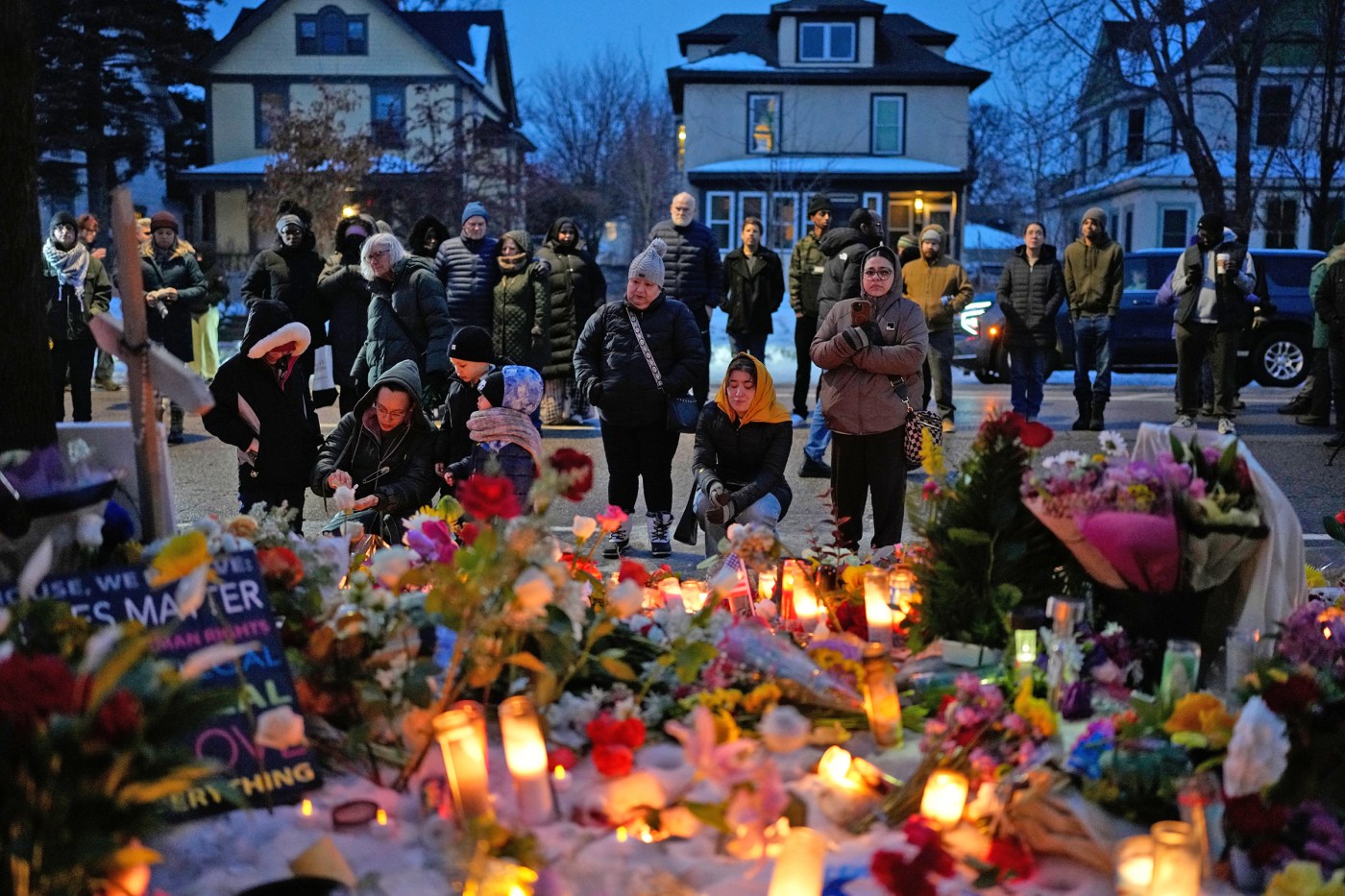
In Minneapolis, the recent shootings of individuals Renee Good and Alex Pretti by federal agents have reignited discussions surrounding police accountability. As public scrutiny grows, many perceive these incidents as emblematic of a broader issue within law enforcement, where accountability often appears more theoretical than practical. The federal government’s handling of these investigations risks further entrenching public cynicism regarding police oversight.
Concerns surrounding police conduct have intensified, particularly in light of the FBI‘s restrictive approach to the investigations. After federal officials made public statements that seemed to exonerate the agents involved, they assumed sole control over the inquiries. This decision, which excluded state and local authorities from accessing vital evidence and interviews, has drawn criticism from those advocating for transparency. The portrayal of Pretti as a significant threat has also raised eyebrows, with reports indicating that federal agents obstructed state authorities from accessing the crime scene.
The need for independent investigations into these shootings is underscored by the belief that such scrutiny is essential to maintain public trust in law enforcement. Retired police officers with extensive experience assert that the legitimacy of the profession hinges on impartial examinations of use-of-force incidents. Given the high visibility of these cases, any appearance of bias in the investigation process could have profound repercussions.
Recent statements from notable leaders, including Vice President J.D. Vance, DHS Secretary Kristi Noem, and President Donald Trump, have further complicated public perceptions. Their rush to label the agents’ actions as lawful undermines the investigative process and raises questions about the commitment to a fair assessment of the events. Rather than advocating for patience during the inquiry, their comments have been interpreted as an attempt to preemptively justify the use of lethal force.
The complexities of determining appropriate use of force are often overlooked in public discourse. Investigators must consider whether agents reasonably perceived an immediate threat at the moment lethal force was employed. This evaluation requires a thorough examination of observable facts rather than generalized assumptions. Additionally, assessing what alternatives were available leading up to the shootings is crucial. Factors such as distance, movement, and prior tactical decisions must be scrutinized to understand the context of the officers’ actions.
Equally significant is the adherence of the agents’ actions to federal use-of-force policies and widely accepted law enforcement standards. A detailed review of the commands given, warnings issued, and the timing of shots fired is necessary to gauge compliance with established protocols. These inquiries are not about presuming guilt or innocence; they reflect the rigor essential for differentiating between justifiable force and actions that violate policies, training, or the law.
By consolidating control over the investigations and making premature declarations about their outcomes, federal authorities risk further alienating public trust. The perception that federal law enforcement operates without accountability can have far-reaching consequences, validating critics’ beliefs that police accountability is often performative and politically motivated.
As public confidence in law enforcement is put to the test, the fallout from the Minneapolis shootings may extend beyond these particular cases. Observers across the nation are closely monitoring the situation, as the outcomes will likely influence perceptions of police accountability and community relations for years to come.
In conclusion, the Minneapolis shootings present a critical moment for law enforcement agencies to demonstrate their commitment to accountability and transparency. The questions surrounding these cases are complex and demand thorough investigation. The decisions made in the coming weeks will play a significant role in shaping public trust and the future of policing in communities across the country.