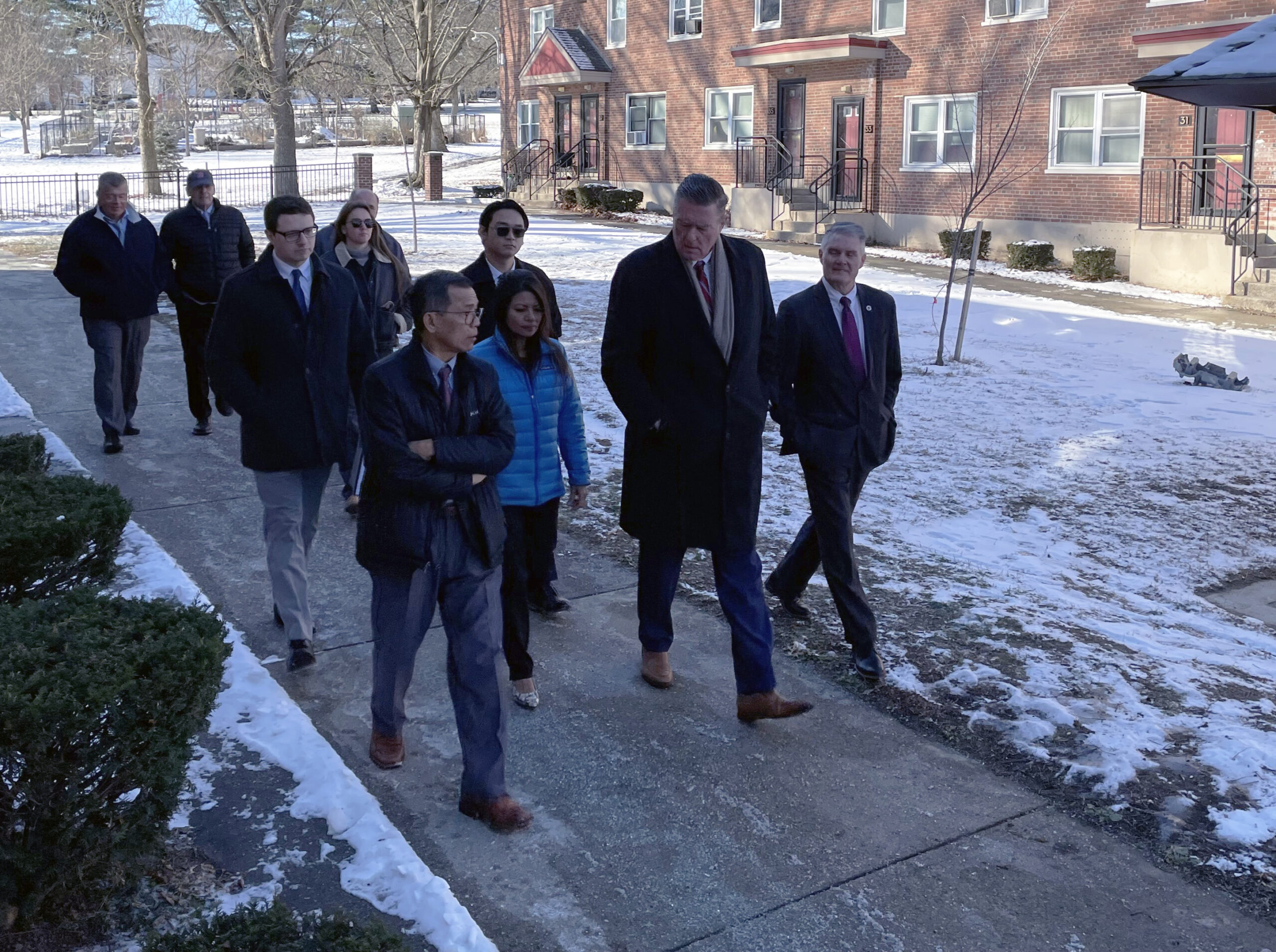
The city of Lowell is making significant strides in affordable housing development, as evidenced by a recent visit from Ed Augustus, Secretary of the Massachusetts Executive Office of Housing and Livable Communities. On December 5, 2023, Augustus attended a presentation by the Lowell Housing Authority (LHA) regarding the ambitious Merrimack Corridor Housing Project, an initiative valued at nearly $100 million. This project aims to enhance affordable housing options in the Acre neighborhood.
Following the presentation, Augustus participated in a walking tour of the LHA’s North Common Village, a site showcasing the city’s commitment to improving living conditions for residents. He also attended a ribbon-cutting ceremony at 733 Broadway Street, where a new, energy-efficient, fully electric affordable housing complex has been established. This development adds 52 affordable apartments to the community while preserving the historical elements of the former Merrimack Valley Food Bank.
In early 2024, Augustus plans to tour ongoing and pre-development housing projects that are expected to contribute nearly 300 new units to Lowell’s housing stock within a short distance from City Hall. His presence in the city is seen as a vital asset, given that he has visited 184 of the state’s 229 housing authorities, reinforcing the importance of state support for Gateway Cities like Lowell.
“Lowell has been punching above its weight in terms of housing, not just public housing but housing in general,” Augustus remarked during his visit.
The support from the state has been substantial, as highlighted by the recent announcement of the Housing Development Incentive Program (HDIP). During a summer visit with Governor Maura Healey, Lowell was awarded $4.5 million for two downtown housing projects, the largest allocation from a total of $27 million distributed to 14 projects across the state. These initiatives are expected to create a total of 547 new units in various Gateway Cities.
The ongoing dialogue between state officials and local leaders is crucial, particularly as Lowell continues to address its housing challenges. In May 2023, Augustus engaged in discussions with city leaders regarding the area around the former Inn & Conference Center and other state-owned properties, indicating a proactive approach to urban development.
In separate news, State Representative Rodney Elliott has adapted his campaign efforts in light of a humanitarian crisis affecting the Cambodian community. Originally planning a fundraiser for his state Senate campaign, Elliott shifted the focus to support the 400,000-500,000 refugees displaced along the Thai-Cambodian border due to escalating conflicts. The event, now scheduled for December 16, 2023, at Sompao Meas Hall in Lowell, will raise funds for Khmer refugees, featuring music by the Arun Reas Band. Suggested donations start at $40 and include food.
Elliott emphasized the urgency of aiding those affected by the crisis, stating, “I decided it would be more important to raise money for the refugees who are without homes, food, or water.”
As the special election for the Massachusetts state Senate approaches, with a primary set for February 3, 2026 and a general election on March 3, the political landscape in Lowell remains vibrant and engaged.
The Tyngsboro Select Board has joined the growing chorus of municipal authorities advocating for increased local aid in response to two recent reports from the Massachusetts Municipal Association (MMA). These reports highlight the fiscal challenges faced by towns and cities, particularly in light of the pressures stemming from Proposition 2½, which limits tax revenue growth.
The MMA’s October report, titled “The Perfect Storm,” and its December follow-up, “Navigating the Storm,” call for policy changes to support municipalities struggling with escalating costs and stagnant revenue. The Tyngsboro Board responded affirmatively to a request from Fairhaven’s municipal leaders, emphasizing the need for a portion of the interest earned from the state’s Stabilization (Rainy Day) Fund to be reallocated to local governments.
Tyngsboro officials noted that while some peers advocate for overturning Proposition 2½, they believe the solution lies in utilizing the existing tax revenue. Their statement underscored the prudent budget management practiced by Massachusetts communities, while cautioning that without increased support, deficits may mount and quality of life could diminish, potentially driving families out of the Commonwealth.
These developments reflect a broader commitment among Lowell and its neighboring municipalities to enhance housing opportunities and advocate for fiscal stability, ensuring that local communities can thrive amidst ongoing challenges.