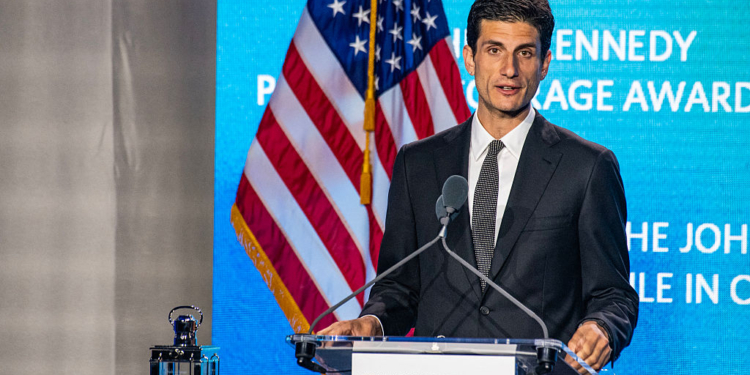
The decision to add President Donald Trump‘s name to the John F. Kennedy Center for the Performing Arts has sparked significant controversy, with Jack Schlossberg, grandson of President John F. Kennedy, vehemently disputing claims of a unanimous board vote. The announcement, made by White House press secretary Karoline Leavitt, stated that the board’s decision would result in the center being renamed the “Trump–Kennedy Center.”
Schlossberg quickly challenged this narrative, asserting that the board meeting was not conducted fairly. He took to social media, stating, “Microphones were muted and the board meeting and vote NOT unanimous.” His comments align with those of Rep. Joyce Beatty of Ohio, who also serves on the Kennedy Center board. She revealed that she was unable to voice her opposition during the meeting, emphasizing that the decision was neither on the agenda nor reached through consensus, calling it a form of censorship.
In a video message, Beatty articulated her concerns, arguing that the process undermines the role of Congress in decisions related to the cultural landmark. “This center, the Kennedy Center, was created by Congress,” she said, highlighting that the public should have a say in such significant changes.
Trump’s interest in the Kennedy Center has been evident throughout his second term. He appointed himself chairman in early 2025 and replaced existing board members with individuals aligned with his political ideology. Earlier legislative attempts to rename the building the “Donald J. Trump Center for Performing Arts” were made but did not succeed.
Schlossberg has also raised legal concerns regarding the renaming. He referenced Public Law 88-260, which stipulates that additional memorials cannot be designated within the Kennedy Center. He argued, “Plain reading of the statute makes clear — YOU CAN’T DO THAT.”
For Schlossberg, the conflict is deeply personal, reflecting a broader concern about how Trump’s actions might overshadow historical significance. He noted on Instagram, “Trump is obsessed with being bigger than JFK. As if that elevates him. It doesn’t.” He further emphasized that the value of art and history cannot be altered by political motivations.
As the situation develops, questions persist about the legitimacy of the board’s vote and whether a transparent account of the proceedings will ever be made available to the public. The unfolding events surrounding this iconic institution continue to raise significant issues regarding governance, cultural legacy, and public involvement in decisions that shape national identity.