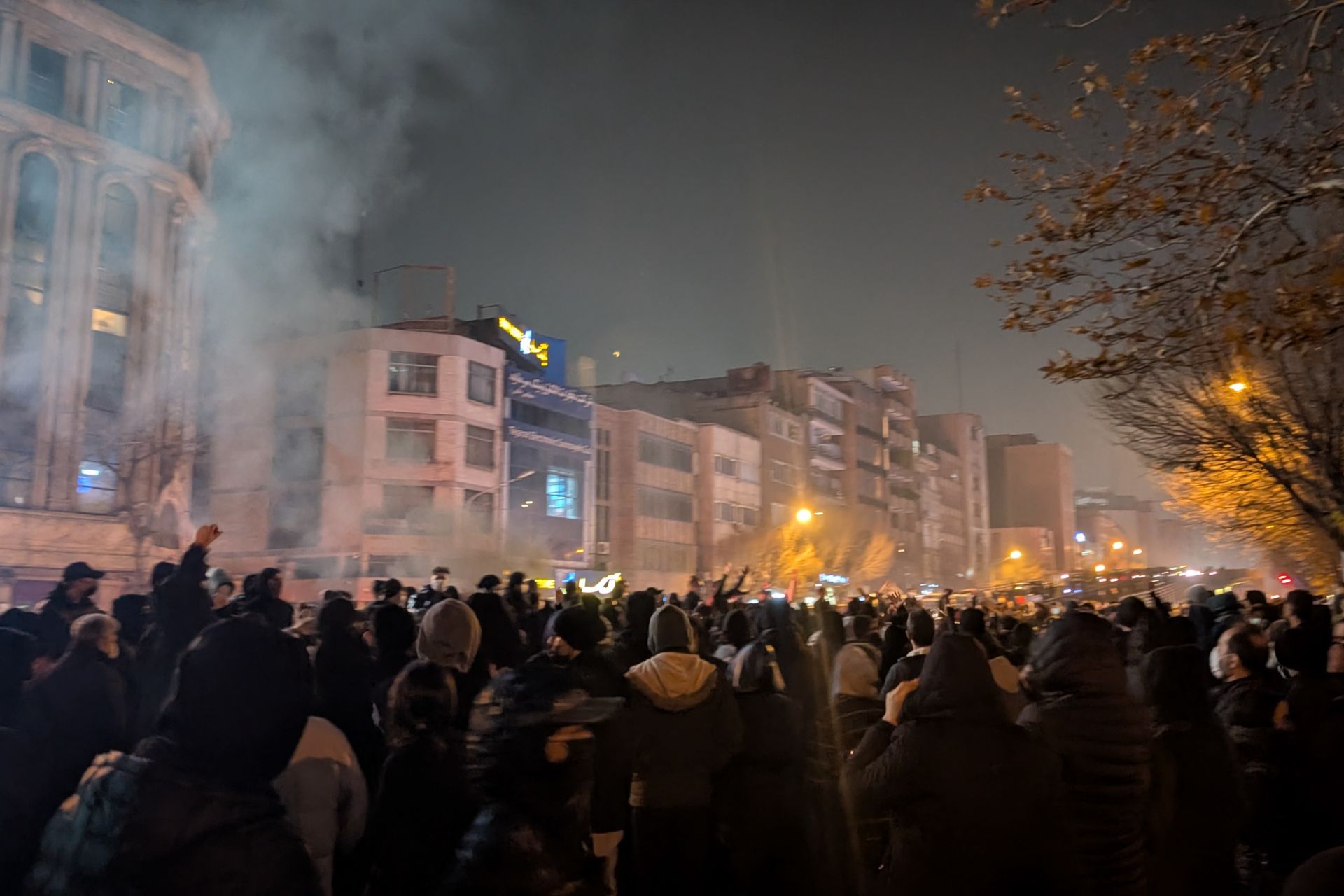
On January 15, 2023, family and friends of Sahba Rashtian gathered at the Bagh-e Rezvan Cemetery in Isfahan to reclaim her body. The 23-year-old was shot during anti-government protests on January 8, part of a violent nationwide crackdown that resulted in thousands of deaths. As her loved ones searched for her name on a constantly refreshing monitor, they faced the grim reality of state-sanctioned violence.
Traditionally, funerals at Bagh-e Rezvan follow Shiite customs, including washing the body and reciting prayers. However, on this day, Sahba’s family and friends broke with these practices. “The mullah shouted for us to recite the funeral prayer, but Sahba’s father told him to leave,” recalled a friend, speaking anonymously due to fear of reprisal. Instead, they carried her coffin themselves, chanting her name as they marched to her burial site.
At the graveside, Sahba’s mother expressed her anger, stating, “I don’t want to see her in a grave. I want to see the people who shot her in the grave. They should know we’re standing with our country.” This rejection of traditional mourning reflects a larger shift in how Iranians express grief in the face of state oppression.
Transforming Mourning into Defiance
Recent funerals across Iran have taken on a new tone, blending celebration with mourning. In videos shared on social media, gatherings for those killed in protests have showcased joyous expressions of defiance. At the chehellom for Arnika Dabbagh, mourners danced and clapped to lively pop music, while the sister of Sajjad Bayat released doves into the air, proclaiming, “In the memory of my brother, the son of Iran.” These scenes starkly contrast with traditional Shiite mourning, which typically involves intense displays of grief.
According to Nahid Siamdoust, an assistant professor at the University of Texas at Austin, these joyful ceremonies deliberately oppose long-standing religious practices. “They are political expressions challenging a state that has championed a religion they now refuse,” she explained. The Iranian government is aware of the power of collective mourning, which can transform into political action, as seen during the last days of Shah Mohammad Reza Pahlavi’s rule.
In July 1978, mourners protested the death of an opposition figure, leading to clashes with police that resulted in numerous casualties. This historical context underscores the potential for funerals to galvanize public dissent.
Families of recent victims, including Sahba’s family, have faced threats from security officials warning them against public gatherings. Despite this, many continue to defy the state, reflecting a growing resistance against oppressive practices.
A Shift in Narrative
The public execution of Majidreza Rahnavard in December 2022 marked a turning point for many Iranians. He was accused of killing two agents during protests and faced a rapid trial before being sentenced to death. His case drew significant attention, especially when he requested that his funeral not include religious rituals, stating, “Don’t cry, be joyful for me.” This defiance resonated deeply with many and transformed him into a symbol of resistance.
Historically, the Iranian regime has utilized the concept of martyrdom as a political tool, a practice rooted in Shiite Islam. However, recent protests have seen families adopting a new term for their deceased loved ones: “javid naam,” translating to “eternal name.” This term signifies a shift away from state-sanctioned narratives of martyrdom, reclaiming the identities of those lost in the struggle.
Sahba’s friend described her as “a unique woman” who aspired to work for Disney and was proud of her creativity. Days before her death, they discussed their shared dreams and the oppressive realities imposed by the government. Her friend recalled, “We talked about the future. We spoke about how we had to free our country.”
As Iran faces renewed airstrikes from the U.S. and Israel, many Iranians confront an uncertain future. While concerns about potential civil unrest grow, the prevailing sentiment among activists remains clear: overthrowing the government is the primary goal.
In this climate of upheaval, the funerals of those like Sahba Rashtian serve not only as a means of mourning but also as a powerful platform for collective resistance against an oppressive regime.