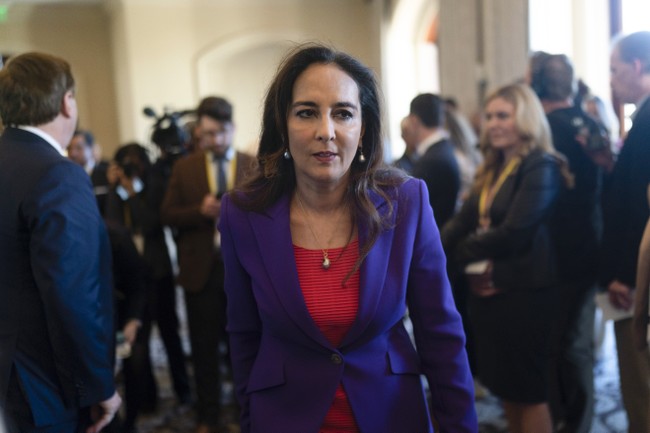
In a significant announcement, Assistant Attorney General Harmeet Dhillon disclosed that over 260,000 deceased individuals and thousands of noncitizens are registered to vote in the United States. This revelation has prompted the Department of Justice (DOJ) to initiate a purge of these names from voter rolls ahead of the 2026 elections.
During her statement, Dhillon emphasized the importance of maintaining the integrity of the electoral system. “We’ve checked the voter rolls, and now at least these names will be purged,” she said, highlighting concerns about the inclusivity that allows deceased individuals to participate in elections.
The issue of voter registration accuracy has garnered attention in several states, particularly in California and New Jersey. Dhillon criticized the lack of action by Congress and called on lawmakers to enact election integrity laws. She stated that if Congress fails to act, the DOJ will take matters into its own hands.
Concerns regarding voter fraud have also been raised in Michigan, where Secretary of State Jocelyn Benson has faced legal challenges related to the management of voter records. Critics argue that the state is not adequately updating its voter rolls, with thousands of ineligible individuals potentially casting votes in recent elections.
In her remarks, Dhillon pointed out that some states, including New Jersey, have not updated their voter rolls for residents who have moved out of state. “We found thousands of individuals who voted in the past election despite no longer being eligible,” she noted. This situation raises questions about the effectiveness of current voter registration systems and the need for comprehensive reforms.
The announcement has ignited discussions on social media, with supporters of Dhillon’s findings expressing relief at the potential for a cleaner voter registration system. Critics, however, argue that allegations of widespread fraud are often exaggerated.
As the DOJ embarks on this voter roll cleanup, the implications for upcoming elections could be substantial. The efforts to ensure that only eligible voters participate in the electoral process resonate with ongoing national conversations around voting rights and election integrity.
The focus now shifts to how effectively the DOJ can implement these changes and whether Congress will take further steps to address these pressing issues. The outcome may significantly impact the political landscape leading into the next election cycle.