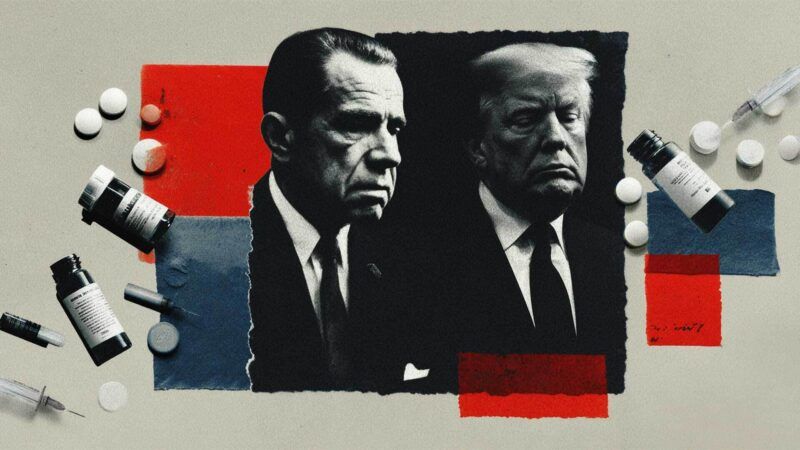
On June 17, 1971, President Richard Nixon announced a sweeping initiative known as the War on Drugs, declaring that “America’s public enemy number one” was drug abuse. This marked the beginning of a contentious campaign aimed at combating illegal drug use and trafficking. Over the ensuing 54 years, the War on Drugs has undergone various transformations, yet its effectiveness has come under intense scrutiny. As the United States grapples with a significant fentanyl crisis, the current administration appears to be intensifying its rhetoric and strategies rather than reevaluating past approaches.
The Trump administration has notably escalated its anti-drug messaging. In a recent executive order, Donald Trump designated fentanyl as a “weapon of mass destruction,” granting the military authority to intercept vessels suspected of transporting the opioid. This declaration raises questions about the administration’s focus, particularly given the complexities surrounding drug trafficking and addiction. Pam Bondi, the U.S. Attorney General, previously claimed that Trump’s policies have saved the lives of 258 million people, a figure that seems implausible given the scale of drug-related fatalities in the country.
The statistics surrounding drug overdoses paint a troubling picture. In 1971, the death rate from drug overdoses was just 3.3 per 100,000 people. By 2023, this figure had surged to 31 per 100,000, reflecting a steady increase in overdose deaths since Nixon’s initial declaration. Despite this alarming trend, there has been a slight decrease in overdose rates, with a reported decline of 27% in 2024. Experts attribute this drop to improved access to treatment and overdose-reversal drugs like naloxone. A shift towards a public health approach, rather than criminalizing drug use, could yield more effective outcomes.
The ongoing fentanyl epidemic exemplifies the unintended consequences of the War on Drugs. Jeffrey Singer, a health expert at the Cato Institute, highlighted the “Iron Law of Prohibition” in his testimony before the U.S. Senate, explaining that enforcing prohibition encourages the development of more potent and easily trafficked drugs. This trend has led to an increase in the production and distribution of synthetic opioids, complicating the fight against drug abuse.
Policymakers have often overlooked how their strategies have inadvertently exacerbated the crisis. Cracking down on prescription opioid analgesics in an effort to curb overprescription led many individuals to turn to cheaper and more potent alternatives available on the black market. As noted in a 2017 article from the International Journal of Drug Policy, the shift from prescription opioids to heroin and eventually to fentanyl has created a cycle of dependence and addiction that is difficult to break.
The War on Drugs has also resulted in significant societal changes beyond the realm of health. The militarization of law enforcement agencies has transformed the perception of police from community protectors to aggressive enforcers. Reports indicate that the current administration’s aggressive tactics may not only target drug dealers but could also serve broader geopolitical interests, particularly concerning Venezuela’s oil reserves.
Civil asset forfeiture has emerged as another controversial outcome of drug enforcement policies. This practice allows law enforcement to seize property based solely on suspicion of involvement in drug offenses, often without due process. Victims of this policy must prove their innocence, undermining the foundational principles of justice.
Many Americans recall the failures of alcohol Prohibition, which fostered organized crime and corruption. The lessons learned from that period highlight the need for a reevaluation of current drug policies. Rather than doubling down on strategies that have historically failed, effective leadership should seek to understand the factors contributing to the recent decline in overdose deaths and build on successful public health initiatives.
As the United States continues to navigate the complexities of drug use and addiction, it may be time to reconsider the approach taken over the past five decades. A focus on evidence-based strategies that prioritize public health could lead to better outcomes for individuals and communities affected by substance abuse.