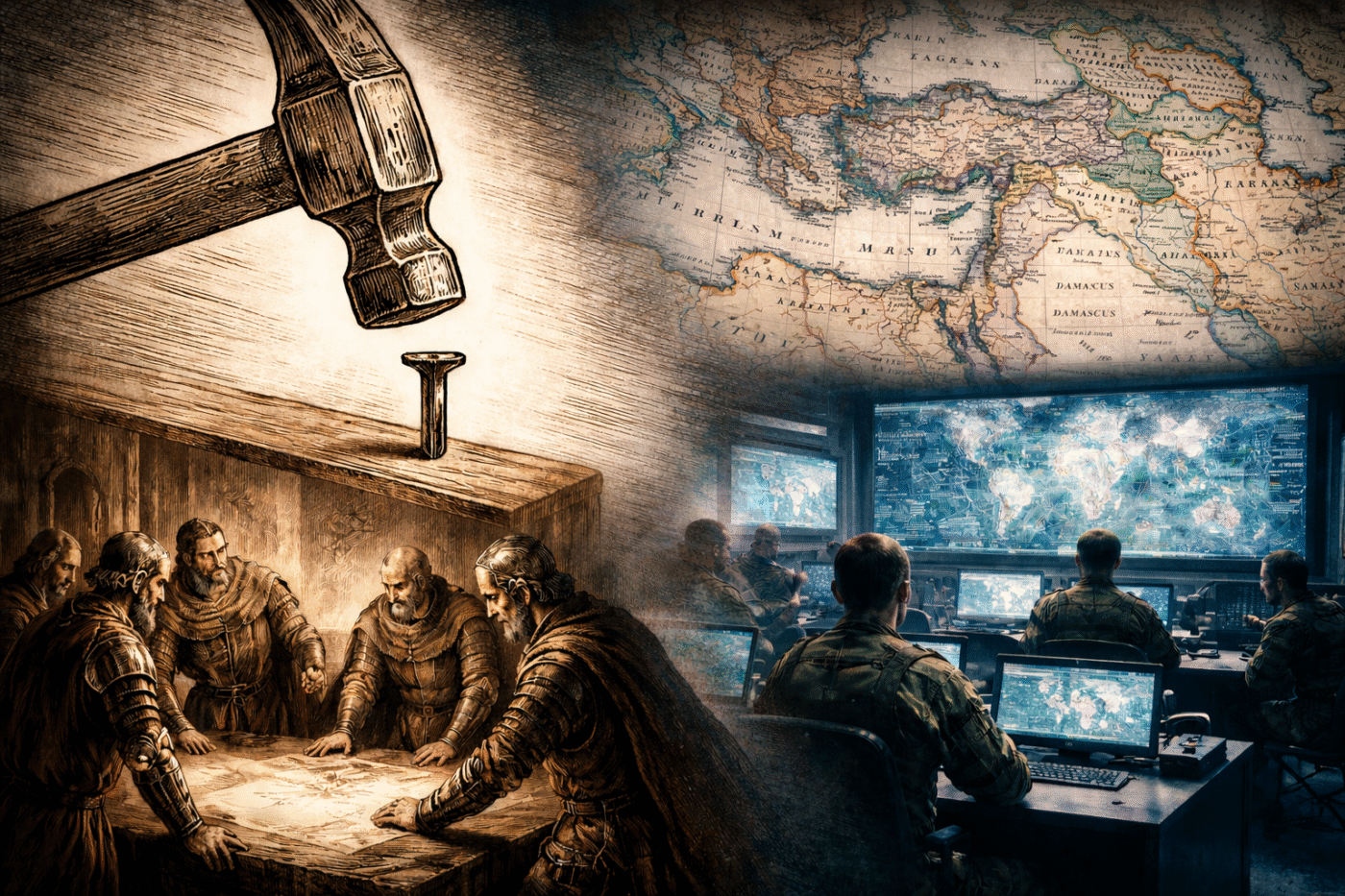
On January 6, 2026, the United States launched Operation Absolute Resolve to capture Venezuelan leader Nicolás Maduro. Following this military action, language surrounding the situation shifted dramatically. What had been framed as a crisis evolved into a technical management issue, obscuring the complexities inherent in such geopolitical conflicts. Officials began to describe the consequences of their actions as unavoidable, presenting a narrative primarily centered on control rather than ethical considerations.
This transformation in framing highlights a cognitive bias known as the Law of the Instrument, identified by psychologist Abraham Maslow. The bias suggests that an over-reliance on familiar tools or perspectives can lead to a narrow understanding of a problem, limiting the options available to decision-makers. In the context of Operation Absolute Resolve, the shift from viewing the situation as a multifaceted crisis to a straightforward management issue signaled a dangerous simplification of reality.
Understanding the nature of crises is essential in the fields of policy studies and leadership research. Scholars distinguish between three types of problems: tame, crisis, and wicked. Tame problems can be solved through expertise, while crisis problems demand immediate command to prevent harm. Wicked problems, however, resist traditional management approaches entirely. They have no definitive solution and often require adaptive leadership and the active engagement of stakeholders.
The concept of wicked problems is rooted in the work of Horst Rittel and Melvin Webber, who argued that these challenges are deeply embedded in social and political complexities. For example, a wicked problem often cannot be resolved through coercive measures or technical fixes. Instead, it necessitates a relational approach between leaders and their followers, as highlighted by leadership scholar Keith Grint.
In J.R.R. Tolkien’s epic saga, The Lord of the Rings, the character Boromir exemplifies the consequences of misclassifying a wicked problem. Convinced that the powerful One Ring could save his homeland of Gondor, Boromir attempts to seize it from the hobbit Frodo. His actions illustrate a critical failure to recognize the nature of the problem at hand. Throughout the narrative, Gondor is depicted as existing in a state of perpetual threat, which can lead to a misclassification of challenges as eternal crises.
Boromir’s failure is not merely a moral failing; it is a result of his institutional environment that rewards decisiveness and action in the face of perceived threats. His decision to take the Ring by force reflects a system that prioritizes immediate results over nuanced understanding. This behavior mirrors real-world examples, such as the strategic culture surrounding Israel since its founding in 1948. According to scholar Michael I. Handel, Israel’s military victories against Arab forces have sometimes obscured deeper vulnerabilities, leading to a culture that prioritizes survival over broader political considerations.
Examining this dynamic through the lens of wicked problems reveals the dangers of framing complex issues as crises. When institutions adopt a command-oriented approach to governance, they risk entrenching a mindset that favors coercion and force as legitimate responses. In contrast, effective leadership necessitates a recognition of the multifaceted nature of wicked problems.
The Council of Elrond in The Lord of the Rings serves as a pivotal moment where Boromir is challenged to confront a different understanding of the Ring. Rather than viewing it as a crisis to be solved through force, participants recognize it as a wicked problem that cannot be dominated without reproducing the conditions of conflict. Despite this warning, Boromir’s sense of entitlement leads him to insist that Gondor deserves the Ring. This reflects a broader issue within governance: when political cultures become fixated on crisis management, alternative solutions become invisible.
In Tolkien’s narrative, Boromir’s brother, Faramir, represents a contrasting approach to leadership. He embodies reflective thinking and restraint, demonstrating that effective responses to wicked problems involve questioning dominant narratives and considering long-term consequences. This contrast underscores the importance of critical followership—where followers actively engage with and challenge the framing of issues rather than simply executing orders.
As institutions grapple with wicked problems, the risk of misclassification becomes increasingly significant. The tendency to frame challenges as permanent crises can lead to a doubling down on coercive measures, ultimately compounding existing issues. The narrative surrounding Operation Absolute Resolve illustrates this point, as the urgency of action can obscure the need for thoughtful engagement and adaptive leadership.
In conclusion, the lessons drawn from Boromir’s experience serve as a cautionary tale about the perils of misidentifying complex problems. When institutions prioritize command over leadership, the risks of reliance on force escalate. Ultimately, addressing wicked problems requires a fundamental shift in perspective, recognizing that the most effective solutions often lie in dialogue, reflection, and a willingness to embrace complexity. The very act of framing problems shapes the responses available to decision-makers, and as history has shown, failing to acknowledge this can lead to catastrophic outcomes.