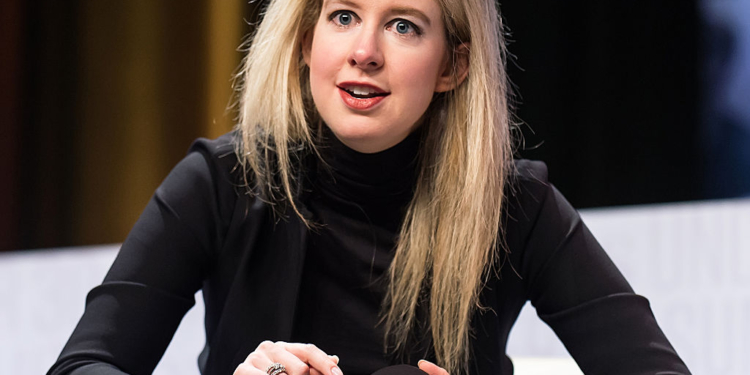
Elizabeth Holmes, the former CEO of Theranos, has formally requested an early release from her prison sentence, appealing to President Donald Trump. Currently serving an **11-year** sentence for defrauding investors, Holmes filed her request with the **Department of Justice** last year, as reported by **CNN**. She was convicted in **2022** and is being held at **Federal Prison Camp Bryan** in Texas, with her sentence set to conclude in **December 2031**. If her request is granted, Holmes could potentially be released nearly six years earlier than planned.
Holmes’ appeal follows a ruling from a U.S. appeals court, which upheld her conviction along with that of Theranos President **Ramesh “Sunny” Balwani**. The court also confirmed the **$452 million** in restitution that both Holmes and Balwani were mandated to pay to their victims. The fall of Theranos, once valued at **$9 billion**, stemmed from claims that its technology could conduct accurate and efficient blood tests for serious health conditions, including cancer and diabetes, using just a few drops of blood.
A critical investigation by the **Wall Street Journal** raised serious doubts about the accuracy of Theranos’ testing methods and the efficacy of its technology. In **2018**, Holmes and Balwani faced a dozen counts of wire fraud and conspiracy to commit wire fraud; both pleaded not guilty.
In a recent statement, Holmes expressed her ongoing fight for what she claims is her innocence. She stated on **X** (formerly Twitter) on **January 22, 2026**, “We are continuing to fight for my innocence and we know the truth cannot be repressed forever. This is not over. The fight against the weaponization of our justice system is just beginning.”
The White House has refrained from commenting on individual clemency requests, as confirmed by a White House official. As Holmes continues her legal battles, the implications of her case resonate widely, raising significant questions about accountability in the tech industry and the boundaries of investor protection.
Holmes founded Theranos while still in college, attracting substantial investment and a high-profile board of directors, which included prominent political figures. The company raised **$945 million** in funding, but its eventual downfall has since become a cautionary tale about the risks inherent in startup culture and the importance of due diligence in investment decisions.
As the legal proceedings unfold, the business world watches closely to see how this case will evolve and the potential ramifications for Holmes and others involved.