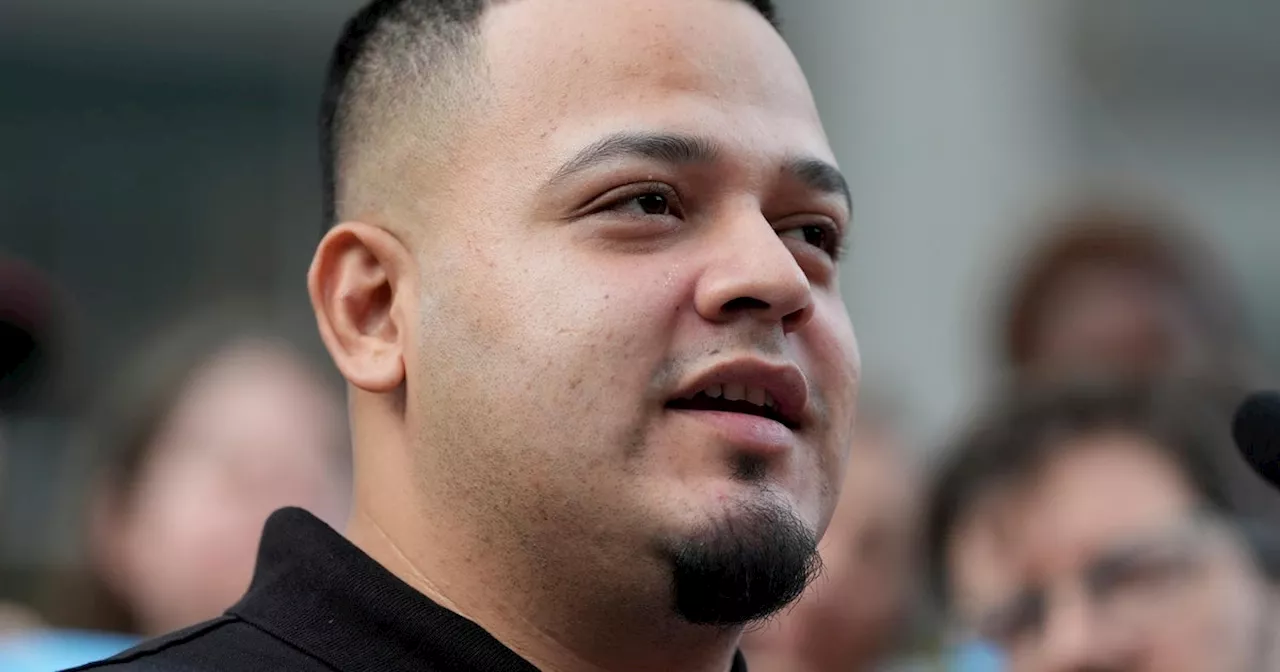
A recently unsealed court order has brought to light that the U.S. Department of Justice (DOJ) under the Trump administration sought to prosecute Kilmar Abrego Garcia for smuggling charges after he contested his deportation. This revelation highlights a possible connection between the timing of the prosecution and Abrego Garcia’s legal challenge against his wrongful removal to El Salvador.
The order, issued by U.S. District Judge Waverly Crenshaw of Tennessee, indicates that the DOJ’s interest in pursuing charges intensified significantly after Abrego Garcia’s deportation. Notably, an official within the DOJ referred to the case as a “top priority” just days after the deportation occurred. The details emerged from a December 3 ruling that is part of a broader examination of the legal proceedings against Abrego Garcia.
On March 15, 2019, Abrego Garcia was deported despite having received legal protection from a federal immigration judge. Following his deportation, he was held in a prison in El Salvador known for its harsh conditions. In a significant turn of events, a federal judge in Maryland ordered the Trump administration to facilitate his return to the United States, a ruling later upheld by the Supreme Court.
In the court order, Judge Crenshaw noted that the prosecution’s decision was not solely the responsibility of one individual. He indicated that communications among DOJ officials were evident, particularly on April 27, when Aakash Singh, an official working under Deputy Attorney General Todd Blanche, reached out to various officials about the case. On that date, Rob McGuire, the then-Acting U.S. Attorney for the Middle District of Tennessee, received a case file concerning Abrego Garcia.
By April 30, Singh characterized the case as a “top priority,” and on May 15, McGuire expressed the necessity of involving higher officials in the decision-making process. He mentioned in an email that while the final charging decision rested with him, he sought input from others within the DOJ. He noted having heard that senior officials preferred a swift prosecution.
Days later, on May 21, a grand jury indicted Abrego Garcia. In his December ruling, Judge Crenshaw observed that the decision-making process appeared to involve multiple DOJ officials, suggesting that the prosecution might have been a collective decision rather than an individual one.
The Justice Department has refrained from commenting on the unsealed order. Judge Crenshaw is currently considering a motion from Abrego Garcia’s legal team to dismiss the charges based on claims of vindictive prosecution. He acknowledged that evidence indicating potential vindictiveness has emerged, and he has requested additional documentation from the government.
In his December 3 order, Judge Crenshaw mandated the DOJ to produce relevant documents, including emails involving Singh. Recently, he canceled a planned trial for January and scheduled an evidentiary hearing for January 28. This hearing will focus on whether the government can counter the preliminary findings suggesting the prosecution may have been driven by vindictive motives.
Abrego Garcia’s legal team argues that the decision to prosecute him was a punitive measure for his legal challenge against the deportation. The administration has denied these allegations, asserting that there was “no intent to punish the defendant for impermissible purposes.”
In a further development, Abrego Garcia was released from Immigration and Customs Enforcement (ICE) custody earlier this month after Judge Paula Xinis found that there was no valid deportation order justifying his detention. He has remained in Maryland since his release, living with his American citizen wife and child.
Judge Xinis has instructed the Trump administration to submit a sworn declaration by Tuesday regarding any intentions to re-detain Abrego Garcia and the legal basis for such actions. The administration has previously suggested it could deport him to various African countries, including Liberia.
This case underscores the complex interplay between immigration enforcement and legal protections, raising questions about the motivations behind prosecutorial decisions in the context of deportation challenges. The forthcoming hearing will be pivotal in determining the future course of this case and whether the charges against Abrego Garcia will be upheld or dismissed.