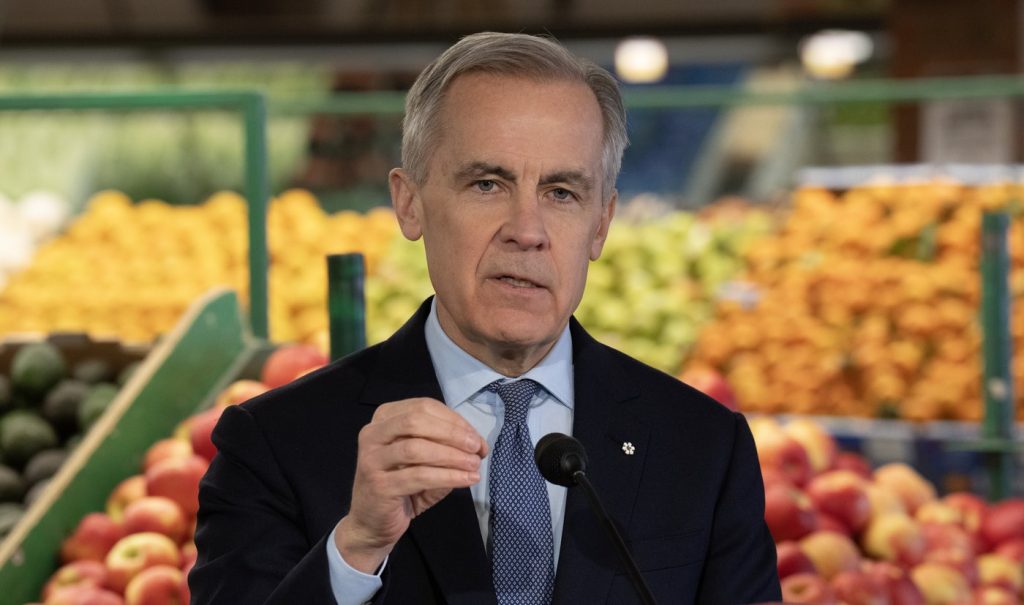
Prime Minister Mark Carney has achieved a notable milestone, reaching a personal approval rating of 60 percent, the highest since he assumed leadership of the Liberal Party. Despite this personal success, polling data indicates that his party’s support remains stagnant, particularly in British Columbia, where it is virtually tied with the Conservative Party.
A recent poll conducted by the Angus Reid Institute and released on January 26, 2023, reveals that the Liberal Party and the Conservative Party are locked in a close competition in British Columbia. According to Shachi Kurl, president of the Angus Reid Institute, while Carney’s personal brand received a boost following his impactful speech at the World Economic Forum in Davos, this has not translated into increased support for the party.
Kurl noted that although Carney’s approval rating is slightly lower in British Columbia—at 58 percent—it remains the highest among all western provinces. In contrast, Conservative leader Pierre Poilievre enjoys a 40 percent approval rating in British Columbia, which is notably higher than his national average of 36 percent.
Despite Carney’s rising popularity, the likelihood of voters choosing the Liberal Party remains unchanged. Current data shows that if an election were to occur today, 39 percent of British Columbians would support the Liberals, compared to 38 percent for the Conservatives. Kurl characterizes this situation as essentially a tie, given the narrow margin.
Overall, the numbers indicate a modest improvement for the Liberals in British Columbia, as they have made inroads since December when their support was at 33 percent, trailing the Conservatives by ten points. Kurl explained that although the Conservatives have not seen significant fluctuations, they are struggling to expand their voter base.
On a national level, the Liberal Party’s advantage over the Conservatives is slightly larger, with 41 percent of Canadians favoring the Liberals compared to 38 percent for the Conservatives. This reflects a gradual shift in voter sentiment, particularly in British Columbia, where the Liberal Party is narrowing the gap.
As the political landscape evolves, Kurl emphasizes that Canada-US relations will remain a critical issue for voters moving forward. The Prime Minister’s strong rhetoric on this front appears to have a positive effect on his personal momentum, even as the party as a whole grapples with stability in voter support.
In summary, while Carney’s personal popularity has surged, the Liberal Party faces challenges in converting this approval into tangible electoral gains. The upcoming months will likely reveal whether this trend will persist or if the party can leverage Carney’s individual success to enhance its overall standing in British Columbia and beyond.