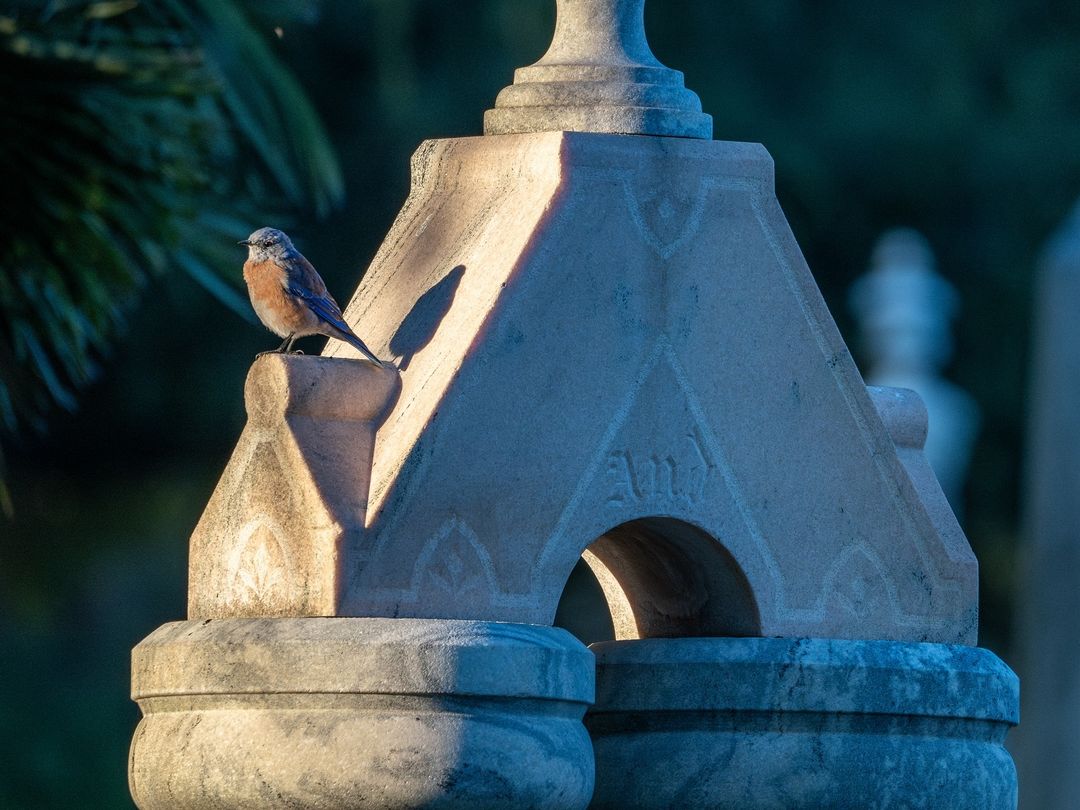
On a chilly morning in January, participants gathered at Mountain View Cemetery & Mortuary in Altadena, California, for a unique wildlife walk led by Lauren Hamlett, Director of Wildlife Education and Services at Pasadena Humane. As the sun began to rise, the group embarked on a journey through the cemetery grounds, observing and identifying various urban wildlife that inhabit this tranquil space within a bustling city.
The cemetery is increasingly seen not just as a resting place for the deceased, but as a sanctuary for the living and the wildlife that shares it. Hamlett guided attendees through the pathways, highlighting the presence of birds, mammals, and other creatures that thrive in the area. During the walk, she also shared insights into the cemetery’s history and pointed out notable grave markers, enriching the experience for all participants.
This monthly series of wildlife walks aims to shift perceptions, encouraging community members to see the cemetery as a vital green space that fosters both human and animal life. Cyndee, a staff member at Mountain View Cemetery, expressed the sentiment: “Some people think cemeteries are for the dead. But when someone walks around, there is a lot of life, and the wildlife tours introduce the community to seeing that.”
Resilience After the Eaton Fire
The sanctuary’s resilience has been tested in the past year, notably during the Eaton fire, which came dangerously close to the cemetery. While the main structures survived, the fire caused damage to fencing and the pump house, and strong winds left the grounds in disarray. Cleanup efforts spanned approximately two and a half months, with full restoration of water and electricity only achieved by September 2023, eight months after the incident.
In the aftermath, cemetery staff observed a significant decrease in local wildlife. The eight coyotes that once roamed the northern part of the cemetery were notably absent. To monitor wildlife recovery, the wildlife team deployed a trail camera, which soon captured images of returning coyotes, squirrels, skunks, and various bird species. This indicated a gradual return of wildlife to the area, though their numbers remain lower than before the fire.
During her walks, Hamlett frequently reports seeing a variety of bird species and the return of coyotes, which she now encounters on nearly every outing. These experiences underscore the resilience of urban wildlife, which can rebound quickly when provided with a reliable water source, safe habitats, and minimal human disturbance.
Looking Ahead: A Commitment to Recovery
With water fully restored, cemetery staff are optimistic about the continued return of wildlife, aiming to reach pre-fire populations. Hamlett emphasizes long-term planning for wildlife recovery, which includes planting climate-appropriate trees and collaborating with local organizations such as Pasadena Humane and the Pasadena Audubon Society.
The wildlife walks occur monthly, with early morning sessions in winter transitioning to evening walks in spring and summer. Each season brings different species, offering unique opportunities for sightings. Evening walks particularly focus on the role of bats within the ecosystem.
For those interested in experiencing the cemetery from this new perspective, the next Cemetery Wildlife Walk is scheduled for February 15, 2024, at 6:30 a.m. Participants can register at pasadenahumane.org/events.
As the community continues to reconnect with nature through these walks, the cemetery serves as a reminder of the intricate relationships between humans and wildlife, fostering a sense of unity in the face of challenges.