Researchers at Washington State University (WSU) are playing a significant role in a groundbreaking project aimed at developing the ideal Christmas tree. Led by renowned expert Gary Chastagner, affectionately known as “Dr. Christmas Tree,” this initiative is part of a larger effort involving nine institutions across multiple countries, collaborating on a project titled “A GIFT SEED.” The acronym stands for Accelerated Genetic Improvement of Fir Through Sequencing, Economics, Extension and Diagnostics, and it is funded by a $7.5 million grant from the USDA National Institute of Food and Agriculture.
Chastagner, a professor emeritus at WSU, has dedicated nearly five decades to researching the optimal characteristics of holiday trees. His work has had a profound impact on the industry, helping growers enhance tree quality while reducing pesticide use. “Hearing growers discuss the positive effects of our research has been incredibly rewarding,” Chastagner stated. “You can’t ask for anything more.”
The GIFT SEED project explores various aspects of fir trees, including their resilience against pests, diseases, and climate change. It also examines consumer preferences and potential new markets for tree growers. The Christmas tree industry is substantial; in 2022, over 14.5 million trees were harvested from approximately 16,000 farms in the United States, generating over $553 million in revenue, according to the USDA.
Exploring Consumer Preferences and Tree Characteristics
The majority of trees sold, around 75%, are fir varieties, with the Douglas fir included, bringing the figure to approximately 93%. Justin Whitehill, an associate professor at North Carolina State University and project lead, noted that true firs are favored for their aesthetic and aromatic qualities. “Firs look better and smell better,” he explained, adding that the project aims to identify fir species that could thrive in different regions.
Chastagner’s journey began in 1978 when he was hired at WSU to address the Swiss needle cast disease affecting Douglas fir growers. His research has led to substantial advancements in tree cultivation, resulting in firs that are fuller, longer-lasting, and more resistant to diseases and pests. “One simple little problem, Swiss needle cast, has resulted in all of these other things happening,” Chastagner remarked.
Regionally, consumer preferences vary significantly; noble firs are the top choice in the Northwest, while Fraser firs are predominant in North Carolina. Understanding these preferences is a key focus of the GIFT SEED project as researchers aim to link consumer desires with the underlying science that defines tree characteristics.
Investigating Aroma and Quality in Christmas Trees
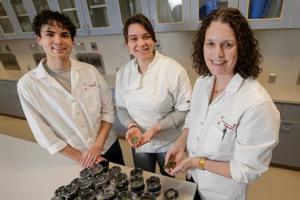
Recent studies conducted in Pullman, Washington, have engaged volunteers in evaluating the aroma of different fir species. Under the guidance of Carolyn Ross, a food sciences professor at WSU, participants assessed the scent and aesthetic appeal of five fir varieties: Fraser, noble, Nordmann’s, Trojan, and concolor. Initial findings suggest that Fraser firs are the most favored in terms of aroma, while noble firs ranked lower.
Whitehill acknowledged the regional implications of these results, stating, “Typically, folks tended to prefer the aroma of the Fraser fir, which is great news for North Carolina.” Despite noble firs’ lower ranking, Ross emphasized that various factors contribute to a tree’s scent, and preferences can vary widely among consumers. “We look at the pluralistic nature of perfection,” she noted. “There’s not one perfect something for everybody.”
The GIFT SEED project aims to integrate these aroma findings into broader research on fir genetics, natural defenses against pests, and potential new markets for growers. Whitehill expressed enthusiasm about the project’s interdisciplinary approach, stating, “It’s exciting to incorporate my background in genetics and pathology with aroma chemistry and biology to address the major challenges facing the industry.”
As the project continues, it seeks to benefit both tree growers and consumers, enhancing the overall understanding of Christmas trees. “These little trees do a lot for us,” Ross concluded. “They retain their needles, look nice, and provide nostalgic aromas. Our understanding of Christmas trees is deeply tied to these experiences.”
This ambitious project promises to reshape the future of Christmas tree farming, ensuring that holiday traditions remain vibrant and sustainable.