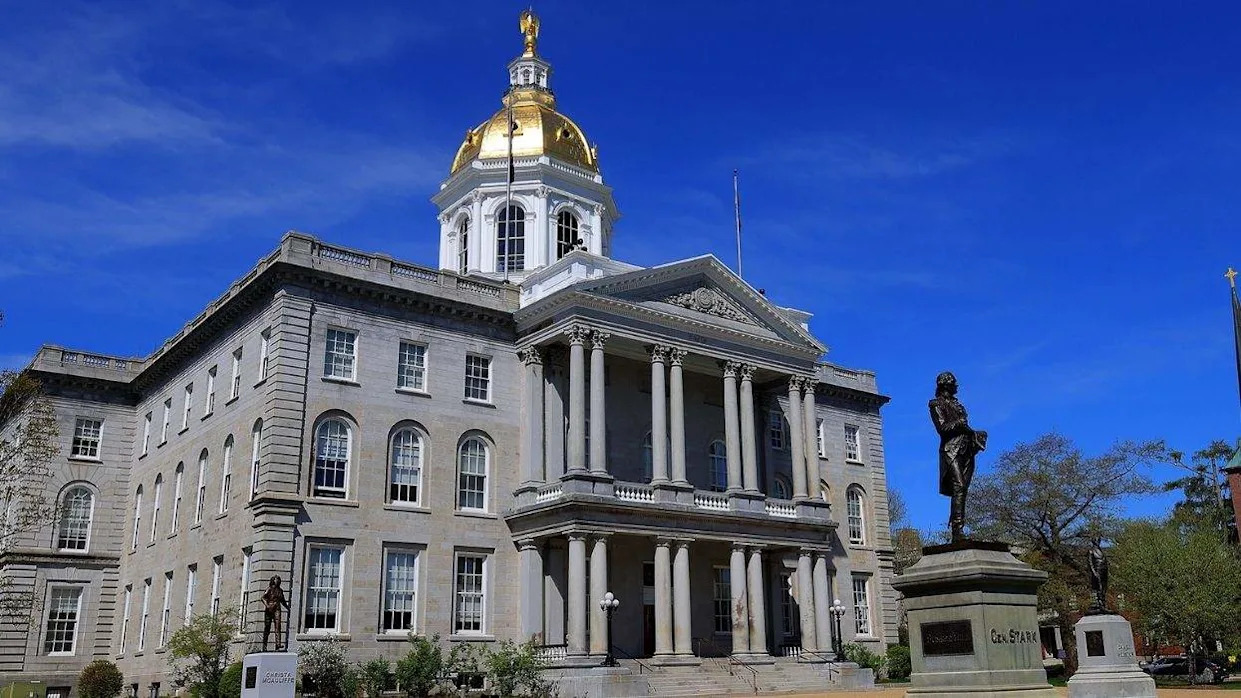
The New Hampshire House has advanced a contentious bill that would permit schools, government buildings, and some businesses to restrict access to bathrooms and locker rooms based on sex assigned at birth rather than gender identity. In a close vote of 181-164 on March 13, 2024, the Republican-controlled chamber approved House Bill 1442, sending it to the state Senate for further consideration. This legislation marks a significant departure from the broader protections for transgender individuals found in New England.
House Bill 1442 mandates that public restrooms and locker rooms be designated for male or female use according to biological sex, which the bill defines based on chromosomes and reproductive anatomy. This requirement extends to multi-user restrooms in businesses and public accommodations. The bill also introduces a legal framework that could classify entering a designated area for the opposite sex as “willful trespass.”
Supporters of the bill contend that it is essential for safeguarding privacy in sensitive environments. In contrast, opponents argue that it targets transgender individuals for exclusion and undermines civil rights protections that were established in New Hampshire in 2018 when gender identity was added to the state’s nondiscrimination law.
The passage of House Bill 1442 continues a trend of legislative attempts to impose restrictions on transgender rights in New Hampshire. Over recent years, similar bills have faced gubernatorial vetoes. Most recently, Governor Kelly Ayotte, a Republican, vetoed a comparable proposal aimed at excluding transgender people from gender-segregated spaces, calling it overly broad and potentially exclusionary. This was the third consecutive year that New Hampshire’s governors have rejected such measures, with former governor Chris Sununu also issuing vetoes on similar bills.
The persistence of these legislative efforts reflects a broader campaign against transgender rights, according to advocacy groups such as 603 Equality. During the current session, several bills have been introduced that seek to regulate access to public facilities based on biological sex, as part of a wider series of proposals affecting bathroom access, sports participation, and identification documentation.
In stark contrast, neighboring states like Massachusetts, Vermont, Rhode Island, and Connecticut maintain extensive protections for transgender residents in public accommodations and healthcare. Maine, which shares a similar political landscape, has not adopted comparable restrictions, focusing instead on a different political battle regarding transgender rights in sports.
Advocates assert that policies like those proposed in House Bill 1442 put transgender individuals in difficult situations, leaving them to choose between using facilities that do not align with their gender identity or facing potential confrontations. The situation in New Hampshire underscores a growing division within the region regarding LGBTQ+ rights, which had previously seemed settled.
As New Hampshire moves forward with this legislation, the potential implications for transgender rights and equality in the state remain a point of significant concern for advocates and community members alike. The outcome in the state Senate could determine whether New Hampshire will join a growing list of states imposing restrictions on transgender individuals, or reaffirm its commitment to inclusivity and civil rights.