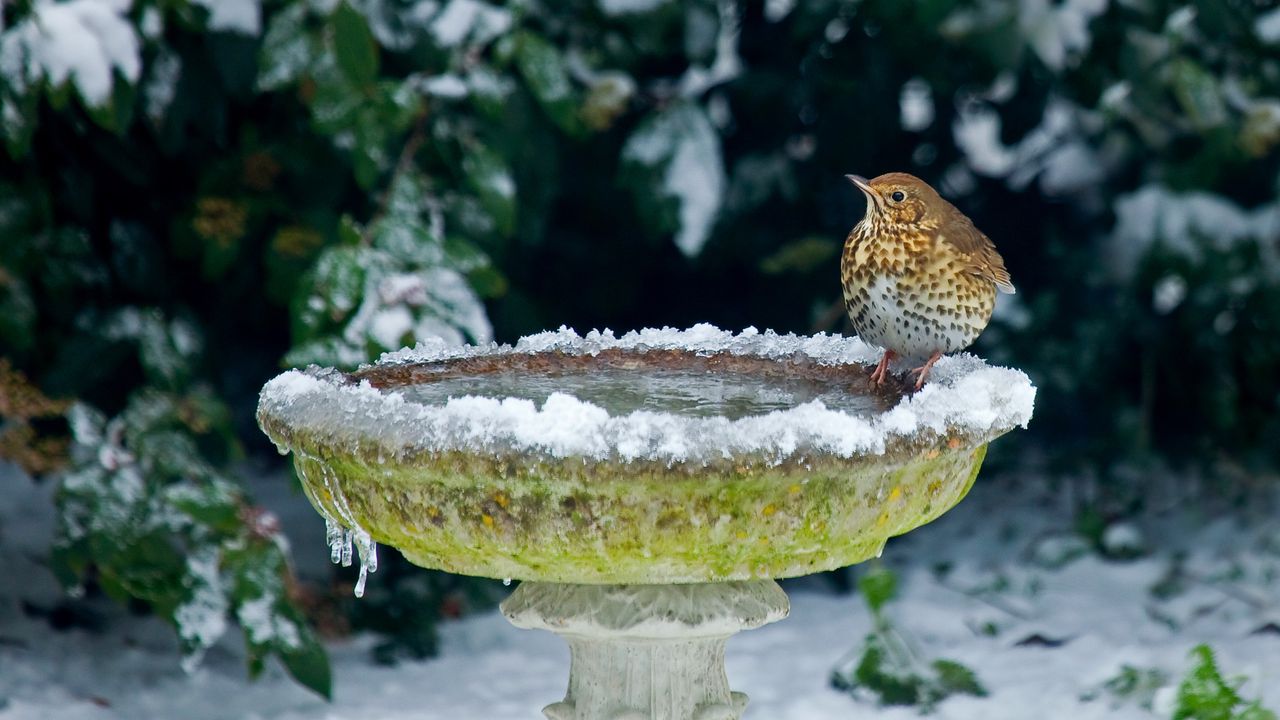
Preparing your bird bath for winter can ensure that local birds have a reliable source of water, even in freezing temperatures. With the right strategies, you can prevent your bird bath from freezing over, making it a welcoming oasis for wildlife throughout the colder months.
Bird baths serve as essential hydration spots for various bird species that may not migrate south. While many assume that birds depart for warmer climates, a significant number remain in local areas during the winter. Maintaining a fresh supply of water can thus be crucial.
Simple Solutions to Prevent Freezing
One effective and economical way to prevent your bird bath from freezing is to add a simple item: a table tennis ball. These balls, which comply with official measurements of 40mm and 2.7 grams, can float on the water surface. As the ball moves with the slightest breeze, it disrupts the formation of ice by breaking up small ice crystals, keeping the water moving and more appealing to birds.
While purchasing a bird bath heater is an option, these devices can pose safety risks, mixing water with electricity, and may be costly to operate. Instead, using a lightweight floating object is a straightforward and effective method to keep your bird bath functional during winter.
Additional Methods to Ensure Water Flow
In addition to using a floating object, there are several other strategies to prevent your bird bath from freezing:
– **Add a black layer to the basin**: Applying a black waterproof insulation layer or painting the bottom can help absorb sunlight, raising the water temperature during the day.
– **Relocate the bird bath**: Positioning the bath in a sunny spot with minimal wind exposure can significantly affect its temperature. Consider placing it near a windbreak to further protect it from harsh conditions.
– **Insulate the basin**: Wrapping the bird bath with straw or burlap can create an attractive look while providing necessary warmth to the water.
– **Maintain water levels**: Keeping the water level high can slow down the freezing process. Regularly topping it up with warm water can help maintain a stable temperature.
– **Choose frost-resistant materials**: If upgrading your bird bath, consider using resin materials that are less prone to cracking in freezing conditions compared to ceramic or stone.
While these methods are beneficial, it’s essential to avoid certain practices that could inadvertently harm your bird bath.
Do not pour boiling water directly into the basin, as this can lead to thermal shock and damage the materials. Additionally, avoid adding salt or chemicals to the water, as these can contaminate the source and deter birds from using the bath. Lastly, refrain from placing space heaters near the bird bath due to the risks associated with electrical devices in wet conditions.
By implementing these strategies, you can ensure that your bird bath remains a vital resource for local wildlife throughout the winter months, enhancing both your garden and the environment.