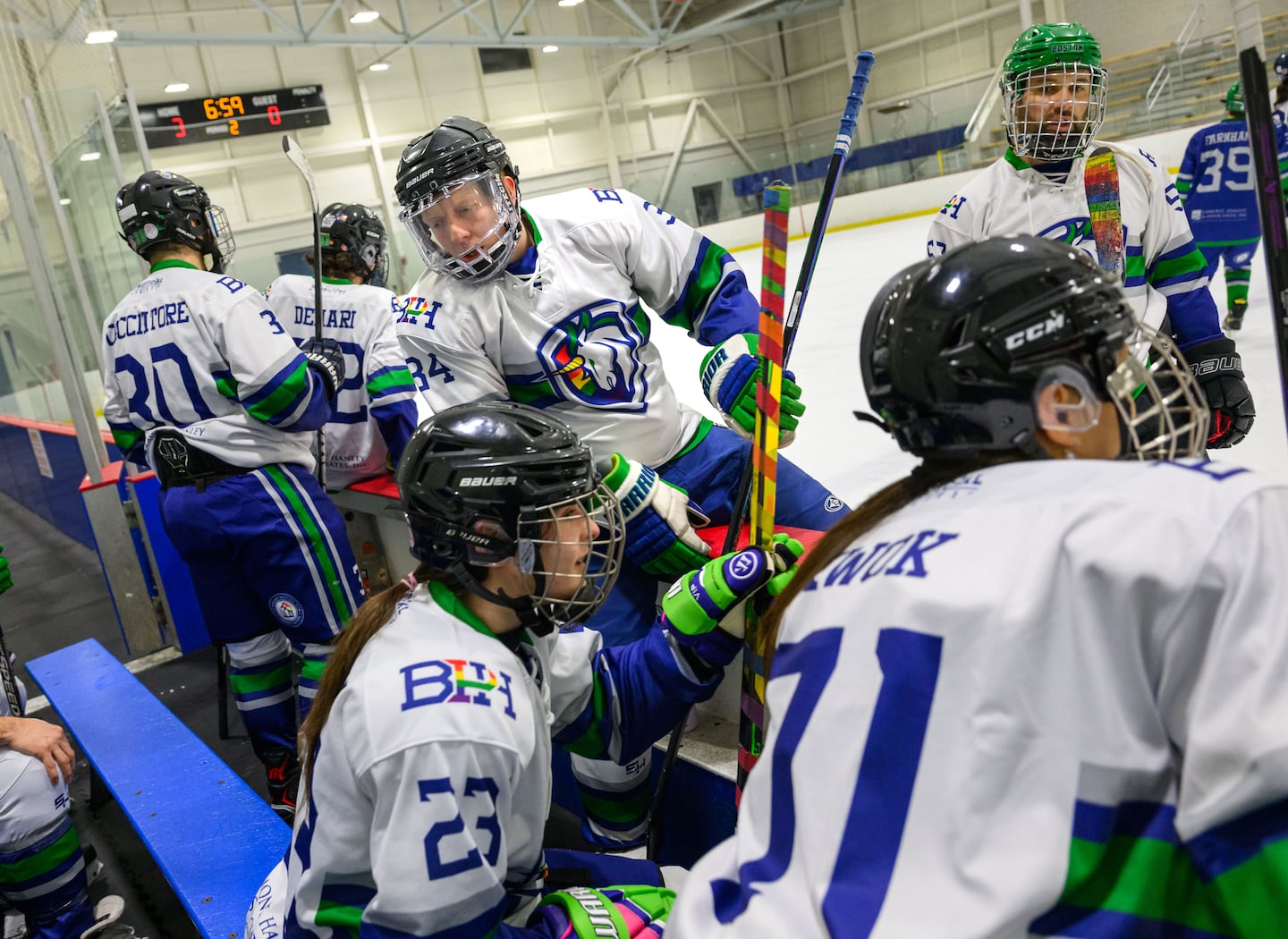
On March 14, 2024, the Boston Bruins will illuminate TD Garden with rainbow lights and adorn their sticks with rainbow-colored Pride Tape during their annual Hockey Is for Everyone night. This event, which has been held for nearly a decade, aims to promote inclusivity and raise funds for the Boston Pride Hockey league. The celebration gains additional visibility this year due to the HBO series “Heated Rivalry,” which follows a romantic storyline between two closeted professional hockey players.
The popularity of “Heated Rivalry” has transcended the LGBTQ+ community, becoming a cultural phenomenon and stimulating interest in hockey among audiences who previously had little connection to the sport. Notably, the National Hockey League (NHL) has yet to feature an openly gay player in its more than 100-year history. Advocates suggest that the show might inspire more LGBTQ+ athletes to come out, potentially reshaping the landscape of professional hockey.
NHL Commissioner Gary Bettman expressed his support for the series, stating, “We’re well aware of ‘Heated Rivalry.’ In terms of embracing it, I think it’s a wonderful story.” Bettman noted that the show’s content might appeal particularly to younger audiences, though he acknowledged the need to balance its themes for broader acceptance. The series has not only entertained but also sparked discussions around LGBTQ+ representation in sports, a topic that has long been overlooked.
The impact of the show is evident in various cultural expressions, including a recent parody on “Saturday Night Live” and look-alike contests organized by local college students. Trivia nights themed around the series are drawing large crowds, often comprised of predominantly female attendees. Merchandise featuring the fictional teams, the Boston Raiders and the Montreal Voyagers, has also gained popularity, engaging a demographic that previously showed little interest in hockey.
While some industry observers express skepticism about whether “Heated Rivalry” will directly encourage current NHL players to come out, the series has undeniably created an environment that fosters conversation. Jim Buzinski, cofounder of LGBTQ+ sports news site Outsports, noted, “The process [of coming out] is fraught with so many things for people.” Buzinski highlighted that most athletes who come out do so after retirement, with notable exceptions like NBA player Jason Collins, who made history as the first active player in major American sports to come out in 2013.
The NHL has made strides toward inclusivity, collaborating with organizations like You Can Play, which aims to ensure LGBTQ+ acceptance at all levels of the sport. Teams often host events like Hockey Is for Everyone nights to promote inclusivity across various demographics. However, the league has faced challenges, including a controversial decision in 2023 to prohibit specialty jerseys and Pride tape, which was later reversed following backlash from players.
Despite these setbacks, the visibility brought by “Heated Rivalry” extends beyond the LGBTQ+ community and may encourage players at all levels to feel more comfortable in their identities. Cheryl Cooky, a professor at Purdue University, emphasized the importance of diverse storytelling, stating, “It’s also straight audiences that are appreciating this type of storytelling, and hopefully it’ll lead to perhaps cultural shifts.”
The series has also ignited renewed interest among LGBTQ+ hockey enthusiasts. Kevin Corsino, a player with the Boston Pride Hockey league, shared his personal journey, noting that he had left the sport due to negative experiences and homophobic remarks in locker rooms. After discovering the inclusive environment of Boston Pride Hockey, he has since seen an influx of inquiries from LGBTQ+ players eager to return to the ice.
Changing Attitudes and Future Prospects
Analysts suggest that while the show may not immediately result in players publicly coming out, it has the potential to alter perceptions within the league. Edward Kian, a sport management professor, believes that “Heated Rivalry” could encourage greater acceptance among fans and players, allowing more athletes to embrace their identities without fear of repercussion.
The physical and often aggressive nature of hockey can deter players from coming out; stereotypes about masculinity contribute to an environment where differences are viewed as liabilities. Clinical psychologist Jett Stone explained that team dynamics often favor conformity, which can discourage individuality. This mindset can lead to LGBTQ+ youth feeling alienated, resulting in many leaving the sport they love.
As the discussion around LGBTQ+ representation in sports continues to evolve, the cultural impact of “Heated Rivalry” cannot be understated. The show has provided a narrative that resonates deeply with the LGBTQ+ community, offering a depiction of love and acceptance that has been long overdue in the realm of sports. Buzinski encapsulated this sentiment, stating, “The show has given us a fairy tale romance. Straight people have had fairy tale romances forever. I wondered, ‘Why can’t gay people have a fairy tale romance, too?’ Finally, we have one.”
As the Boston Bruins prepare for their Hockey Is for Everyone night, the intersection of sports, culture, and inclusivity is more salient than ever, offering hope for a future where all players feel empowered to be their authentic selves on and off the ice.