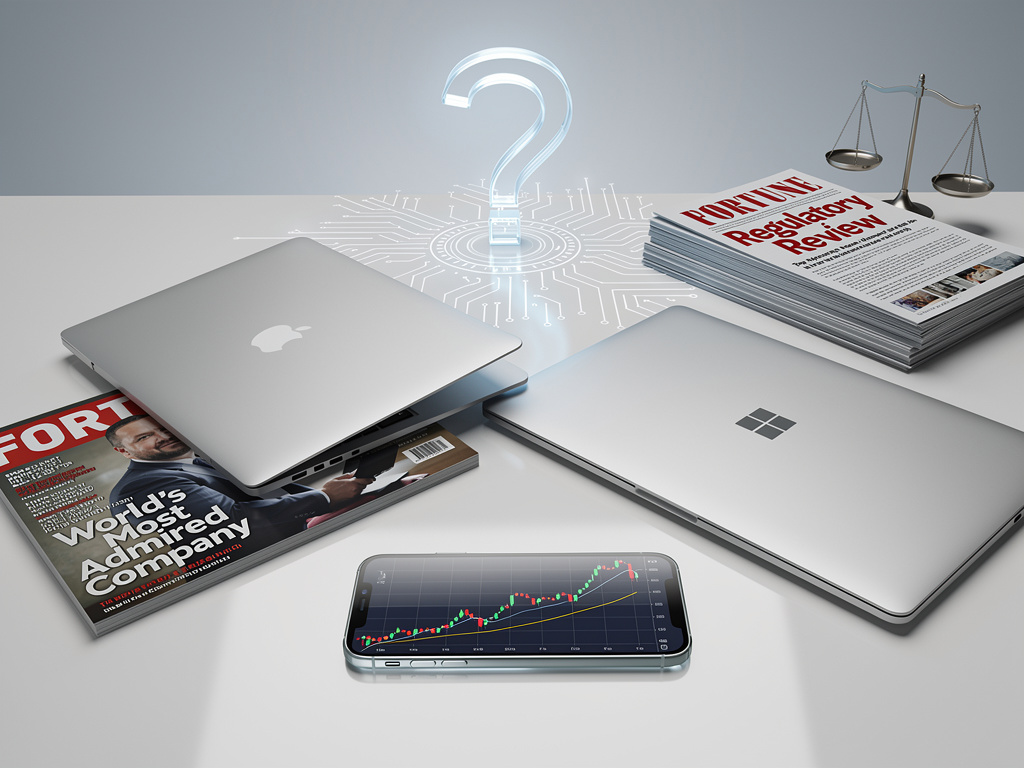
Apple Inc. has maintained its dominance by securing the top position on Fortune’s list of the World’s Most Admired Companies for the 19th consecutive year. This accolade, based on a survey of approximately 3,750 executives, directors, and analysts, reflects not only public relations success but also a longstanding reputation for operational excellence and innovation. The company achieved the highest score in all nine key attributes, including Quality of Products, Innovation, and Financial Soundness, according to AppleInsider.
This recognition underscores Apple’s status as a corporate giant, bolstered by a legacy of groundbreaking products from the iPhone to the Apple Watch. The survey positions Apple ahead of notable competitors like Microsoft and Amazon, reinforcing the belief among investors and industry experts in the company’s long-term value and effective management, led by Chief Executive Tim Cook.
Admiration Amid Challenges
Despite this impressive achievement, Apple faces significant challenges that complicate its narrative of corporate success. While the company enjoys high praise from its peers, it is also grappling with formidable strategic and regulatory hurdles. Global regulators are scrutinizing its business practices, testing the very foundations of its operational model. Additionally, competition is intensifying, particularly in the rapidly evolving field of artificial intelligence, where Apple’s innovative reputation is under scrutiny.
The source of Apple’s enduring admiration lies primarily in its ability to create a cohesive ecosystem of hardware, software, and services. This integration fosters strong customer loyalty and consistent revenue. The perfect score in “Quality of Products/Services” reflects the daily experiences of millions who value the interoperability of their devices, such as the iPhone, Mac, and iCloud services. This ecosystem acts as a powerful driver of growth and a significant competitive advantage.
Financially, Apple remains robust. With substantial cash reserves and impressive profitability, the company can make long-term investments in new technologies without being overly influenced by short-term market fluctuations. Its recent introduction of the Apple Vision Pro, a bold venture into spatial computing, exemplifies this strategy—an ambitious project that only a company of Apple’s magnitude could undertake.
Regulatory Pressures and Market Shifts
Amid this corporate admiration, Apple is experiencing shifting dynamics that could impact its reputation. In response to regulatory scrutiny, the company announced major adjustments to its App Store and iOS operating system in the European Union to comply with the Digital Markets Act (DMA). These modifications permit alternative app stores and payment systems, directly affecting Apple’s lucrative services sector, as detailed by The Verge. Similar antitrust pressures are emerging in the United States, where the Department of Justice is reportedly preparing a significant case against the company.
These regulatory challenges raise questions about Apple’s management practices and its commitment to social responsibility. Critics assert that the very strategies that have driven Apple’s profitability may stifle competition and hinder smaller developers. This increasing criticism poses a reputational risk that could threaten the admiration the company currently enjoys.
Market dynamics have also shifted, as seen in January when Microsoft briefly surpassed Apple as the world’s most valuable company. This change was largely driven by investor excitement over Microsoft’s swift advancements in generative AI, according to a report from Reuters. Concerns about iPhone sales, especially in China, have further compounded Apple’s challenges, with analysts noting a significant decrease in demand amid fierce competition from local rivals like Huawei. Such market pressures raise doubts about Apple’s growth prospects and its global competitiveness.
Amid these challenges, one must consider how Apple continues to command admiration despite headwinds. The Fortune ranking reflects a long-established reputation for quality and resilience, rather than just recent financial performance. The executives surveyed are acknowledging nearly two decades of excellence, disruption, and reinvention.
This admiration can be viewed as a vote of confidence in Tim Cook’s leadership and the company’s demonstrated capacity to navigate complex challenges. While the market’s attention shifts towards the potential of AI, corporate leaders recognize Apple’s methodical approach to dominating sectors like smartphones, tablets, and smartwatches. In a recent earnings call, Cook confirmed that Apple is making substantial investments in artificial intelligence and plans to reveal further details later this year, as reported by MacRumors.
Ultimately, Apple’s 19th consecutive title as the World’s Most Admired Company serves as both an indicator of its past successes and a potential sign of future resilience. The goodwill and respect it commands from the global business community provide a critical asset that could help the company navigate regulatory challenges and focus on long-term investments. The coming year will be pivotal in determining whether Apple can successfully incorporate generative AI, adapt to the evolving regulatory landscape in Europe, and rejuvenate growth in China.