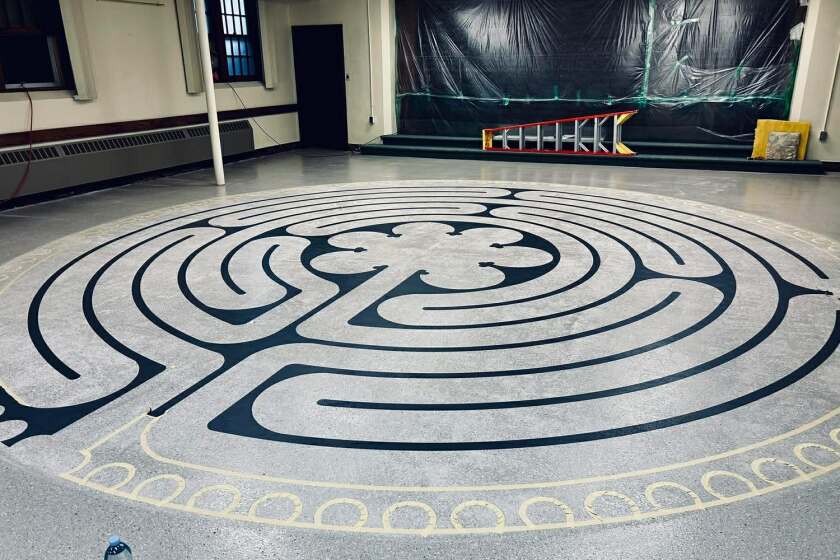
In Alexandria, Minnesota, the First Congregational Church has introduced a permanent labyrinth in its basement, a spiritual practice rooted in ancient traditions. This installation, a collaborative effort between church leaders and the family of a recently deceased member, aims to provide a space for healing and reflection within the community.
The labyrinth is not merely a decorative feature; it is designed for meditation and prayer. Marcie Watson, a retired Lutheran spiritual director, emphasizes that a labyrinth differs from a maze. “A labyrinth is not a maze. It has one entrance and one exit, guiding participants on a path intended for walking meditation,” she explains.
Rev. Dr. Jill Sanders adds, “It’s embodied prayer,” highlighting how the movement through the labyrinth allows individuals to connect with their spirituality in a more dynamic way. Participants journey through a winding path, culminating in a center that symbolizes a union with the divine. “As you walk, you let go of your worries, experience the presence of the Holy, and feel at one with the universe,” she notes.
The concept of walking prayer has historical roots, dating back to the Middle Ages. Pilgrimages to the Holy Land were often perilous and costly, prompting the creation of labyrinths in cathedrals, including the renowned Chartres Cathedral in France. “This labyrinth is patterned after Chartres. It’s a symbolic walk to the Holy Land,” Watson explains.
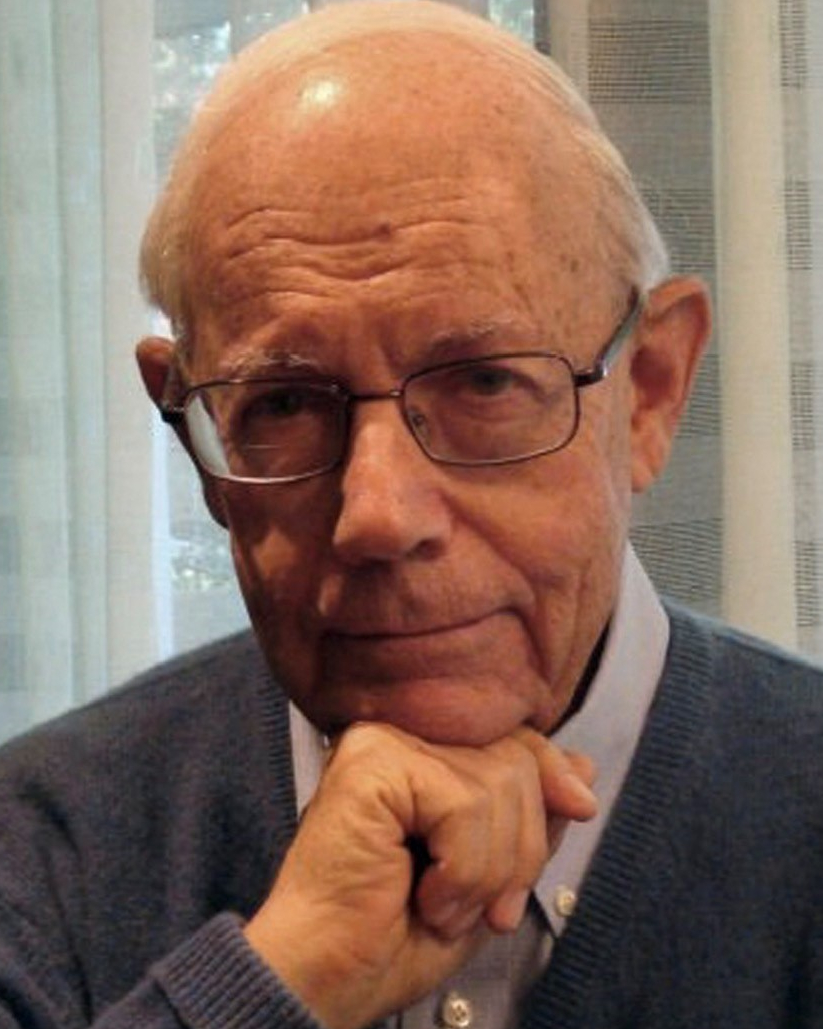
The journey to establish a permanent labyrinth in Alexandria began approximately four years ago when the church borrowed a canvas labyrinth for Ash Wednesday services. Following a community event, Dr. Mike Mosleth, a retired physician interested in holistic healing, engaged in a meaningful conversation with Sanders about the labyrinth after walking its path. Unfortunately, Mosleth passed away unexpectedly during a pilgrimage to Ireland in April 2024, a tragic event that profoundly impacted the community.
After Mosleth’s funeral, his children, Amanda Choudary and Tim Mosleth, sought a way to honor their father’s memory. During a meeting with Sanders, they expressed a desire to provide a permanent labyrinth for the church. “They wanted it to be available to the whole community,” Sanders recalls. The cost of the project was approximately $6,000 to $7,000, entirely funded by Mosleth’s family.
The construction of the labyrinth required removing asbestos from the floor and installing new flooring. Fortunately, Lisa Moriarty, an artist affiliated with The Labyrinth Society, was found to paint the labyrinth. “It took her about two and a half days to complete it,” Sanders noted.
By the third week of October 2024, the labyrinth was completed ahead of schedule. The church leadership is now focusing on making this space accessible to the community for meditation and reflection. “I cannot imagine how pleased Mike would be if he knew what his kids had done,” Sanders said, reflecting on the connection Mosleth had with this spiritual practice.
His daughter Amanda shared that she had walked the labyrinth at the retreat center in Ireland where her father passed away. “This is exactly what my dad envisioned,” she noted, emphasizing how the labyrinth aligns with Mosleth’s vision of a holistic healing center.
The labyrinth at the First Congregational Church stands as a testament to the power of community, remembrance, and spiritual renewal. As the congregation prepares to welcome the public to this sacred space, it embodies both the joy of connection and the sorrow of loss, a fitting tribute to Dr. Mosleth’s legacy.