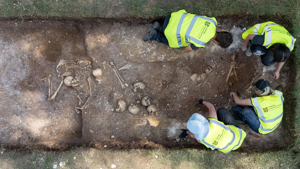
A recent discovery of a Viking-era skull has unveiled evidence suggesting that early civilizations may have practiced brain surgery. The skull, dated to the 10th century and unearthed in Sweden, features a significant hole that indicates the individual likely underwent a procedure known as trepanation. This technique, which involves drilling into the skull, is believed to have been used to treat conditions such as migraines or seizures.
The find, reported by the Archaeological Institute of America, highlights the advanced medical practices of the Viking people. Researchers suggest that the procedure may have been aimed at alleviating severe headaches or controlling seizures, which were often misunderstood during that era. The presence of the hole suggests a complex understanding of anatomy, as well as a willingness to engage in surgical intervention.
Significance of Trepanation in Ancient Medicine
Trepanation is one of the oldest known surgical practices, with evidence dating back thousands of years across various cultures. The practice involves creating an opening in the skull to relieve pressure, treat injuries, or, as some theories suggest, to release evil spirits. While its exact purpose can be debated, the discovery of this skull provides a tangible link to the medical practices of the time.
Analysis of the skull reveals that the individual likely survived the procedure, as there are signs of healing around the edges of the hole. This suggests that the person lived for some time following the surgery, indicating a level of skill and knowledge that would have been necessary for such an operation. The findings challenge previous assumptions about the capabilities of ancient societies, particularly in regard to medical practices.
Broader Implications for Historical Understanding
The implications of this discovery extend beyond just the Viking era. It raises questions about the medical knowledge of ancient cultures and their approaches to health and illness. The understanding of trepanation as a legitimate medical procedure during this time suggests that ancient societies had developed more sophisticated healthcare practices than previously acknowledged.
Furthermore, this discovery contributes to the growing body of evidence indicating that surgical practices were more widespread across historical civilizations than once thought. Researchers continue to study other archaeological finds to piece together a fuller picture of how ancient peoples approached medicine and surgery.
The Viking-era skull serves as a vital piece of evidence in understanding the complexities of ancient medical practices. As researchers delve deeper into the implications of this find, they aim to uncover more about the lives of those who lived during the Viking age and their innovative solutions to health challenges.