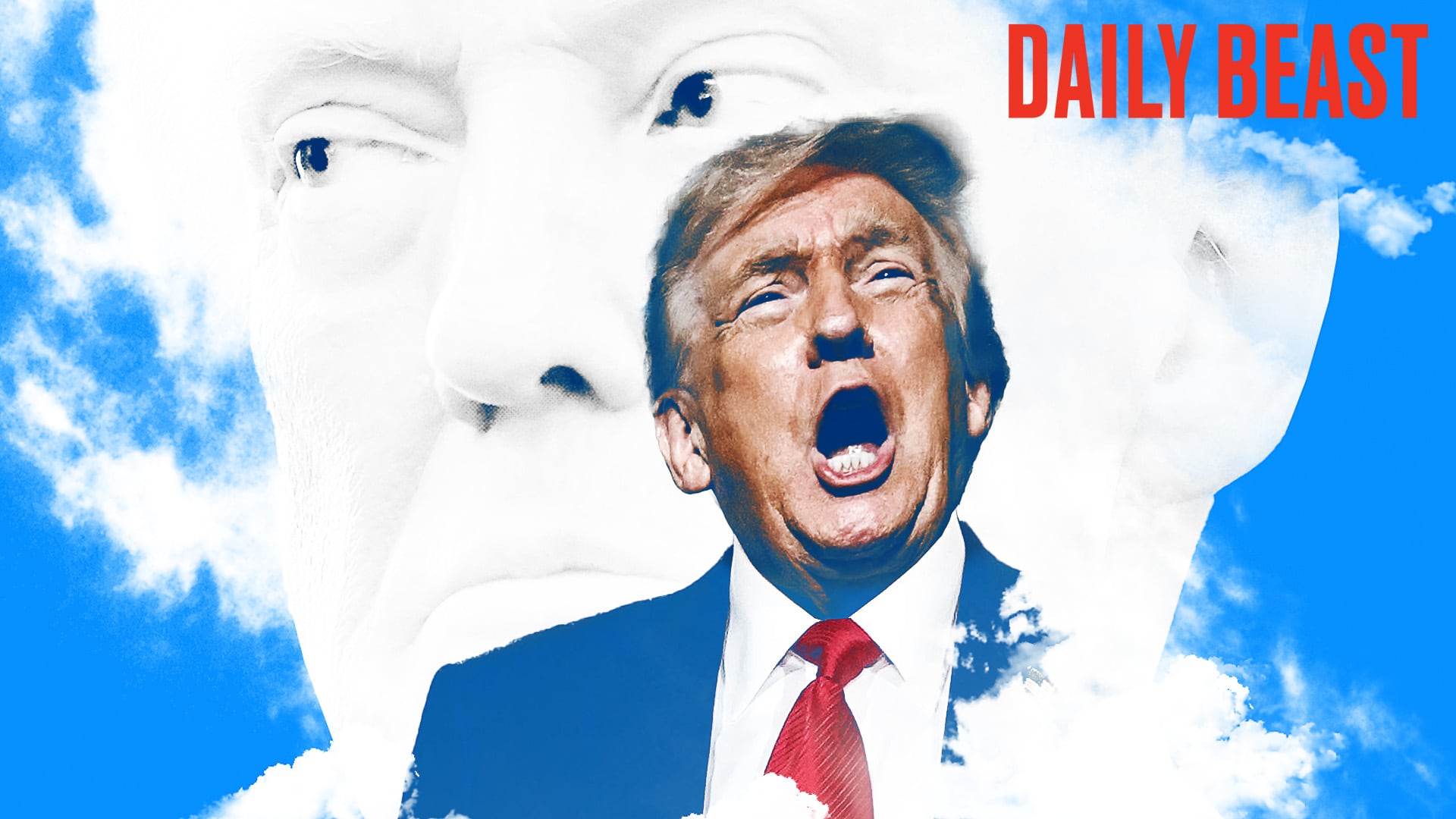
President Donald Trump has expressed heightened anxiety regarding his mental health, particularly fearing that it may lead to the invocation of the 25th Amendment, according to psychologist Dr. John Gartner in a recent interview on The Daily Beast Podcast. This conversation followed a revealing article in the Wall Street Journal, where the 79-year-old president acknowledged wearing compression socks for swollen ankles and vented frustration over the public’s ongoing scrutiny of his health.
Gartner explained that Trump’s distress over discussions surrounding his health is not unfounded, as it relates to concerns about his declining physical and cognitive abilities. “No story enrages Donald Trump more than the stories about his physical and cognitive health,” Gartner stated, adding that such paranoia is often evident in individuals experiencing cognitive decline.
In the podcast, Gartner, a former professor at Johns Hopkins University, noted that Trump exhibits symptoms he believes are indicative of “clinical signs of dementia.” He emphasized that as Trump’s mental state deteriorates, his paranoia intensifies, leading to erratic behavior. “As he’s starting to deteriorate, one of the signs of dementia is people becoming more paranoid,” Gartner said, indicating that Trump may perceive threats from those around him.
During his presidency, Trump has shown a tendency to lash out at perceived enemies, a behavior acknowledged by his Chief of Staff, Susie Wiles, who referred to it as “retribution.” Recently, Trump used his platform on Truth Social to urge Pam Bondi, the Attorney General of Florida, to prosecute former FBI Director James Comey and others he views as adversaries.
Gartner posits that Trump may be suffering from frontotemporal dementia, a condition that affects the frontal lobes of the brain, leading to impulsive and socially inappropriate behaviors. “We have this person who has virtually absolute power and no guardrails, who, in a demented state, is impulsively being driven to act out in these paranoid and destructive ways,” he explained.
In a striking display of his influence, Trump recently claimed that the United States would take control of Venezuela after the country’s leadership shifted. He referred to this as a move to seize Venezuelan oil and indicated that Cuba could be next on his agenda. Furthermore, he renamed the historic Monroe Doctrine to the “Donroe Doctrine,” emphasizing his unilateral approach to foreign policy.
Despite Gartner’s assertions, Trump remains adamant about his mental acuity. On March 15, 2025, he boasted on Truth Social that he had “ACED” his cognitive test for the third consecutive time, declaring himself in “PERFECT HEALTH.” In response to inquiries about his mental state, Liz Huston, Assistant Press Secretary at the White House, reiterated the president’s good health, citing the consistent assessments of Dr. Sean Barbabella, the president’s physician.
Gartner pointed out that the Montreal Cognitive Assessment (MoCA) is typically administered repeatedly only when there are concerns about dementia. He recommended that those seeking further evidence of Trump’s cognitive decline read a New Republic article detailing “Trump’s 11 Most Senile Moments” from 2025, which included instances of the president falling asleep during public appearances and fixating on the word “groceries.”
When asked what advice he would offer to individuals working closely with Trump, Gartner simply suggested they consider invoking the 25th Amendment, a constitutional provision that allows for the removal of a president deemed unable to fulfill their duties.
As discussions surrounding Trump’s mental health continue to unfold, the implications for his presidency and the broader political landscape remain significant. The ongoing examination of his cognitive capacity raises questions about the stability of his leadership during a pivotal period in American politics.