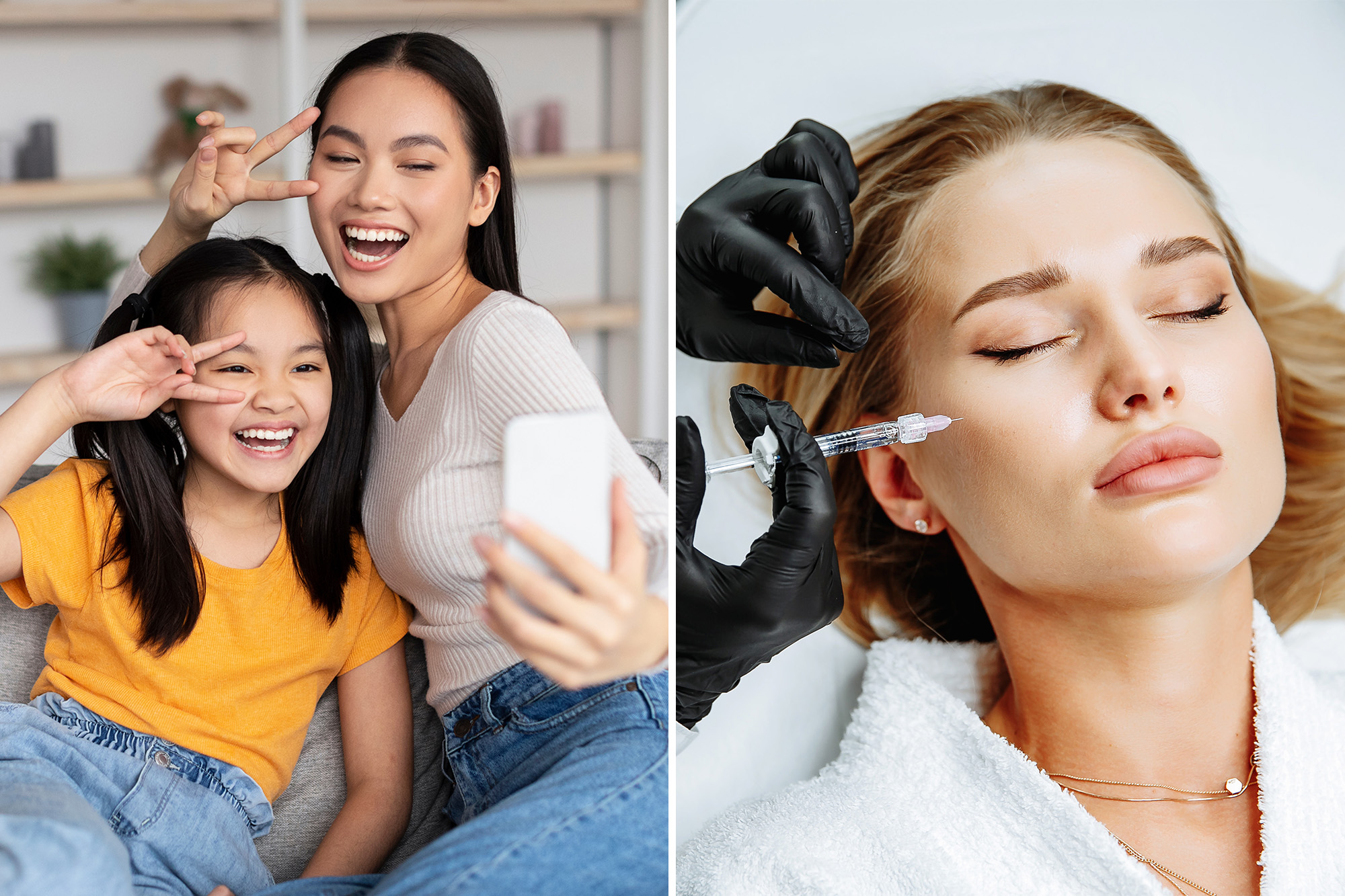
New research has highlighted a concerning trend where mothers who frequently take selfies may inadvertently influence their children’s attitudes toward plastic surgery. A study conducted in China examined 541 mother-child pairs and found that teenagers raised by selfie-loving mothers are more likely to express dissatisfaction with their faces and consider cosmetic procedures.
The findings, published in the Journal of Health Psychology, revealed that both boys and girls, averaging 16 years in age, who exhibited behaviors associated with “self-related behavior” often engaged in “body surveillance.” This pattern of behavior suggests a growing obsession with appearance that can lead to thoughts of undergoing surgical alterations. While the study did not specify the number of teenagers who actually undergo cosmetic surgery, it indicated a strong correlation between considering such procedures and the likelihood of pursuing them.
Researchers concluded that there is no direct causal link between mothers who enjoy taking selfies and their children’s decisions regarding plastic surgery. Instead, they argue that the mothers’ behaviors can indirectly shape their offspring’s perceptions of body image. According to another study by Brigham Young University, mothers play a crucial role as the first role models for their children’s self-perception and body image.
This issue has gained attention in light of various public controversies. In June, Noel LaPalomento, a 28-year-old mother and social media influencer, faced criticism for bringing her seven-year-old daughter, Giada, to a tanning salon, which many viewed as promoting unrealistic beauty standards. Similarly, reality television star Kim Kardashian encountered backlash when her 12-year-old daughter, North West, appeared in a TikTok wearing a nose ring and adorned with fake tattoos.
Further exploration into this phenomenon indicates that a preoccupation with selfies can be linked to narcissism and other dysfunctional personality traits. A study from the University of Palermo found that daughters who viewed their mothers as less caring or overprotective were more likely to experience body dissatisfaction.
As social media continues to shape perceptions of beauty and self-worth, it is essential for parents to reflect on their behaviors and the potential impact on their children. The influence of mothers, particularly in the realm of body image, remains significant, necessitating a dialogue about the values imparted to the younger generation.