The landscape of work is poised for significant transformation, with three job sectors at the forefront of potential automation, according to Olivier Godement, the head of product for business products at OpenAI. Speaking on the “Unsupervised Learning” podcast, Godement identified the life sciences, customer service, and computer engineering as areas likely to experience substantial changes within the next few years.
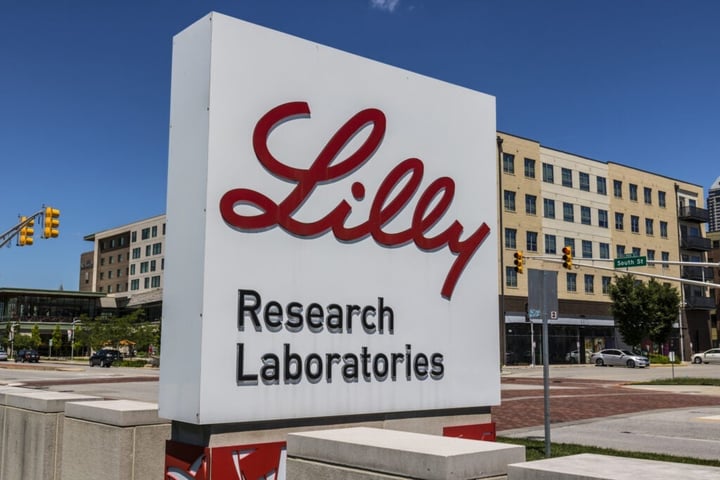
Godement emphasized that the life sciences sector, particularly pharmaceutical companies such as Amgen, is ripe for automation. He noted that the lengthy process involved in drug development, which includes both research and administrative tasks, can be streamlined through artificial intelligence. “The time it takes from once you lock the recipe of a drug to having that drug on the market is months, sometimes years,” he explained. AI models are proving effective in managing vast amounts of both structured and unstructured data, allowing for quicker identification of changes in documentation.
Although Godement acknowledged that we have not yet reached a point where “any white collar job” can be fully automated overnight, he highlighted the increasing applicability of AI in areas such as coding and customer service. “The automation is probably not yet at the level of automating completely the job of a software engineer, but I think we have a line of sight essentially to get there,” he said. This sentiment is echoed by recent trends in the tech industry, where companies are increasingly adopting AI-assisted coding technologies.
An October study from Indeed revealed that software engineers, quality assurance engineers, product managers, and project managers have faced significant job losses during recent layoffs and organizational restructuring. This trend underscores the growing integration of AI in the tech workforce.
In addition to life sciences and engineering, Godement pointed to customer service roles as another area facing imminent automation. He has collaborated with T-Mobile, a leading telecommunications company in the United States, to enhance customer experience through automation. “We’re starting to achieve fairly good results in terms of quality at a meaningful scale,” he noted, suggesting that significant advancements in task automation could emerge within the next one to two years.
The conversation surrounding automation and job displacement is not limited to Godement. Geoffrey Hinton, a prominent figure in AI research often referred to as the “Godfather of AI,” shared his perspective in a June podcast. He expressed confidence that technology will eventually surpass human capabilities in various tasks. “I’d say it’s going to be a long time before it’s as good at physical manipulation,” he cautioned, recommending fields like plumbing as safer career choices in the interim.
Hinton also raised concerns about the future of mundane intellectual labor, predicting that roles such as paralegals will be particularly vulnerable to automation. He stated, “For mundane intellectual labor, AI is just going to replace everybody,” highlighting the urgency for professionals in affected fields to adapt.
As automation technologies advance, the implications for the workforce become increasingly significant. The insights shared by both Godement and Hinton reflect a broader trend in which AI is set to redefine the nature of work across multiple industries. The coming years may witness dramatic shifts in job roles, prompting a reevaluation of skills and career paths for many professionals.