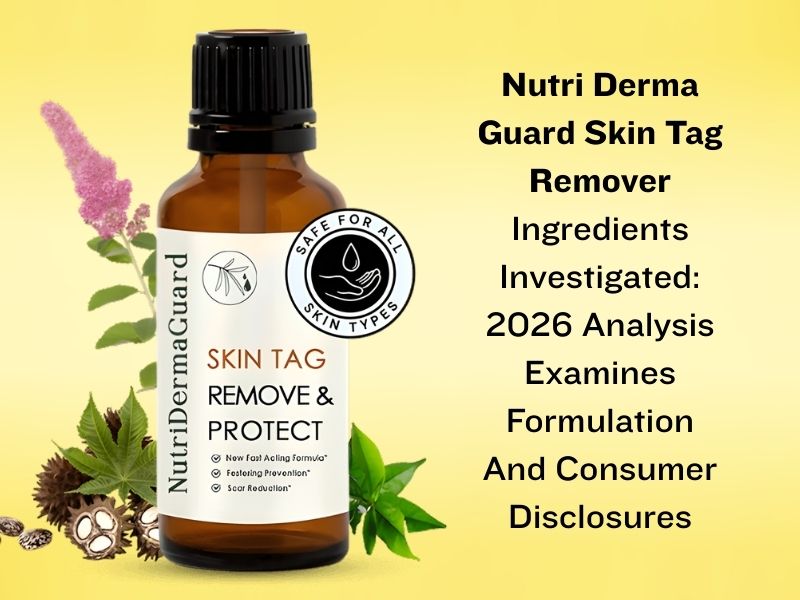
On January 10, 2026, consumer interest in the ingredients of NutriDerma Guard Skin Tag Remover has led to a detailed examination of its formulation and consumer disclosures. As direct-to-consumer skincare products gain popularity, independent research focuses on topical treatments marketed for skin tag removal. This analysis highlights the ingredient profile and the relevant scientific background of NutriDerma Guard’s active compounds.
As outlined on the official NutriDerma Guard website, the product comprises four primary components: Alcohol Denat, Ricinus Communis (castor) seed oil, Melaleuca Alternifolia (tea tree) leaf oil, and Salicylic Acid. The formulation is manufactured in the United States under Good Manufacturing Practice (GMP) standards. It is marketed as cruelty-free and is distributed from Largo, Florida.
Understanding Skin Tags and Consumer Interest
Skin tags, or acrochordons, are benign growths that commonly affect adults, typically appearing in friction-prone areas such as the neck, underarms, and eyelids. While generally harmless, many individuals seek removal options due to cosmetic concerns or discomfort caused by these growths. Dermatological studies reveal that visible skin tags can lead to self-consciousness, particularly in prominent locations. Additionally, skin tags may cause irritation, catching on clothing or jewelry.
Research indicates that skin tags often multiply with age, especially after the age of 40. This drives consumers to explore at-home removal alternatives, motivated by the cost implications of professional treatments, which can include multiple visits and insurance complications.
Ingredient Analysis of NutriDerma Guard
The analysis of NutriDerma Guard delves into each ingredient’s characteristics based on peer-reviewed studies.
Ricinus Communis (castor oil) has been used in traditional medicine for centuries. Its primary component, ricinoleic acid, has humectant properties that may help maintain skin moisture. While traditional remedies reference castor oil for skin growths, clinical validation of its efficacy remains absent.
Melaleuca Alternifolia (tea tree oil) is recognized for its antimicrobial properties, which have been documented in studies published in the Journal of Antimicrobial Chemotherapy. Its effectiveness in treating various skin conditions has been explored, though its specific applications for skin tags have not been independently verified.
Salicylic Acid is the most established ingredient in the formulation. It is recognized by the U.S. Food and Drug Administration for specific over-the-counter uses, including wart treatment. Salicylic acid’s keratolytic action promotes the shedding of abnormal skin tissue, making it a common choice in dermatological products. However, its effectiveness for skin tags is not explicitly supported by the FDA.
Alcohol Denat, or denatured alcohol, serves multiple functions in skincare formulations. It acts as a solvent and penetration enhancer, aiding the absorption of active ingredients. While effective, it may cause irritation in those with sensitive skin, as noted in the product labeling.
The company emphasizes that NutriDerma Guard is intended solely for external use and provides clear instructions to avoid contact with sensitive areas, such as the eyes and mouth. Users are cautioned to discontinue use if irritation occurs and to consult a healthcare professional if they have underlying health conditions.
Consumer Considerations and Self-Assessment
As consumers evaluate at-home topical solutions, self-assessment can guide their decision-making process. Those who prefer non-invasive approaches, have multiple small growths, or have previously used over-the-counter products without adverse reactions may find topical options suitable.
Conversely, individuals with growths in sensitive areas or those who notice changes in existing growths should seek professional evaluation. Immediate results from clinical methods may be preferable for those desiring quick interventions.
This analysis underscores the importance of individual considerations when choosing between topical and clinical approaches for skin tag removal. It also highlights the necessity of consulting healthcare professionals before using any skin treatment product.
In summary, while NutriDerma Guard Skin Tag Remover contains ingredients with documented properties, it has not been independently studied as a finished product. Consumers should verify pricing and availability directly with the company and assess ingredient compatibility with known sensitivities.
For more information about the product, including pricing and customer support, individuals can visit the official NutriDerma Guard website or contact their customer service.