Research led by Annabelle Singer, an associate professor at the Georgia Institute of Technology and Emory University, is investigating whether flickering lights and sound can slow the progression of Alzheimer’s disease. In her lab in Atlanta, Singer is focused on understanding the neural activity patterns that fail in patients with Alzheimer’s, with the aim of developing new treatment methods that could improve cognitive health.
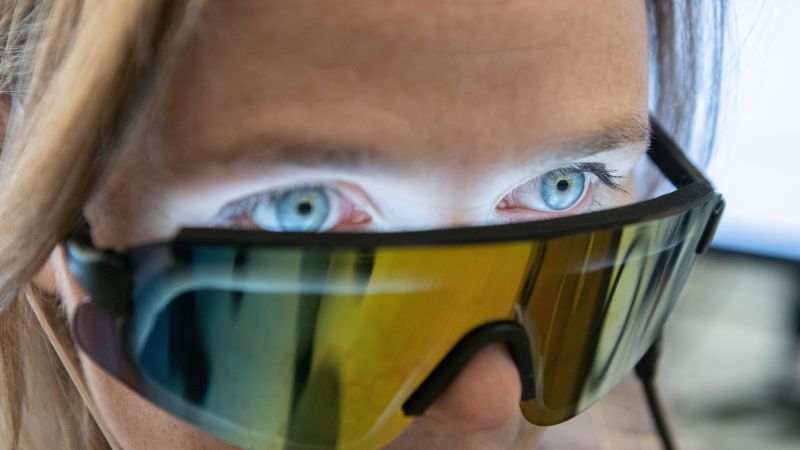
Singer’s approach is distinct from traditional pharmaceutical interventions that often come with significant side effects. She employs a non-invasive method using specially designed goggles and headphones. These goggles emit flickering lights at a rate approximately five times faster than typical strobe lights, while the headphones deliver rapid beeping sounds. This innovative technique is intended to decode memory functions in Alzheimer’s patients and explore how disruptions in neural activity contribute to memory impairment.
Preliminary studies indicate that this sensory stimulation could potentially slow cognitive decline. According to recent findings, exposure to flickering lights and sound at a frequency of 40 Hz for one hour daily may reduce cognitive deterioration and brain volume loss in areas crucial for memory. “We’re aiming to slow the continuing decline,” Singer explained, emphasizing her objective to improve patient outcomes rather than reverse existing memory loss.
The research comes at a critical time, as the number of Americans aged 65 and older living with Alzheimer’s disease exceeds 7 million, a figure projected to nearly double to 13.8 million by 2060 without significant advancements in treatment. Globally, around 57 million individuals are affected by dementia, with Alzheimer’s being the most prevalent form, according to the World Health Organization.
A Phase 3 double-blind clinical trial involving nearly 700 patients across 70 locations in the United States is currently underway. This trial, led by Cognito Therapeutics, a medtech firm specializing in wearable devices, aims to assess the efficacy of this innovative treatment. While Singer serves as a scientific adviser on Cognito’s board, she is not directly managing the study. “The hope is that we will see those undergoing stimulation experience slower cognitive decline compared to those not receiving treatment,” she stated.
Singer’s alternative approach stems from concerns regarding the efficacy and safety of existing Alzheimer’s medications. Recent developments in drug therapies, such as lecanemab and donanemab, have shown modest benefits but also pose risks of severe side effects, including brain swelling and bleeding. For instance, lecanemab demonstrated a 27% reduction in cognitive decline over 18 months, while donanemab resulted in a 35% lower risk of disease progression among individuals with mild cognitive impairment. However, the annual cost of these treatments, around $30,000, has sparked criticism regarding accessibility.
Collaboration between disciplines has been pivotal in this research. Close to Singer’s lab, James Lah, director of the Cognitive Neurology Program at Emory University, worked with her on preliminary studies evaluating the flickering light and sound method in patients with mild cognitive impairment. Their initial proof-of-concept study involved 10 patients over an eight-week period, revealing promising changes in brain connectivity patterns.
Singer’s fascination with light and sound began in her youth in Boxborough, Massachusetts, where she initially envisioned a career in theater. Her experiences in stage design, particularly with lighting and sound, shaped her understanding of how these elements can create immersive experiences. This passion for sensory interaction ultimately guided her towards a career in biomedical engineering, where she combined her interests in neuroscience and technology.
She pursued her education at Wesleyan University, followed by graduate studies at the University of California, San Francisco, and postdoctoral work at the Massachusetts Institute of Technology. Witnessing the stark reality of Alzheimer’s care during her time at the UCSF Fein Memory and Aging Center left a lasting impression on her, igniting her commitment to finding innovative solutions for this challenging disease.
Singer’s research builds on established findings that flickering lights can influence neural activity in the visual cortex. However, she recognized the need to adapt this approach to target the hippocampus, a crucial area for memory. “We ultimately found that light and sound combined at 40 Hz could effectively stimulate the hippocampus,” she noted. The most common side effects reported in initial tests included headaches, yet there were no adverse effects leading to seizures, and some participants even experienced a decrease in subclinical seizure activity.
As the clinical trial progresses, the research aims to determine the long-term effects of this innovative intervention. Lah expressed his intrigue with Singer’s work, emphasizing the potential of external stimulation to modify brain activity. “It’s just cool,” he remarked, underscoring the innovative nature of this research and its promise for the future of Alzheimer’s treatment.
The results of this ongoing trial could significantly impact the landscape of Alzheimer’s care, offering hope to millions affected by the disease while paving the way for more accessible and safer treatment options.