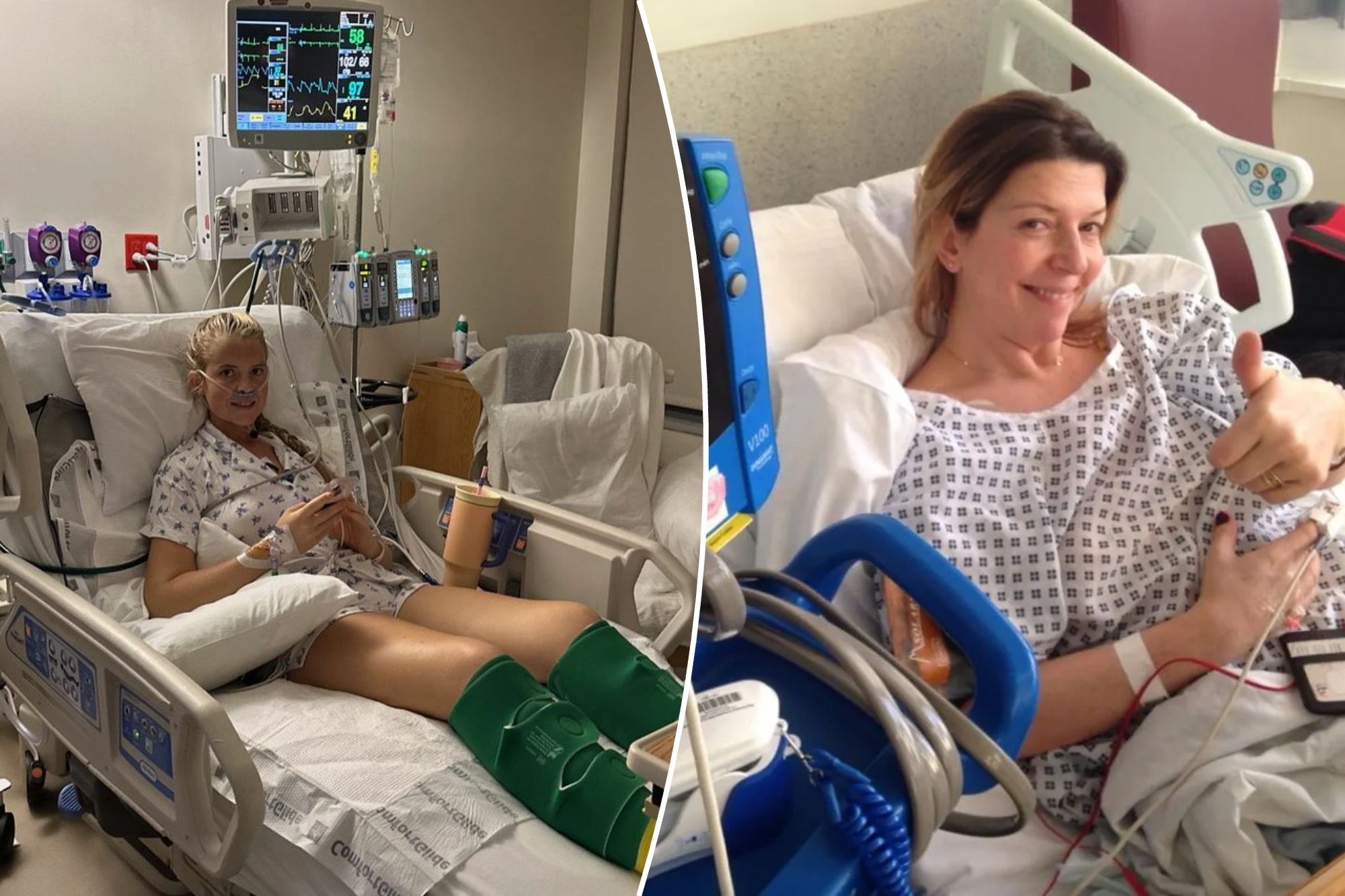
Health trackers are proving to be essential tools in identifying serious health issues, often prompting users to seek medical attention before conditions worsen. A striking case is that of Maeve O’Neil, a 19-year-old freshman at George Washington University. After experiencing a significant increase in her respiratory rate, resting heart rate, and body temperature, O’Neil was motivated to visit the doctor, which ultimately saved her life.
O’Neil’s health crisis began during a hotel stay with her mother after suffering from illness for several days. At around 03:00, she felt an alarming change in her condition and immediately checked her Oura app. “What I saw honestly scared me,” she recalled. She was soon rushed to George Washington Hospital, where she was diagnosed with several life-threatening conditions, including Lemierre’s syndrome, double pneumonia, and COVID-19. After spending a total of 17 days in the hospital, including a week in intensive care, O’Neil made a remarkable recovery and is now a thriving Division I lacrosse player.
The increasing prevalence of health trackers, with an estimated one-third of Americans using such devices, has led to numerous reports of users discovering serious health conditions. These devices often provide critical data that motivates individuals to consult medical professionals. For instance, wearers have identified conditions like lymphoma, lupus, and atrial fibrillation after being alerted by their devices.
Despite the impressive capabilities of some consumer health trackers, brands such as Oura emphasize that their products are not medical devices. “Oura Ring is not intended to diagnose, treat, or prevent medical conditions,” the company stated. Instead, these devices offer users valuable information, such as heart rate and sleep patterns, which can indicate when medical evaluation is necessary.
Dr. Jordan Shlain, founder of Private Medical, described wearables as both the “rearview mirror and the windshield of personal health.” They can help users recognize patterns in their health data. “When someone notices their resting heart rate has been creeping up for three weeks, or their sleep architecture has quietly collapsed, that’s pattern recognition at a scale no human could track on their own,” he explained.
While health trackers provide valuable insights, they cannot diagnose medical issues. Dr. Shlain warned that data without context can be misleading. A spike in heart rate, for example, could indicate a serious issue or simply be a reaction to caffeine intake. “We are still in the early innings of this technology,” he noted, suggesting that devices currently provide disjointed information rather than a complete understanding of health.
For many users, even the partial insights these devices offer have been life-changing. Nicolette Amette, a 44-year-old television producer from London, discovered her heart issues thanks to her Fitbit. Feeling increasingly unwell, Amette’s device recorded a resting heart rate exceeding 120 beats per minute, prompting her to seek medical help. An EKG revealed multiple heart conditions, leading to several surgeries throughout the year. “I relied on my wearable through treatment,” she stated.
Other users have experienced different health revelations. Sandy Mendez, a 33-year-old from Houston, initially used an UltraHuman ring to track her sleep. However, its period-tracking feature ultimately led her to discover fluctuations in her thyroid function. “I don’t think I would have discovered my thyroid issue if it weren’t for the Ultrahuman ring,” Mendez shared. This newfound knowledge empowered her to seek medical answers, bringing her closer to her goals of starting a family.
As health trackers become more integrated into daily life, medical professionals increasingly encourage patients with chronic conditions to use these devices for monitoring. Yet, caution remains paramount. Dr. Shlain emphasized that while wearables can enhance health management, they cannot replace traditional medical assessments. “A sensor on your wrist will never look you in the eye and ask the question you didn’t know needed asking,” he explained.
In the evolving landscape of healthcare, technology like wearables will likely play a significant role in monitoring and managing health. Their potential to empower individuals to advocate for their health is clear, but the human element of medical care remains irreplaceable.