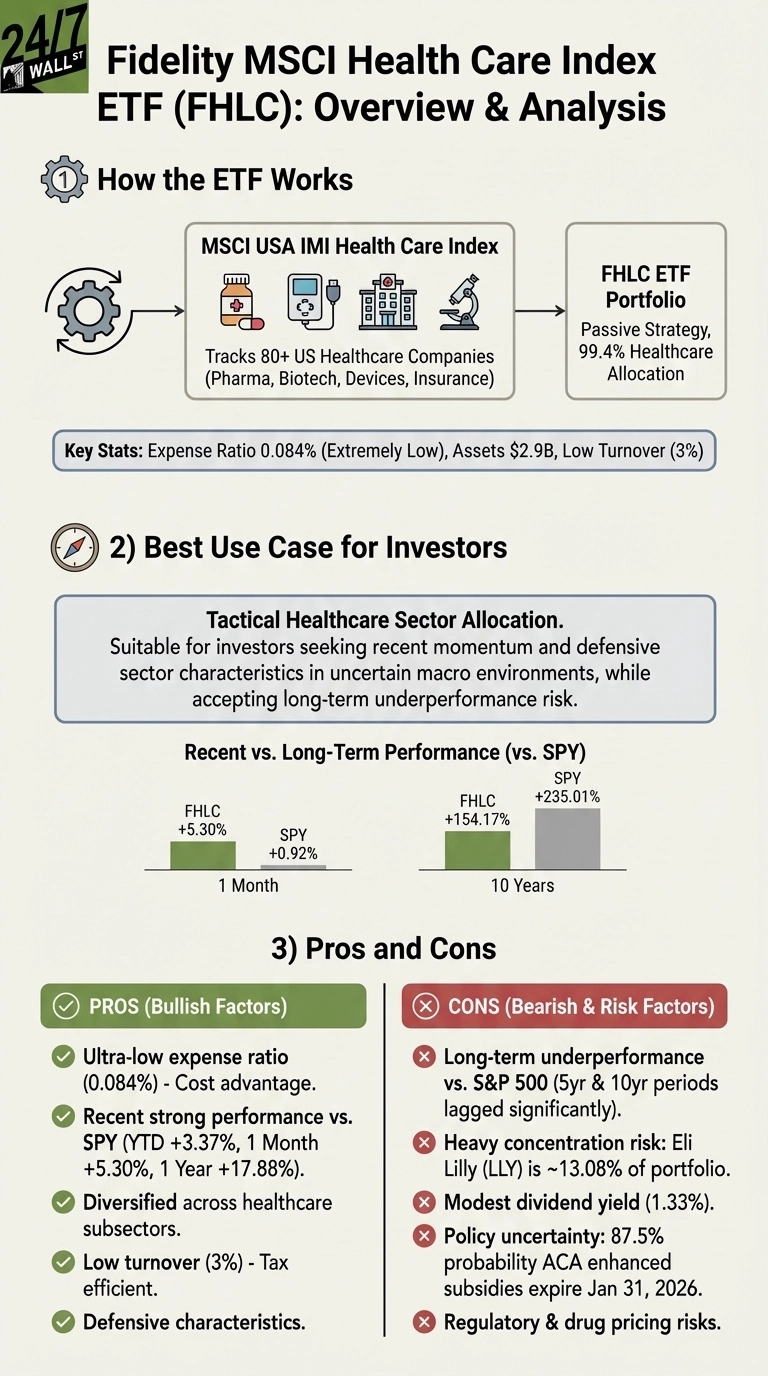
The Fidelity MSCI Health Care Index ETF (NYSEARCA:FHLC) has emerged as a noteworthy option for investors seeking exposure to the healthcare sector. With an expense ratio of just 0.084%, it offers a low-cost entry point. However, potential buyers should consider the fund’s significant concentration in Eli Lilly, which comprises over 13% of its portfolio.
This fund tracks the MSCI USA IMI Health Care Index, providing diversification across various healthcare industries, including pharmaceuticals, biotechnology, medical devices, and health insurance. Recent performance statistics are promising, with the ETF gaining 17.9% over the past year. Yet, a deeper examination reveals a troubling trend; over ten years, FHLC has returned 154%, significantly lagging behind the S&P 500, which achieved 235% in the same period.
Performance Analysis: Short-Term Gains vs. Long-Term Trends
Despite delivering strong short-term results, FHLC’s long-term performance raises concerns. The fund has shown a 5.3% gain in the past month. However, the five-year return stands at 42.6%, compared to the S&P 500‘s 84.5%. This discrepancy highlights systemic challenges within the healthcare sector, such as ongoing drug pricing pressures and slower innovation in areas outside oncology and rare diseases.
The current momentum might suggest a sector rotation is underway, but investing after a period of outperformance carries inherent risks. The ETF’s reliance on the performance of a few key stocks, particularly Eli Lilly, necessitates caution for potential investors.
Regulatory Uncertainty and Income Considerations
Investors must also navigate the political and regulatory landscape that influences healthcare investments. A 87.5% probability exists that enhanced ACA premium tax credits will expire by January 31, 2026, which could adversely affect health insurers like UnitedHealth. This company, comprising 4.5% of FHLC, has already seen its stock decline by 31% over the past year.
For those seeking dividend income, FHLC offers a yield of 1.33%, which may not compete favorably with other market alternatives. Although the fund has increased dividends at around 4.6% annually over the past five years, this growth barely keeps pace with inflation and falls short of the income potential found in other defensive sectors.
Investors focused on capital appreciation might find FHLC unsuitable, given its historical underperformance compared to broader market indices. Similarly, retirees who prioritize income generation may discover better opportunities elsewhere without sacrificing stability.
For those comparing healthcare sector funds, the Vanguard Health Care ETF (NYSEARCA:VHT) may present a more attractive alternative. VHT carries an expense ratio of 0.09% and boasts assets of $20.4 billion, significantly higher than FHLC’s $2.9 billion. This larger asset base offers better liquidity and tighter bid-ask spreads, while VHT also provides a slightly higher dividend yield of 1.38%.
In conclusion, while the Fidelity MSCI Health Care Index ETF provides an entry point for those interested in healthcare, the concentration risk and historical performance issues warrant careful consideration. The ETF may appeal to investors looking for tactical exposure in the healthcare sector, but prudent position sizing is essential to mitigate potential risks.