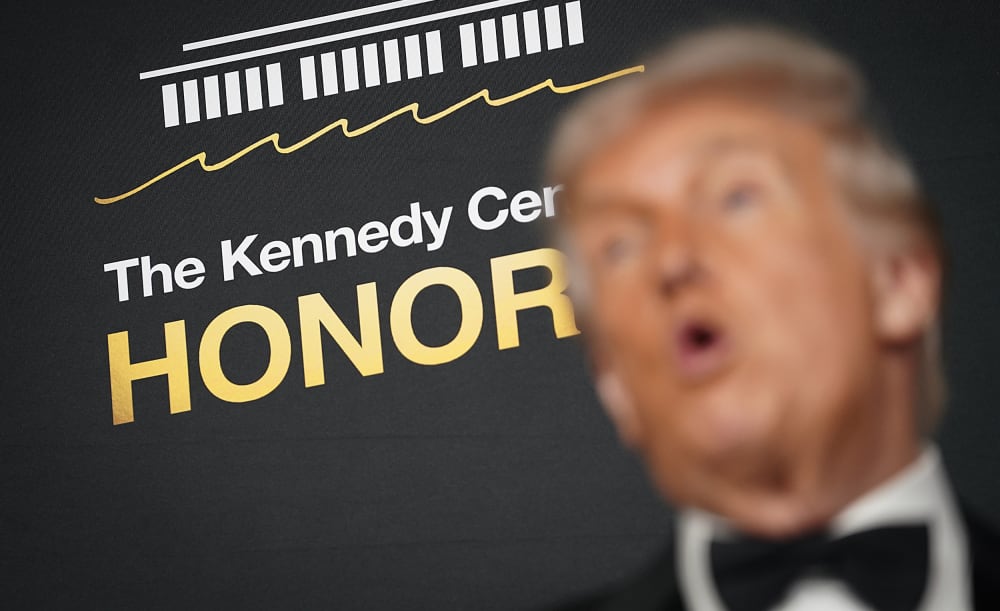
Donald Trump’s recent hosting of the Kennedy Center Honors resulted in the lowest viewership in the event’s history. The annual program, which celebrates significant contributions to American arts and culture, averaged an estimated 2.65 million viewers this year, a staggering 35% decline from the 4.1 million viewers it garnered in 2024, according to preliminary data from Nielsen shared by Programming Insider.
Since its inception in 1978, the Kennedy Center Honors has recognized iconic performers, including Tom Hanks and Aretha Franklin. Traditionally hosted by prominent figures like Walter Cronkite and more recently by David Letterman and Stephen Colbert, the program has maintained a reputation for honoring a wide range of artistic achievements. This year, however, Trump sought to reshape the event in his image.
Appointed chairman by a board he filled with loyalists, Trump took the helm of the event broadcast on Tuesday. He claimed to have been “98% involved” in selecting this year’s honorees, which included Sylvester Stallone, the rock band KISS, and disco singer Gloria Gaynor. Despite Trump’s efforts, the show fell flat, with CBS’s legal department insisting that the event retain its original title rather than be branded as the “Trump Kennedy Center Honors.”
The misalignment between Trump’s programming choices and the traditional audience was apparent. The Kennedy Center Honors has historically showcased a diverse range of artists, including cellist Yo-Yo Ma and actor Morgan Freeman, reflecting the cultural tastes of John and Jackie Kennedy. Trump’s approach, however, leaned heavily towards mainstream entertainment, diverging from the event’s established legacy.
Critics noted that Trump’s selections misjudged the audience, which typically appreciates a broader spectrum of artistic contributions. While pairing Stallone with a jazz artist like Wynton Marsalis could have introduced new viewers without alienating core fans, Trump’s inability to connect with those outside his conservative base has been a recurring theme throughout his career.
This latest broadcasting failure mirrors Trump’s declining popularity, evident not only in television ratings but also in his standing in public polls. As audience interest wanes, both for his entertainment ventures and political aspirations, the ramifications of this miscalculation may extend beyond television.
Trump’s experience with the Kennedy Center Honors serves as a reminder of the challenges faced by public figures in navigating the complex landscape of audience preferences. The event’s historical significance and its role in celebrating cultural diversity cannot be overstated, and Trump’s attempt to redefine it has raised questions about his understanding of American arts and entertainment.
As the Kennedy Center continues its tradition of honoring excellence in the arts, it remains to be seen how Trump’s latest foray will impact the event’s future.