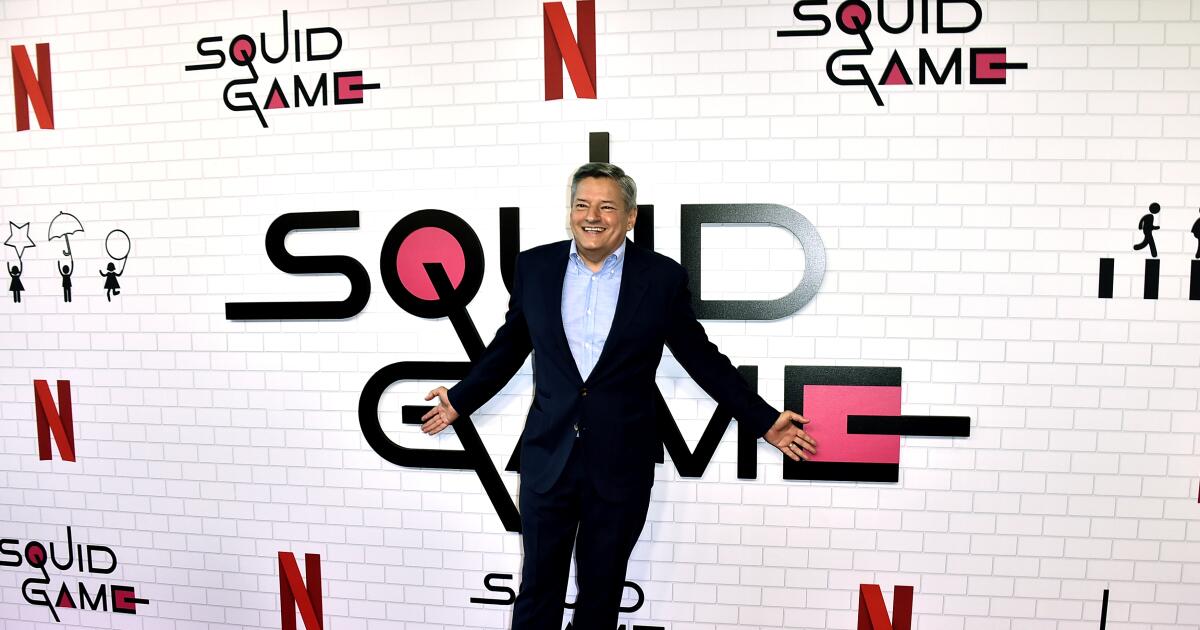
Netflix co-Chief Executive Ted Sarandos has made headlines by orchestrating an ambitious deal valued at $82 billion to acquire significant assets from Warner Bros., including the film and television studios in Burbank and the HBO streaming service in Culver City. This acquisition marks a pivotal moment in the streaming landscape, showcasing Netflix’s rapid evolution from an upstart to a dominant force in Hollywood.
Sarandos announced the deal during an investor call, stating, “This is a rare opportunity. It’s going to help us achieve our mission to entertain the world and to bring people together through great stories.” Should this takeover receive the necessary regulatory approvals, Netflix would gain ownership of iconic titles such as Casablanca and Harry Potter, in addition to popular franchises like Batman and Scooby-Doo.
Market Dynamics and Challenges Ahead
The acquisition has taken many industry observers by surprise, especially given that Paramount, backed by billionaire Larry Ellison, was widely believed to be the frontrunner for these coveted assets. Even within Netflix, executives had downplayed merger ambitions just two months prior. Co-CEO Greg Peters noted, “We come from a deep heritage of builders rather than buyers.”
Despite that, Netflix’s strong financial position enabled it to present a cash-intensive bid that impressed the Warner Bros. Discovery board, which voted unanimously in favor. In addition to the purchase price, Netflix has agreed to assume over $10 billion of Warner Bros.’ debt, elevating the total deal value to $82.7 billion. Approval from Warner shareholders and various regulatory bodies in the U.S. and abroad is still required.
Opposition is already mounting against the deal, particularly from cinema chains, lawmakers, and labor unions. The Writers Guild of America has voiced strong concerns, stating that “the world’s largest streaming company swallowing one of its biggest competitors is what antitrust laws were designed to prevent.”
Ted Sarandos: A Journey Through Disruption
If the acquisition is finalized, it would mark a significant milestone for Sarandos, who has been a driving force behind Netflix’s content strategy since its early days. His background includes a modest start, having once worked in a video rental store before joining Netflix when it was a fledgling company focused on DVD distribution.
Sarandos gained recognition for pioneering a revenue-sharing deal with Warner Bros. during his tenure at West Coast Video. He has played a crucial role in Netflix’s transformation, steering the company toward original programming. His bold decision in 2011 to secure the rights for House of Cards without a pilot, committing $100 million upfront, proved pivotal for the streaming service’s credibility.
Under Sarandos’ leadership, Netflix innovated by releasing entire seasons of shows simultaneously, revolutionizing how audiences consume content. Series like Stranger Things became cultural phenomena, further solidifying Netflix’s position as a leader in entertainment.
Despite facing challenges, including a decline in subscribers in early 2022, Netflix demonstrated resilience by diversifying revenue streams and exploring new business avenues such as advertising and live events. The company remains profitable, reporting $2.5 billion in net income for the third quarter of 2023, an increase of 8% compared to the previous year.
As Netflix prepares for the potential acquisition, Sarandos expressed optimism about navigating regulatory scrutiny, emphasizing that the deal is “pro-consumer, pro-innovation, pro-worker, pro-creator, pro-growth.” He indicated that Netflix would work closely with regulators to secure the necessary approvals.
Sarandos’ leadership has not been without controversy. He faced criticism during the dual strikes in 2023 over compensation for writers and actors, but was seen as a key figure in bridging gaps between management and talent. Moreover, he has navigated internal conflicts, notably a walkout over the handling of comments made by comedian Dave Chappelle.
As Netflix continues to dominate the streaming market, it faces competition from various entertainment platforms, including YouTube and social media. Sarandos acknowledged the need for continual innovation, stating, “In a world where people have more choices than ever how to spend their time, we can’t stand still.” The upcoming deal with Warner Bros. could be a significant step in enhancing Netflix’s storytelling capabilities and expanding its global reach, further solidifying Sarandos’ position as a leading figure in modern entertainment.